This guide gives you a quick reference for coolant chemistry, fluid selection, compatibility, testing, service, and disposal. Whether you are answering a parts-counter question, maintaining a fleet, or working on your own vehicle, the goal is the same: identify the correct fluid and keep the cooling system protected. Here's the chemistry, here's the spec, here's what to do with it.
What coolant does in an engine
Coolant carries heat from the engine to the radiator while protecting metal surfaces from freezing, boiling, corrosion, and cavitation. Water is an excellent heat-transfer fluid, but water alone freezes in winter, boils too readily under pressure, and allows corrosion in iron, aluminum, copper, solder, and mixed-metal systems. A properly formulated coolant solves those problems with glycol and an additive package.
Most passenger vehicles use ethylene glycol diluted with water. Propylene glycol is also available and is less acutely toxic if swallowed, but it is not automatically the correct choice for an automotive application. The finished mixture is what matters. A common 50/50 blend provides freeze protection near minus 34 degrees Fahrenheit and raises boiling protection compared with plain water. Exact performance depends on system pressure, condition, and formulation.
The additive package controls corrosion and deposits. Inorganic inhibitors, organic acids, phosphates, silicates, borates, and combinations of these materials behave differently. That is why color is not a reliable identification method. Green, orange, yellow, pink, and blue are dye choices, not universal chemical standards. Two fluids with similar color can have incompatible inhibitor systems.
Reference Box: The one-line rule is to match the vehicle manufacturer's specification, not the bottle color. Concentrate requires the correct water dilution; premix is already diluted.
Choosing the right chemistry
When selecting coolant, start with the service information for the year, engine, and cooling-system design. Look for an OEM specification or a recognized performance claim on the product label. General categories such as conventional, hybrid organic acid technology, and organic acid technology are useful starting points, but they do not replace the vehicle specification.
Older systems often used conventional formulas with silicate or phosphate protection. Many newer vehicles use long-life organic acid technology, commonly abbreviated OAT. Hybrid organic acid technology, or HOAT, combines organic acids with selected inorganic inhibitors. European, Asian, and North American manufacturers have used different inhibitor balances, so a product marketed as “long life” is not automatically suitable for every car or truck.
Mixing is where many service problems begin. A small emergency top-off with clean water is usually better than running an engine low, but a substantial addition of an unfamiliar formula can dilute or disturb the inhibitor package. Do not rely on a universal label if the owner's manual calls for a specific standard. If the fluid history is unknown, a complete drain, flush where appropriate, and refill with the specified product is more defensible than repeated guesses.
Water quality also matters. Distilled or deionized water is a practical choice when mixing concentrate. Hard water can contribute minerals that encourage scale, while highly contaminated water can add chlorides or sulfates. Never use straight concentrate unless the manufacturer specifically permits it; glycol transfers heat less effectively than water, and excessive concentration can reduce cooling performance.
Testing and service decisions
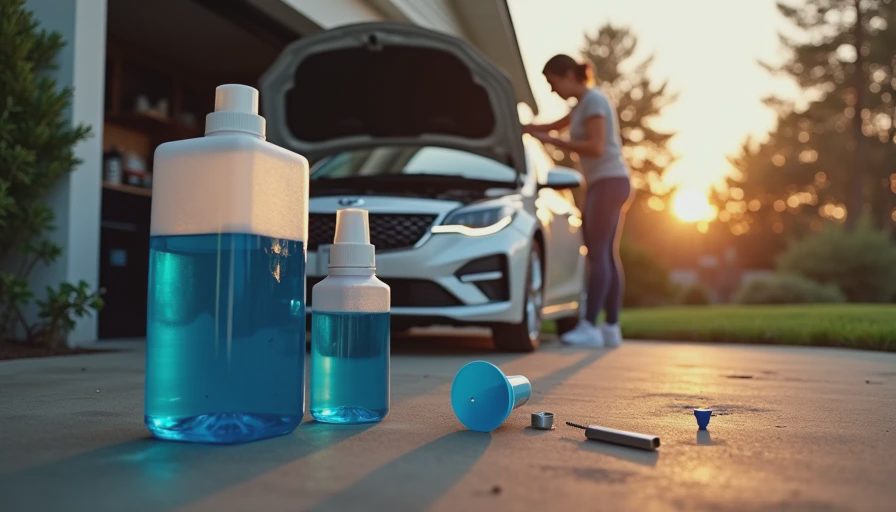
A technician can learn a great deal from a visual inspection, but appearance does not prove protection. Rust-colored fluid, oil contamination, floating debris, or a sweet smell around the engine points to a problem requiring diagnosis. A refractometer or suitable hydrometer can estimate freeze protection. Test strips can provide information about reserve alkalinity or inhibitor condition, depending on the product and the strip design.
Do not treat a single test result as a complete health report. A fluid can show acceptable freeze protection while its inhibitors are depleted. Conversely, a clean-looking sample can conceal electrochemical corrosion, a weak radiator cap, a failing water pump, or combustion gases entering the system. Check the service interval, maintenance records, concentration, hoses, cap, thermostat, radiator, and expansion tank together.
The cooling system must be cool before opening a radiator cap or pressure cap. Hot fluid can flash into steam and cause severe burns. Use gloves and eye protection, keep hands clear of fans that can start automatically, and collect the old fluid in a labeled drain pan. Ethylene glycol attracts pets because of its sweet taste and can cause fatal poisoning. Clean spills immediately and keep containers closed.
Reference Box: ASTM D3306 is a common performance specification for engine coolants intended for automotive and light-duty service. It is a useful label reference, but the vehicle maker's requirement still controls the application.
When a flush is justified
A drain and refill replaces only the fluid that leaves through the drain point. A flush can remove more old fluid, deposits, and incompatible material, but aggressive chemical flushing is not automatically beneficial. Before choosing a procedure, identify why service is needed. Scheduled maintenance, contamination, overheating, incorrect previous fluid, and component replacement each call for a different level of work.
If oil appears in the coolant, do not solve the symptom with a flush alone. Investigate a failed oil cooler, head gasket, transmission cooler, or related component. If combustion gases are present, pressure testing and chemical block testing can help narrow the fault. After repairs, rinse thoroughly according to the service procedure, refill with the correct mixture, bleed trapped air, and verify operating temperature.
Air pockets are especially important in systems with high-mounted radiators, remote expansion tanks, or complicated heater circuits. An engine may show a normal gauge reading while the heater produces cold air or the cylinder head develops a localized hot spot. Follow the manufacturer's bleeding procedure and recheck the level after a complete cool-down.
Fleet and shop handling practices
A fleet does not need a warehouse full of every color on the market, but it does need disciplined identification. Record the vehicle, engine, installed fluid, concentration, date, and mileage or engine hours. Label bulk tanks and transfer equipment. Keep incompatible products from being poured into the same tote or pump. A simple spreadsheet can prevent an expensive mistake when several makes share one service bay.
Parts-counter staff can ask three useful questions: What is the vehicle year and engine? What specification does the service information call for? Is the customer topping off, repairing a leak, or replacing all the fluid? Those answers distinguish a small emergency addition from a full maintenance job. A universal product may be convenient, but convenience does not override application requirements.
For larger equipment and heavy-duty fleets, supplemental coolant additive control may be part of the maintenance program. Some diesel engines use coolant systems that require specific additive monitoring for wet-sleeve cavitation protection. Do not add supplemental treatment to a passenger-car system unless the manufacturer specifies it. The chemistry must fit the liner design, metals, seals, and maintenance schedule.
Storage, disposal, and the practical answer
Store new containers sealed, upright, and protected from extreme heat, freezing, and contamination. Keep them away from food, animal access, ignition sources, and floor drains. Used coolant should go into a dedicated, clearly labeled container. Do not mix it with used oil, solvents, brake cleaner, or gasoline, because contamination can change recycling and disposal requirements.
Never pour used coolant onto soil, into a storm drain, or into a septic system. Contact a household hazardous-waste program, municipal collection site, or licensed recycler for local instructions. Shops should follow applicable state and federal waste rules, maintain labels and records, and use spill-control materials suited to glycol fluids. A small leak still deserves prompt cleanup: absorb it, place the waste in an appropriate container, and prevent access by animals.
If your customer asks, the one-line answer is this: coolant is a heat-transfer and corrosion-control formulation, not simply colored water. Verify the specification, use the right concentration, test the system intelligently, open it only when cool, and dispose of the old fluid responsibly. That process protects the engine, the technician, and the environment better than guessing from color or marketing language.



No comments yet — be the first to share a thought.