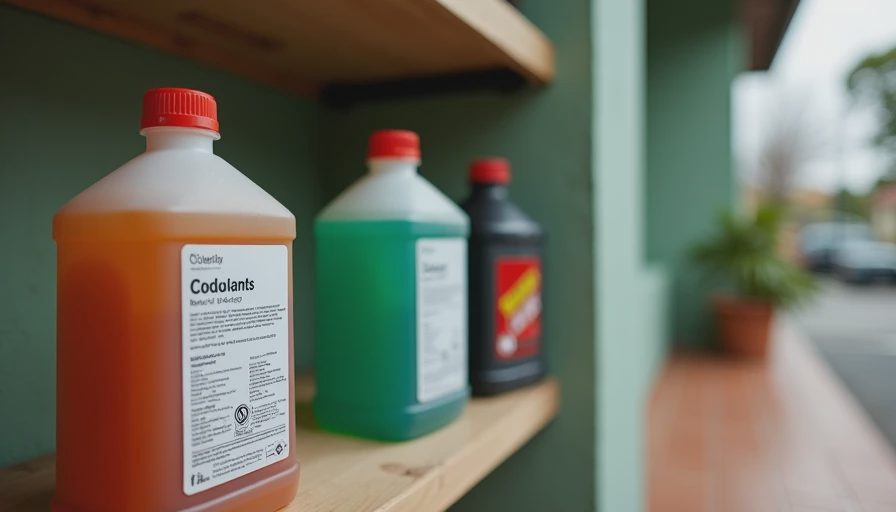
If you're standing at the parts counter wondering can coolants be mixed with what's already in the radiator, the short answer is: it depends. Here's the chemistry, here's the spec, here's what to do with it. This article will give you a reference you can use the next time a customer or a student asks that exact question.
Why Coolant Chemistry Matters
Engine coolant is not just colored water. It's a carefully balanced mixture of ethylene glycol or propylene glycol, deionized water, and an additive package that includes corrosion inhibitors, anti-foam agents, and pH stabilizers. The additive package is what differentiates one coolant type from another. When you mix coolants with incompatible additive chemistries, those additives can react. The result can be a gel-like sludge that clogs heater cores, a drop in corrosion protection, or accelerated seal wear.
Reference Box: The additive package is the deciding factor, not the color. Color is a dye added for identification, but no industry standard ties color to chemistry. Two coolants with the same color may still be incompatible.
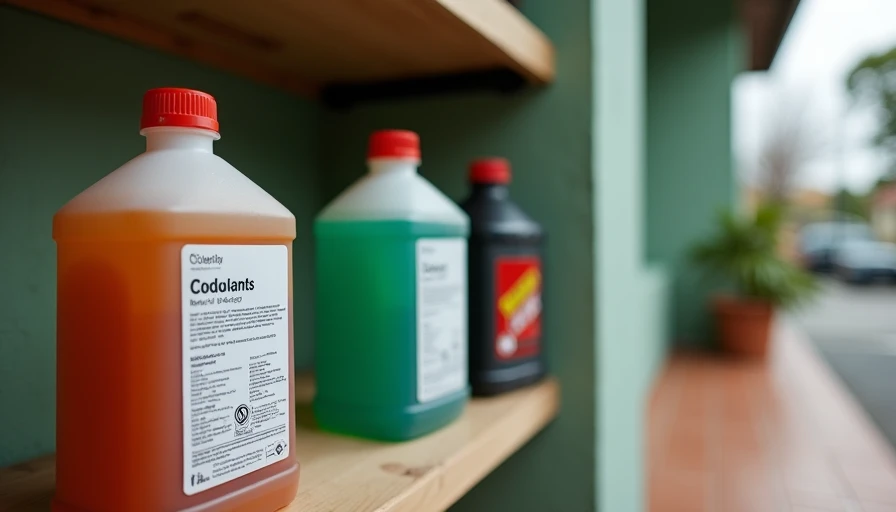
The Two Main Coolant Types: IAT vs. OAT
Most automotive coolants fall into one of three families: Inorganic Additive Technology (IAT), Organic Acid Technology (OAT), and Hybrid OAT (HOAT).
- **IAT (often green):** The traditional formula used in older vehicles (pre-1990s). Contains silicates and phosphates. Requires more frequent changes, typically every 2 years or 30,000 miles.
- **OAT (often orange, yellow, pink, or red):** Developed for longer life—up to 5 years or 150,000 miles. Uses organic acids like sebacic acid and 2-EHA. Common in GM, Toyota, and Honda vehicles.
- **HOAT (often purple, blue, or turquoise):** A blend of IAT and OAT chemistries. Used by Chrysler, Ford, and European manufacturers. Offers extended life with silicate stabilization.
When you ask "can coolants be mixed," the first thing to determine is which family the coolant already in the system belongs to.
What Happens When You Mix Different Coolants
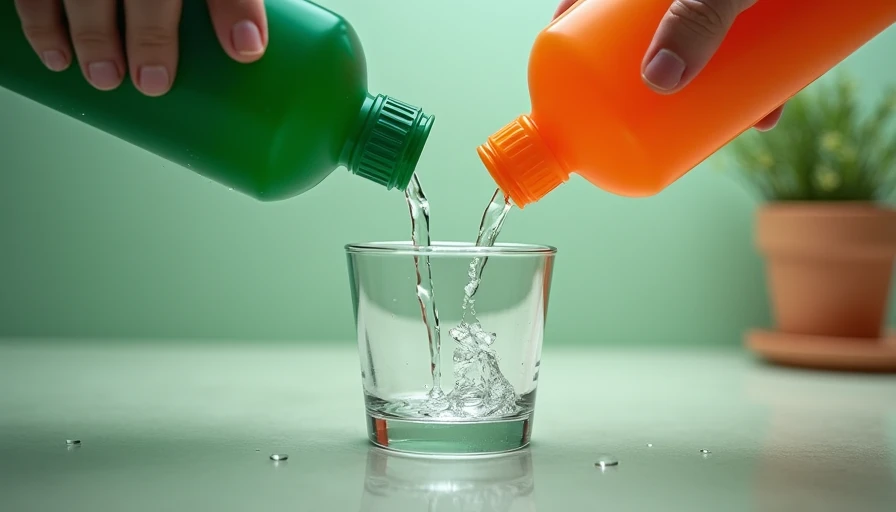
Mixing IAT and OAT coolants is the most common mistake. The silicates in IAT can react with the organic acids in OAT to form a gel. In mild cases, you'll see a cloudy appearance. In severe cases, the gel can plug the radiator tubes or heater core within hours of circulation.
Mixing OAT with HOAT can also cause problems. Some HOAT formulations rely on a specific silicate level for gasket protection. Adding a fully OAT coolant can dilute that protection, leading to corrosion around the cylinder head gasket over time.
Even mixing two OAT coolants from different manufacturers can be risky if they use different organic acid blends. For instance, a 2-EHA-based OAT (common in Dex-Cool) mixed with a sebacate-based OAT can reduce the solubility of inhibitors, leading to drop-out.
Reference Box: ASTM D3306 and D4985 cover coolant specifications, but they do not guarantee compatibility between different brands or chemistries. Always consult the vehicle manufacturer's recommendation.
Can You Mix Same-Color Coolants?
Color is not a reliable guide. Many coolants are dyed to a specific color by an automaker's specification—GM Dex-Cool is orange, but Honda OAT is also orange, and they are not compatible. Similarly, there are green HOATs and green IATs. The only safe way to answer "can coolants be mixed" is to read the bottle's label or the coolant specification listed in the owner's manual.
If the label states "Universal" or "Compatible with all colors," it generally means the coolant is formulated to be miscible with any conventional IAT, OAT, or HOAT. These universal coolants use a silicon-enhanced additive package that buffers the reaction. However, even universal coolants have limitations—they may reduce the long-life properties of an OAT system by half.
The One-Line Answer for Your Customer
If a customer asks you at the parts counter, "can coolants be mixed?" your one-line answer should be: "Only if they are the same chemistry family as specified by the vehicle manufacturer. When in doubt, use a universal coolant that explicitly states compatibility with all types." Then explain that topping off with distilled water is safer than guessing, provided the climate allows.
What to Do If You Already Mixed Coolants
If a coolant mix was accidental and you haven't driven the vehicle long:
- **Drain the system** while the engine is cold.
- **Flush with distilled water** or a commercial cooling system flush product.
- **Refill with the correct coolant** as per the vehicle's service manual.
If the mixture has been in the system for thousands of miles, inspect for gel or sludge. If you find any, a full system flush and heater core backflush may be needed. Corrosion damage from long-term mixing is not reversible, so the sooner you act, the better.
Conclusion
Knowing the answer to "can coolants be mixed" comes down to understanding the chemistry behind the additive package. For quick reference, keep a bottle of universal coolant on the shelf—it's the safest fallback when the exact spec isn't available. But for long-term reliability, nothing beats using the OEM-recommended fluid.
Reference Box: The industry's best practice is to never mix coolant chemistries. Drain, flush, and refill with the correct type. Your engine will thank you.




No comments yet — be the first to share a thought.