After reading this guide, you will be able to compare oil change near me results, identify the correct engine oil specification, ask useful questions at the counter, and recognize service that protects an engine rather than simply draining and refilling it. I have spent years working with lubricant formulations and teaching technicians, and the same rule applies in every bay: here's the chemistry, here's the spec, here's what to do with it.
Start with the vehicle, not the advertisement
When a driver searches for oil change near me, the closest listing is not automatically the best choice. Begin with the vehicle owner's manual or the manufacturer's maintenance portal. Record the required viscosity, such as SAE 0W-20 or SAE 5W-30, the oil performance category, the approximate fill volume, and the recommended service interval.
A 2022 Honda Civic, for example, may call for a different viscosity and specification than a 2015 Ford F-150, even if both vehicles operate in the same neighborhood. Turbocharged engines, diesel engines, hybrid systems, and vehicles with exhaust aftertreatment can be especially sensitive to the wrong oil. The shop should ask for the year, make, model, engine, mileage, and driving conditions before quoting a service.
Reference Box: SAE viscosity describes how oil flows at specified temperatures. It does not, by itself, prove that an oil meets the vehicle manufacturer's performance requirements.
A quick-lube outlet, dealership, independent repair shop, and mobile technician can all perform a sound service. The important comparison is the process, not the sign above the door. Ask whether the quote includes the oil filter, drain-plug washer when required, labor, and disposal fee. A low advertised price that excludes the filter or charges separately for full-synthetic oil is not a meaningful comparison.
What a proper oil service should include
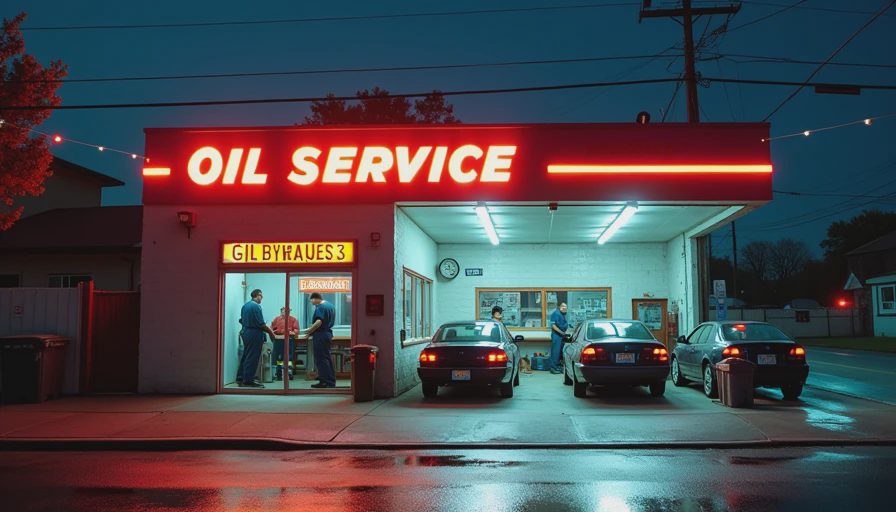
A competent oil change near me appointment should begin with vehicle identification and a confirmation of the oil grade. The technician should inspect for obvious leaks, check the oil level before draining when practical, install the correct filter, and verify the final level after the engine has been run briefly and allowed to settle. The drain plug should be tightened to the manufacturer's specification rather than guessed by feel.
The filter matters because it controls particles circulating through bearings, camshaft journals, timing components, and hydraulic valve-lift systems. Filter quality is not determined only by the color of the canister. Media construction, anti-drainback valve design, bypass-valve calibration, gasket material, and capacity all affect performance. A filter that fits the threads may still be the wrong filter for the application.
The service record should show the date, mileage, oil viscosity, brand or product line, and filter part number when available. That information helps with warranty documentation and prevents confusion at the next visit. It also gives a fleet manager useful data for identifying vehicles that consume oil or need shorter intervals.
Synthetic oil, conventional oil, and the real decision
Most late-model passenger vehicles specify a synthetic or synthetic-blend product, particularly where fuel economy, low-temperature pumping, turbocharger heat, or extended drain intervals are concerns. Full synthetic oil generally uses more highly engineered base stocks and additive systems, but the label alone is not enough. The product must also meet the required API category and any stated OEM approval.
Reference Box: API categories describe performance requirements, while SAE grades describe viscosity. An oil can have the correct viscosity and still lack the required performance category.
When comparing oil change near me pricing, separate the oil type from the marketing language. A premium package that costs $85 to $130 may include synthetic oil, a quality filter, inspection, and tire-pressure checks. A basic service might cost $35 to $65, but the lower price can reflect conventional or blended oil, a smaller fill limit, or additional charges for larger engines. Prices vary by region and vehicle, so compare the written inclusions.
Do not assume a thicker oil protects an older engine better. Increased viscosity can reduce consumption in some worn engines, but it can also slow cold flow or interfere with systems designed around a specific viscosity. If a change is appropriate, it should be based on the manual, measured consumption, operating temperature, and a technician's diagnosis.

Interval decisions for real driving conditions
The maintenance reminder in a vehicle is useful, but it is not a substitute for understanding operating conditions. Frequent short trips, extended idling, towing, dusty roads, very cold starts, and repeated stop-and-go driving can increase fuel dilution, moisture accumulation, oxidation, or contaminant loading. A vehicle used for delivery work may need a different interval from the same vehicle driven steadily on a highway.
Many modern vehicles monitor operating data and provide a mileage or time recommendation. Follow the more demanding requirement when the manual lists separate normal and severe-service schedules. If the vehicle has no reliable history, an oil change near me visit is a practical time to establish a baseline: document the current mileage, inspect the drained oil for unusual fuel odor or coolant contamination, and recheck the level after several hundred miles.
Oil color alone is a poor replacement criterion. Detergent and dispersant additives can suspend soot and oxidation products, making used oil appear dark while it is still performing normally. Conversely, oil that looks clean can be diluted with fuel or contaminated with coolant. A laboratory used-oil analysis is the better tool for fleet decisions or unusual wear concerns.
Questions to ask before approving the work
When you call about oil change near me service, ask five practical questions. Which viscosity and API category will be installed? Which filter is included? Is the stated price for the actual engine capacity? Will the technician inspect for leaks and confirm the final level? How will the service be documented?
A good answer should be specific rather than vague. The adviser should be able to name the SAE grade and explain any package limits, such as an extra charge for an engine requiring more than five quarts. If a shop suggests a different viscosity, ask what manual specification supports that recommendation.
Also ask whether the shop resets the maintenance monitor and returns the old filter if you want to inspect it. A reset without a written record creates a maintenance gap. For a business fleet, request consolidated invoices listing vehicle identification, mileage, product specification, and technician notes. Those details are more valuable than a generic stamp.
Used oil safety and responsible disposal
Used engine oil contains degraded additives, combustion byproducts, and metal particles. It should not be poured onto soil, into a storm drain, or into household plumbing. A shop performing an oil change near me service should collect the fluid in a suitable waste-oil container and use an authorized recycling or disposal channel.
For do-it-yourself work, drain the oil into a clean, leak-resistant pan, transfer it to a sealed container, and keep it away from children, pets, ignition sources, and open drains. Do not mix used oil with gasoline, solvent, brake cleaner, coolant, or water; contamination can make recycling more difficult. Many auto-parts retailers, municipal programs, and service centers accept limited quantities of used motor oil and filters, but confirm the site's rules before arriving.
Wear gloves and eye protection, support the vehicle with properly rated jack stands, and never rely on a jack alone. Hot oil can cause burns, while a loose drain plug can create a rapid loss of lubrication after the vehicle leaves the bay.
Choosing the shop and booking confidently
The best oil change near me choice is the provider that gives a clear specification, transparent price, competent installation, and useful documentation. Read recent reviews for evidence about wait times, incorrect fills, leaks, or pressure to buy unnecessary services rather than relying only on a star rating. A clean bay and organized intake process are encouraging, but the paperwork and technical answers matter more.
Before booking, have the VIN or exact engine information available, especially for a vehicle with multiple engine options. Confirm whether an appointment is required and whether the quoted time includes inspection and record updates. A routine service often takes 30 to 60 minutes, though a busy shop can take longer.
If your customer asks, the one-line answer is simple: choose the nearest qualified shop that can prove it will install the correct specification, filter, quantity, and interval. Distance saves little if a wrong oil grade, underfilled crankcase, or loose filter creates a repair bill. Compare the complete service, then schedule it before the reminder becomes an engine problem.




No comments yet — be the first to share a thought.