This diesel repair guide will help you look up what to check when an engine is hard to start, smokes, loses coolant, or shows an unexpected oil-level change. The short answer: record the symptoms and fault codes, check fluid condition and service history, and test the affected system before replacing parts. A fluid problem can be a useful clue, but it is rarely a complete diagnosis by itself.
Start with the symptom, not the part
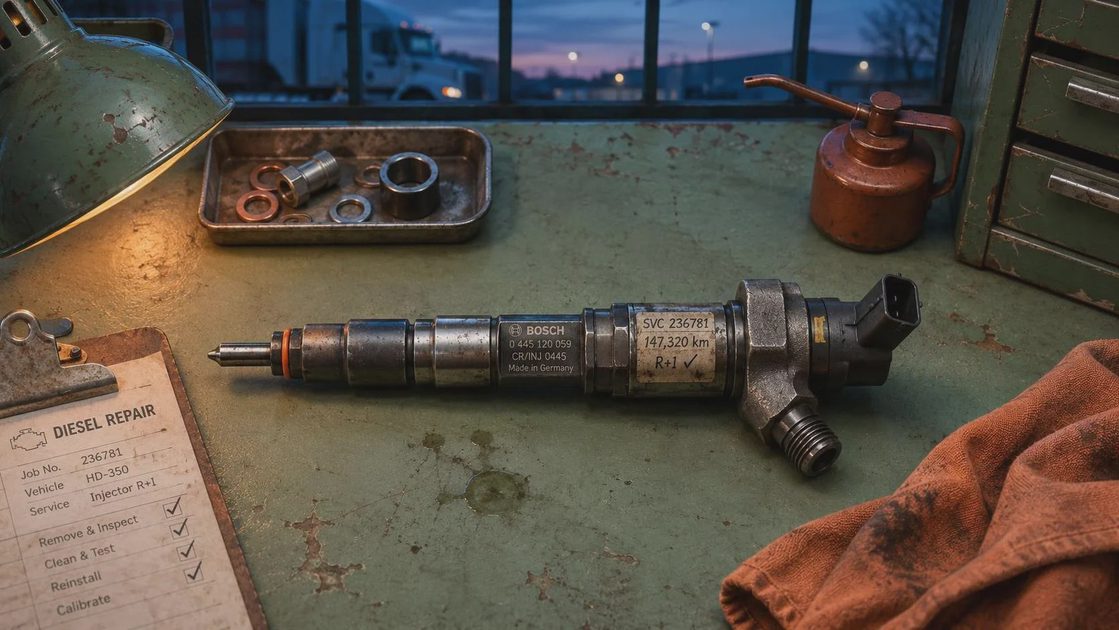
A useful diesel repair work order records when the trouble occurs: cold start, hot restart, under load, during regeneration, or after a fuel or filter change. Note the engine hours or mileage, recent service, warning lights, and any stored or pending fault codes. A code identifies a condition the control system detected; it does not automatically condemn the component named in its description.
Check the basics before opening a fuel system. Battery condition, cranking speed, air intake restrictions, fuel supply, and the correct starting procedure all matter. On electronically controlled engines, use a suitable scan tool to compare commanded and actual values where the manufacturer provides a diagnostic procedure. Follow that procedure rather than guessing at an acceptable pressure or sensor reading.
For a hard-start complaint, distinguish between an engine that cranks slowly and one that cranks normally but will not fire. Those are different diagnostic paths. Cold weather can expose weak batteries, starting-aid faults, or fuel flow problems; it does not prove that any one of them is responsible.
Reference Box: Record the exact engine model and serial number before looking up procedures. Trucks and equipment with similar badges can have different fuel systems, emissions equipment, and fluid requirements.
Read smoke and fluid changes as clues
Smoke color can help direct diesel repair, but lighting, temperature, and engine design make color an imperfect test. Persistent black smoke under load can point toward excess fuel relative to available air. Inspect for intake restrictions, charge-air leaks, and relevant fuel-system faults using the manufacturer's diagnostic steps.
Blue-appearing smoke can indicate oil burning. White smoke or vapor can have several causes, including unburned fuel or coolant entering the combustion process. A brief cloud at a cold start is not equivalent to persistent smoke from a warm engine. Document when it appears and pair the observation with oil consumption, coolant level, fault codes, and appropriate tests.
A rising crankcase oil level deserves attention. Fuel dilution is one possible cause, including on engines where fuel can enter the oil during operating or regeneration events. An oil analysis may help identify dilution, but the result does not locate the leak or explain the cause on its own. Excess dilution can reduce viscosity and compromise lubrication; investigate the source and follow the engine maker's guidance on oil and filter replacement.
A falling coolant level calls for a pressure test and inspection for external leaks before assuming an internal failure. Do not remove a cooling-system cap while the system is hot or pressurized. Milky oil can suggest coolant contamination, but condensation and other conditions can complicate appearance, so confirm the cause rather than diagnosing from color alone.
Select engine oil by specification
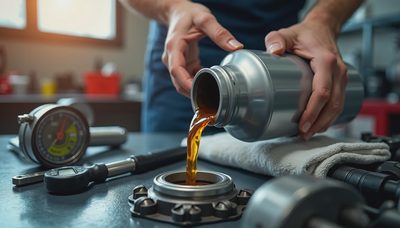
Fluid selection belongs in every diesel repair discussion because viscosity alone does not tell you whether an oil is suitable. Start with the engine manufacturer's required oil specification, then select an allowed SAE viscosity grade for the expected temperature range. Some engines also require a specific manufacturer approval. Check the container and product data sheet, not just the parts catalog description.
Reference Box: SAE J300 defines engine-oil viscosity grades. API CK-4 and API FA-4 are distinct diesel engine oil categories; do not substitute one for the other unless the engine manufacturer permits it.
The distinction matters particularly on engines with exhaust aftertreatment. Oil formulation can affect the accumulation of noncombustible ash in a diesel particulate filter, but a low-ash description alone does not establish that an oil meets the engine's requirements. On the spec sheet, the number that decides it is the applicable OEM approval or API category specified for that engine.

If service records are incomplete, confirm the oil level and inspect for obvious contamination, then establish a documented oil and filter interval based on the manufacturer's schedule and actual duty cycle. Extended idling, short trips, and heavy loads may put a vehicle in a severe-service category. Oil analysis can support a maintenance program, but it does not override a warranty requirement or compensate for using the wrong oil.
Fuel, coolant, and DEF: prevent a second problem
Diesel repair can become more expensive when the wrong fluid enters the wrong tank. Diesel exhaust fluid, or DEF, belongs in its designated DEF tank, never in the diesel fuel tank. If either tank receives the wrong fluid, do not start or operate the engine. Secure the vehicle and follow the manufacturer's contamination and cleaning procedure; circulating the fluid can enlarge the repair.
Reference Box: ISO 22241 specifies requirements for DEF, an aqueous urea solution used in selective catalytic reduction systems. Keep it in clean, dedicated equipment and use a sealed container appropriate for DEF handling.
For fuel quality, ask where and when the vehicle was fueled and whether other equipment supplied from the same tank has symptoms. Water or debris in a filter can justify further investigation, but changing a filter without addressing contamination upstream may only provide temporary relief. Dispose of drained fuel and contaminated filters according to local requirements and the facility's waste procedures.
For coolant, use the engine maker's specified chemistry and concentration. Color is not a reliable compatibility test. Where dilution is required, follow the product and engine instructions for water quality; unsuitable water can introduce minerals that contribute to deposits. Never mix coolant types merely because their colors look alike.
Know when to stop and bring in a specialist
Modern common-rail systems operate at extremely high pressures. Do not loosen a fuel line to check for flow while the engine is running, and do not use a hand to search for a leak. High-pressure injection injuries require immediate emergency medical attention, even when the wound looks small. Shut the engine down and use the manufacturer's depressurization procedure before service.
Wear suitable eye protection and chemical-resistant gloves when handling fluids, and work with adequate ventilation. Collect used oil, coolant, fuel, and DEF separately in labeled, compatible containers. Do not pour them into drains or onto the ground; use an authorized collection or disposal service and follow state and local rules.
A qualified diesel technician is the right next step when diagnosis requires high-pressure fuel-system work, internal engine testing, or emissions-system procedures beyond your equipment and training. Give the shop the symptom timeline, codes, fluid observations, and work already performed. For diesel repair, that record is often more valuable than a bag of parts that might have fixed it.
No comments yet — be the first to share a thought.