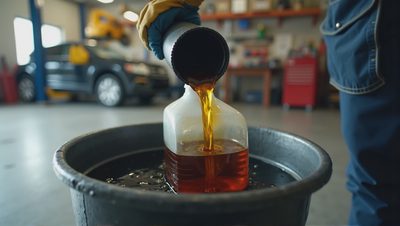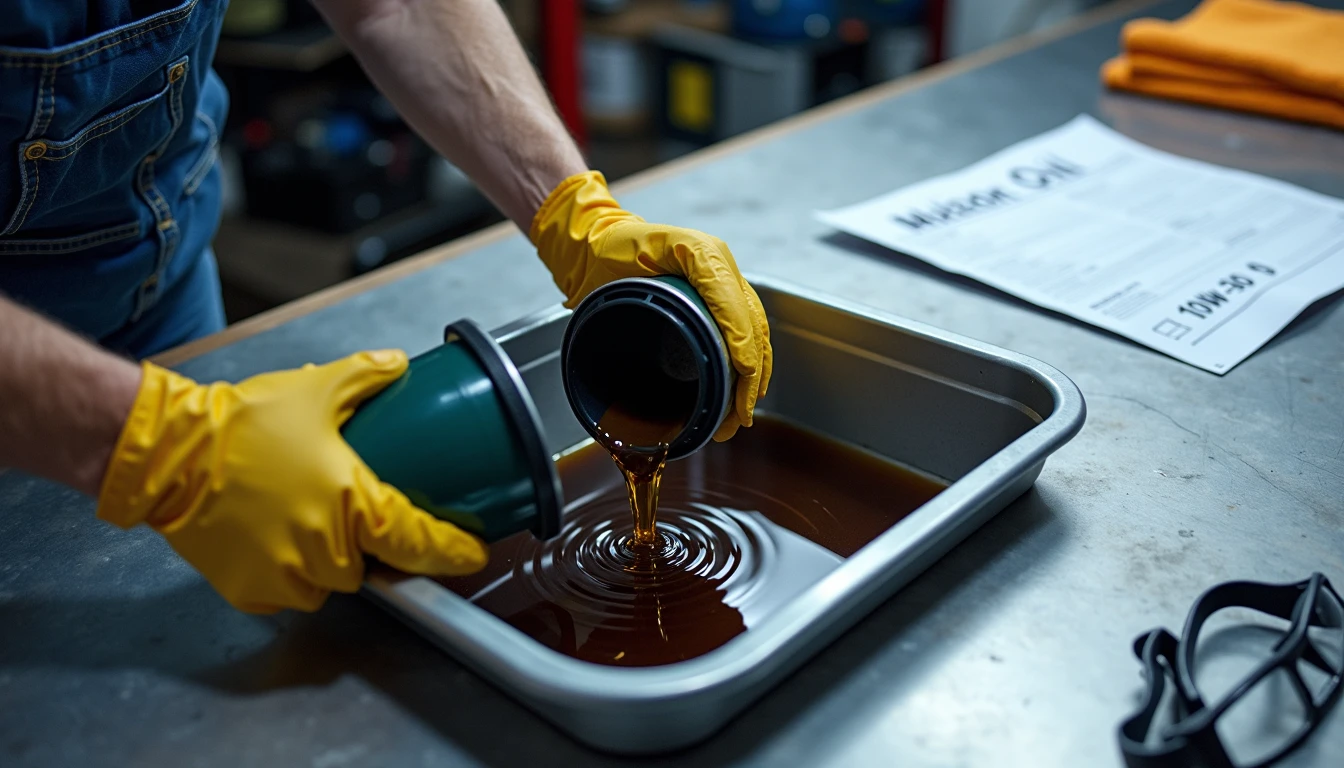
Handle used motor oil wrong and you may raise cancer risk—here’s how to work clean and stay safe
Why This Matters (cost/safety/longevity payoff)
Most DIY wrenching injuries aren’t dramatic—no explosions, no movie stuff. It’s the slow, repetitive exposure that gets people: wiping hands on oily rags, eating with dirty fingers, wearing oil-soaked clothes, or breathing fumes in a closed garage. The big takeaway from the Safety Data Sheet (SDS) information discussed in the source is simple: clean motor oil is “minimally toxic,” but used motor oil can become far more hazardous—including carcinogenic (cancer-causing) concerns in animal tests.
So the payoff here isn’t just “be careful.” It’s: use a few shop habits and basic protective steps so you can keep wrenching for decades without treating your garage like a chemical exposure experiment.
What You Need to Know (specs, types, intervals)
The source article pulls toxicity details from SDS documents for these specific engine oils:
- Mobil 1 synthetic 10W-30
- Pennzoil conventional 10W-30
10W-30 is an oil viscosity grade (how thick the oil is at a given temperature). The SDS language in the source notes:
Clean motor oil (new oil)
Both oils’ SDS information describes typical exposure routes—inhalation, ingestion, and skin contact—as “Minimally Toxic.” Practical notes mentioned:
- Skin protection: Mobil 1’s SDS states: *“No skin protection is ordinarily required under normal conditions of use… precautions should be taken to avoid skin contact.”*
- Skin issues from repeated contact: Pennzoil’s SDS warns that prolonged/repeated contact without cleaning can clog pores and cause “oil acne/folliculitis.”
- If swallowed: Pennzoil’s SDS mentions nausea, vomiting, and diarrhea could occur if you drink too much.
- Eye contact: Both sources mention mild, short-lasting eye discomfort if oil gets in your eyes.
Used motor oil (drained from an engine)
This is where the risk profile changes. The Mobil 1 SDS excerpt in the source warns that oils used in gasoline engines may become hazardous and may be:
- Carcinogenic in animal tests
- Mutagenic in vitro (caused mutations in lab testing)
- A possible allergen and photoallergen
- Potentially contaminated with polycyclic aromatic compounds (PAC) from gasoline combustion byproducts and thermal breakdown
Pennzoil’s SDS language (as quoted in the source) adds that:
- Used oils may contain harmful impurities that accumulate during use
- All used oil should be handled with caution and skin contact avoided as far as possible
- Continuous contact with used engine oils has caused skin cancer in animal tests
Bottom line: new oil is not the same exposure risk as used oil. Treat used oil like the hazardous material it can become.
How It Works (practical, followable shop routine)
You don’t need a hazmat suit to change oil at home, but you do need a system. Here’s a simple routine that aligns with what the SDS language is telling you.
Step 1: Treat “used” as the problem
When you open a new bottle of Mobil 1 synthetic 10W-30 or Pennzoil conventional 10W-30, the SDS summaries in the source suggest it’s relatively low-risk with normal use. Once it comes out of a running gasoline engine, it may contain combustion contaminants (including PAC). That’s why your habits need to change during drains, filter removal, and cleanup.
Step 2: Keep it off your skin (especially repeatedly)
Repeated skin contact is the big, common DIY pattern.
- Don’t let used oil sit on your hands “until you finish the job.”
- If you get used oil on your skin, clean it off promptly rather than wiping it around.
Pro Tip: Keep a dedicated hand-cleaning plan before you start—soap, water, and clean towels ready—so you don’t “just deal with it later” and end up eating lunch with used oil still on your fingers.
Step 3: Keep it out of your eyes
The source notes clean oil can cause mild, short-lasting eye discomfort if it gets past safety glasses. Used oil is not something you want in your eyes at all.
- Position the drain pan so splash is minimized.
- When removing filters, expect the last bit of oil to run down unexpectedly.
Pro Tip: When you crack an oil filter loose, pause and let it drain before spinning it off fully. That reduces the “oil waterfall” down your arm.
Step 4: Don’t ingest it (yes, this happens indirectly)
Nobody drinks motor oil on purpose, but ingestion happens by contamination:
- Eating with dirty hands
- Touching food, drinks, or cigarettes with oil on your fingers
- Using shop rags at the dinner table (it happens)
The SDS notes that swallowing too much can cause nausea, vomiting, and diarrhea. The bigger issue is avoiding any casual contamination—especially with used oil.
Pro Tip: Create a “clean zone” in your garage: one shelf or bench area where no oily parts or rags are allowed. Keep your water bottle and snacks there only.
Step 5: Don’t wear it
The source jokes about wearing oil-dyed clothing, but it highlights a real risk: extended skin contact. Used oil on clothing keeps the contaminant against your skin.
- Change out of oil-soaked clothes promptly.
- Don’t keep oily rags in your pockets.
Step 6: Use SDS sheets like a pro (fast method)
The most useful workflow in the source is the research method itself:
1. Search the product name (example: “Mobil 1 10W-30”)
2. Add “Safety Data Sheet” (or “SDS”)
3. Read the sections about hazards, first aid, handling, and disposal
This takes five minutes and gives you real, manufacturer-backed guidance for the exact fluid you’re using.
Common Mistakes (myths, pitfalls, warnings)
Mistake 1: “Oil is oil—new and used are basically the same.”
Not according to the SDS excerpts in the source. Used oil can pick up harmful impurities from engine operation and may show carcinogenic concerns in animal tests.
Mistake 2: “If it’s ‘minimally toxic,’ I don’t need to worry.”
“Minimally toxic” doesn’t mean “good for you,” and it definitely doesn’t mean “rub it into your skin daily.” Pennzoil’s SDS warning about oil acne/folliculitis is exactly what DIYers get from repeated exposure.
Mistake 3: “I’ll just wipe my hands on a rag.”
A rag spreads contamination and keeps it around. It also increases the chance you’ll transfer oil to your eyes, phone, steering wheel, or food.
Mistake 4: “Used oil on clothes isn’t a big deal.”
It’s a big deal because it extends contact time. The SDS language stresses caution and avoiding skin contact with used oil as much as possible.
Bottom Line (summary, recommended action)
If you do your own oil changes, the smartest safety upgrade is treating used motor oil as the real hazard. SDS information cited for Mobil 1 synthetic 10W-30 and Pennzoil conventional 10W-30 says clean oil is “minimally toxic,” but used oil may contain harmful impurities and has shown carcinogenic effects in animal tests. Keep used oil off your skin, out of your eyes, off your clothes, and away from anything you eat or drink—and use the SDS for your exact products as your rulebook.