If you are looking up **5w30 vs 10w30 what's the difference**, this post will give you the short answer, the chemistry behind it, and the practical service decision. You will be able to look up what the two numbers mean, how they behave in cold and hot conditions, and when a technician should stick with the OEM recommendation. Here's the chemistry, here's the spec, here's what to do with it.
What the numbers actually mean
The first thing to know is that both 5W-30 and 10W-30 are SAE multigrade engine oils defined by **SAE J300**. The **"W" means winter**, not weight. The number before the W describes low-temperature cranking and pumping performance. The number after it describes viscosity range at operating temperature, measured at 100 degrees C, along with high-temperature, high-shear performance requirements in the grade.
**Reference Box:** If your customer asks, the one-line answer is: 5W-30 flows better in cold starts, while both 5W-30 and 10W-30 are in the same 30-grade range once the engine is hot.
That is the core of **5w30 vs 10w30 what's the difference**. A 5W oil has to meet colder cranking and pumping limits than a 10W oil. A 30-grade hot viscosity target, however, is shared by both. On the spec sheet, the number that decides cold-start advantage is the first one.
In plain shop terms, 5W-30 gets to bearings, cam surfaces, and timing components faster during cold starts. That matters because a large share of engine wear happens before full oil circulation and stable hydrodynamic film are established.

Cold-start behavior is where the real difference shows up
Most of the practical debate around **5w30 vs 10w30 what's the difference** comes down to startup temperature. In colder weather, 5W-30 will crank easier and pump sooner than 10W-30. That means less strain on the starter, quicker pressure build, and better flow through narrow oil passages and variable valve timing systems.
A lot of older advice says 10W-30 is "thicker and better." That is not a good universal rule. At winter startup temperatures, thicker is usually worse if the engine was designed for faster oil delivery. Modern engines often use tight clearances, chain tensioners, hydraulic lash adjusters, and oil-controlled actuators that benefit from the lower cold viscosity of 5W-30.
**Reference Box:** Under SAE J300, 5W and 10W are different low-temperature performance categories, not different hot-engine grades.
If you work in Ohio, Michigan, Pennsylvania, or anywhere that sees freezing mornings, the cold-start advantage of 5W-30 is easy to feel in real service. In warm southern climates, the gap matters less on a July afternoon, but it still matters on overnight cold starts and first ignition wear.
At operating temperature, they are more alike than different
Once oil is fully warmed up, 5W-30 and 10W-30 are both in the **SAE 30** viscosity band. That means their kinematic viscosity at 100 degrees C falls within the same general range. So if someone asks whether 10W-30 is automatically much heavier at operating temperature, the accurate answer is no.
There can be small formulation differences between products, base oils, and additive packages, but grade alone does not tell you that 10W-30 gives dramatically more protection when hot. API service category and OEM approval matter too. For gasoline engines, you will often see oils meeting current **API SP** requirements, which include protection related to oxidation control, deposit handling, timing chain wear, and low-speed pre-ignition protection for certain turbocharged direct-injection engines.
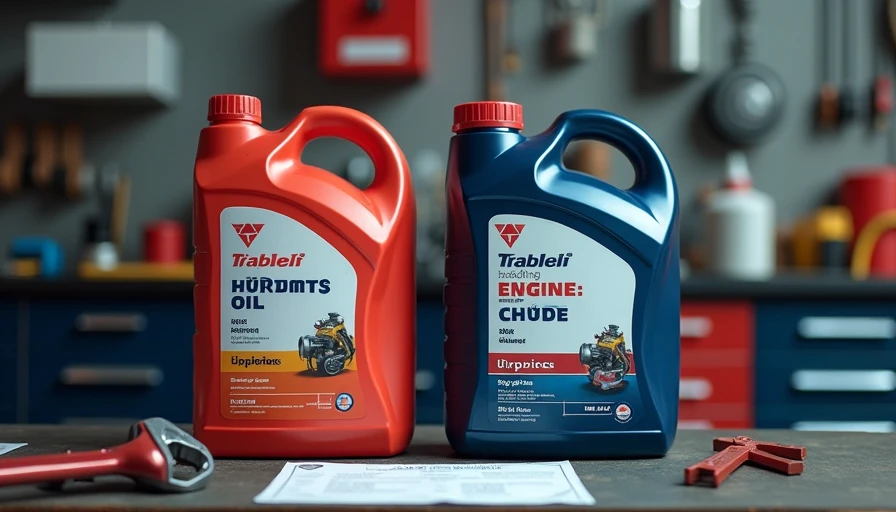
Here is where chemistry helps the discussion. A multigrade oil uses base oil selection and viscosity index improvers so it behaves acceptably across a broader temperature span. The old assumption that 10W-30 is inherently the "stronger" oil comes from an era when some engines and some formulations behaved differently than current products. Today, the correct call is still the spec on the oil cap or service information.
Which one should you use in a real vehicle
For most drivers and techs, the answer is simple: use the viscosity grade specified by the vehicle manufacturer. If the manual calls for 5W-30, use 5W-30 unless the manufacturer provides an approved temperature chart showing acceptable alternatives. If it calls for 10W-30, use 10W-30 or an approved substitute listed in the service literature.
That is the practical answer to **5w30 vs 10w30 what's the difference**. The difference matters most when the engine is cold, and the manufacturer already accounted for bearing clearances, oil pump design, emissions hardware, fuel economy targets, and valvetrain response.
Some older engines do list both grades depending on ambient temperature. In that case, a fleet lead or DIY owner can choose based on season and starting conditions. For example, 5W-30 is commonly the better all-season choice in mixed climates, while 10W-30 might appear as an acceptable warm-weather option in older applications.
If your customer asks, the one-line answer is: do not treat 10W-30 as an upgrade over 5W-30 unless the OEM chart says it is acceptable.
Common mistakes, safety, and disposal points
The most common mistake is choosing oil by habit instead of specification. Another is focusing only on viscosity and ignoring approvals such as API SP, ILSAC ratings, or OEM requirements. On the spec sheet, the number that decides it is not just the grade; it is the full approval set.
Do not mix assumptions from one engine family to another. A high-mileage pickup from the early 2000s and a late-model turbocharged four-cylinder are not asking the same thing from the oil, even if both happen to mention a 30-grade.
From a handling standpoint, store engine oil in sealed, labeled containers and keep it away from ignition sources and food-prep areas. Used oil should be collected in a clean drain pan and transferred to a proper container for recycling. In the U.S., used motor oil is commonly recyclable through auto parts stores, service facilities, or local collection programs. Do not dump oil on the ground, into drains, or into household trash.
Bottom line
So, **5w30 vs 10w30 what's the difference**? The short version is this: 5W-30 performs better in cold starts, and 10W-30 requires less low-temperature fluidity. When hot, both sit in the SAE 30 range. That makes the first number the key service difference, while the second number tells you they are similar once the engine reaches operating temperature.
**Reference Box:** Here's the chemistry, here's the spec, here's what to do with it: follow SAE J300 grade guidance, confirm the API category and OEM approval, and default to the manufacturer recommendation.
If you are choosing for your own vehicle, the safest rule is simple: use what the manual specifies. If the manufacturer allows both, pick based on expected startup temperature. That answer is accurate, defensible at the parts counter, and consistent with how modern engine oils are classified.