If you need a fast reference for car lubrication, this post will help you sort out what goes where, which spec matters, and where people most often guess wrong. I am aiming this at the working tech, the parts counter person, and the serious DIY owner who wants the two-minute answer without the sales pitch. Here's the chemistry, here's the spec, here's what to do with it. By the end, you should be able to tell engine oil from grease service, match viscosity to the manual, and avoid the kind of mix-up that creates noise, wear, or a comeback.
Reference Box:
SAE J300 defines engine oil viscosity grades. API SP and ILSAC GF-6 are current light-duty gasoline engine oil performance specs. NLGI 2 is the common consistency for chassis and wheel-bearing grease. ASTM D445 measures kinematic viscosity in lab work.
What car lubrication actually covers
When I talk about car lubrication, I am talking about any fluid or semi-fluid used to separate moving parts, reduce friction, and carry heat or contaminants away from the contact zone. In practice, that usually means engine oil first, then grease at serviceable chassis points, and sometimes specialty fluids in bearings, electric accessory drives, or older driveline parts. The term sounds broad because it is broad. A driver hears the word and thinks only of an oil change, but the service bay sees a longer list.
The useful habit is to ask three questions: what part is moving, what kind of load is it under, and can the lubricant be replenished. A sealed bearing is a different job from a grease zerk on a ball joint. A modern engine with tight oil passages is a different job from a vintage chassis that still expects periodic grease. Once you sort the component, the rest follows from the manual and the spec sheet.
Reference Box:
On the spec sheet, the number that decides it is not the color of the fluid. It is the viscosity grade, the performance category, and whether the OEM calls for a special approval.
Oil, grease, and where each one belongs
For car lubrication, the split between oil and grease matters more than most people think. Oil flows, cools, and reaches narrow passages. That is why engine oil has to circulate through galleries, filter media, and bearings that are often only a few thousandths of an inch apart. Grease is oil held in a thickener, so it stays put where a film has to remain in place on joints, splines, or bearings that are not fed by a pump. If you put grease where the design expects free-flowing oil, you block the path. If you use thin oil where the part expects grease, it runs away and leaves the metal exposed.
Most passenger cars today have fewer grease points than older trucks, but the points that remain still matter. Serviceable ball joints, tie-rod ends, U-joints, and some driveshaft slip joints often want an NLGI 2 chassis grease, commonly lithium complex or a comparable synthetic thickener system. Wheel bearings on older or serviceable hubs may use a bearing grease with the right temperature and water resistance. The safe move is simple: clean the fitting, use the correct coupler, and purge until fresh grease appears without overpacking the cavity.

Reading the service specs without guessing
The spec sheet is where car lubrication stops being generic and starts being exact. For engine oil, SAE J300 tells you whether you need 0W-20, 5W-30, or another grade that matches cold cranking and operating viscosity. The viscosity number is not a quality score; it is a flow behavior target. API SP is a performance category for modern gasoline engines, and many late-model vehicles also want an ILSAC GF-6 oil for fuel economy and timing-chain protection. If the owner manual or oil-fill cap calls for an OEM approval, that approval wins over a shelf habit every time.
Grease has its own logic. NLGI 2 is a consistency grade, not a quality grade, so two NLGI 2 greases can still behave differently under heat, washout, or shear. That is why I like to look at the service environment next. A water-exposed suspension part needs different resistance than a dry steering joint. If the greases are not known to be compatible, do not casually top one off with another. Purge and refill when the application allows it, or stay with one product family in the first place.
Reference Box:
If your customer asks, the one-line answer is this: match the OEM viscosity and approval for the engine, then match the grease consistency and performance to the exact joint or bearing.
What a good service interval looks like in the real world
Good car lubrication is only half the job; the other half is doing it on time. On a newer vehicle, the oil interval may be set by the driver information center or the owner manual, and those numbers can be longer than the old 3,000-mile habit. In mixed city use, towing, short trips, or dusty service, a severe-duty schedule still makes sense. For a fleet truck or a work van, I care less about the marketing sticker and more about duty cycle, idle time, and oil analysis history if the program has it.
Grease service is easier to overlook because the vehicle still drives fine until the joint starts complaining. On older equipment, I like to see serviceable chassis points hit during routine inspection or tire work, especially if the vehicle sees rain, road salt, or trailer duty. The cost is usually modest compared with a repair. A retail oil service can run roughly $50 to $120 depending on capacity and oil choice, while a grease service may be much cheaper but still save a joint, a bearing, or a comeback. In shop terms, that is inexpensive insurance.
Safety, storage, and disposal
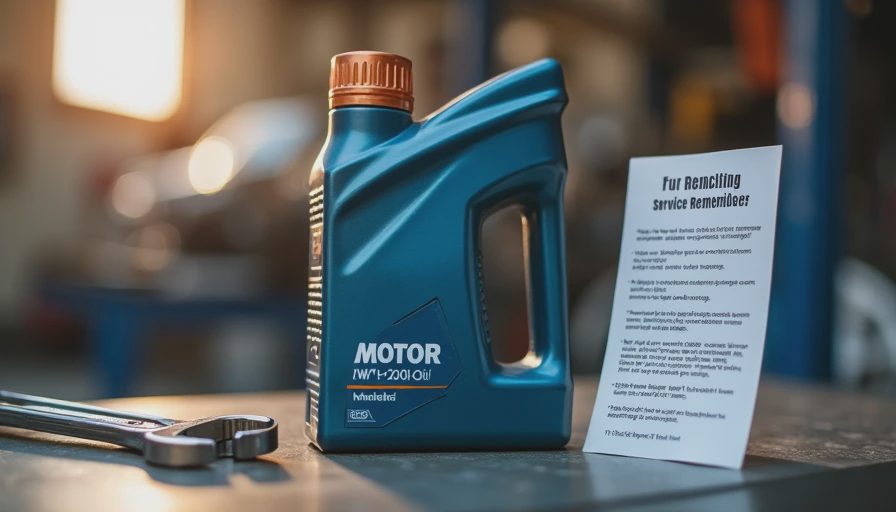
Any discussion of car lubrication should include handling and disposal, because used oil and grease are not shop trash. Wear nitrile gloves when practical, keep absorbent material nearby, and clean spills before they migrate to floor drains or brake parts. Used engine oil, oily filters, and grease tubes should go into approved containers and be sent to a recycler or collection site that accepts automotive fluids. Do not pour them into a storm drain, onto the ground, or into a burn pile. That is both a safety issue and a disposal problem.
Storage matters too. Keep new oil and grease sealed, labeled, and out of direct heat. A pail of grease left open in a humid bay collects dirt and moisture fast, and that contamination will show up at the joint. If you are running a parts counter or a small fleet shop, a simple labeling system by viscosity grade and service category saves time and avoids mix-ups. For customers who want the short answer, tell them this: if the container is dirty, unlabeled, or past its serviceable state, do not use it on a modern vehicle.
The practical takeaway is straightforward. Car lubrication works best when the component, the spec, and the service interval all line up. If you know the manual, read the approval, and keep the fluids clean, you avoid most of the expensive mistakes. If you are building a maintenance menu or training a new tech, that is where I would start before anyone touches a drain pan or grease gun.



No comments yet — be the first to share a thought.