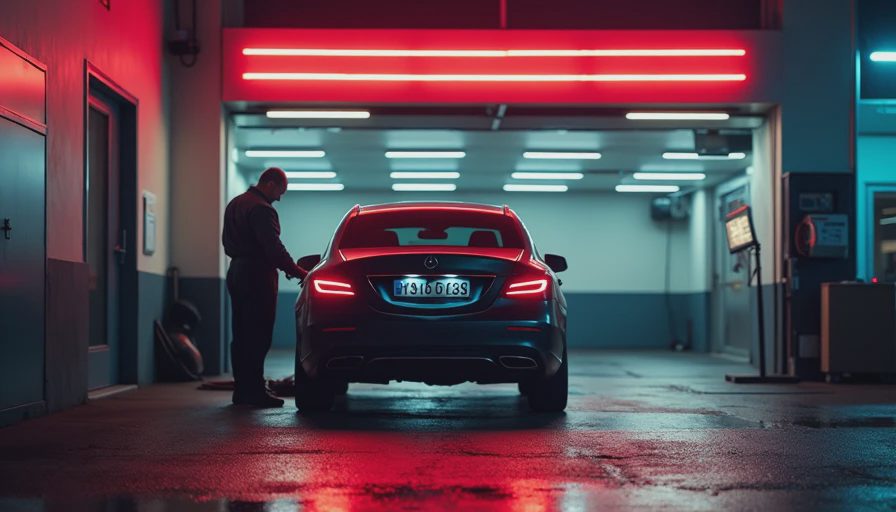
If you're a technician or a parts counter pro, you've had the moment: a customer needs a transmission service on a Mercedes, and you need to confirm which **Mercedes ATF fluid** is correct. The wrong choice can shift like a nightmare — or worse, damage the transmission. After this post, you'll be able to look up the exact spec number, understand what's different about it, and avoid the common pitfalls. Here's the chemistry, here's the spec, here's what to do with it.
The Difference Between Mercedes ATF Fluid and Standard ATF
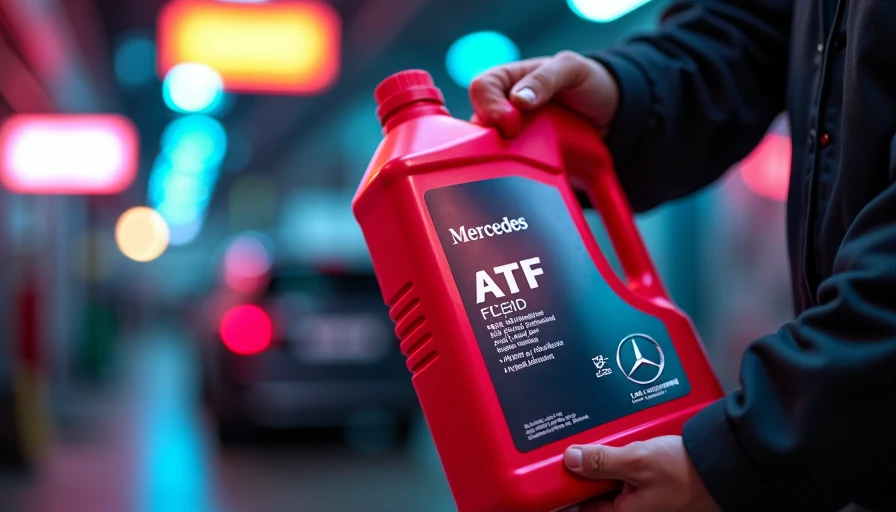
Mercedes-Benz automatic transmissions have used a unique set of fluid specifications since the early 2000s. Unlike a generic Dexron or Mercon fluid, **Mercedes ATF fluid** is formulated to meet very specific frictional requirements, thermal stability, and shear resistance. The key difference lies in the additive package — Mercedes fluids use a special friction modifier blend that ensures smooth, consistent shift feel over the service interval. Standard ATF may cause harsh shifts or torque converter shudder in a Mercedes transmission. Always recommend a fluid that meets the exact Mercedes specification, not just a generic "compatible" product.
Reference Box: The Mercedes spec numbering system (236.x) started with 236.1 in the 1960s and evolved through 236.2, 236.3, etc. Current fluids use 236.10, 236.12, 236.14, and 236.15.
Which Mercedes ATF Fluid Spec Does Your Customer Need? (236.10, 236.12, 236.14, 236.15)
The spec number is printed on the fluid bottle and often on the transmission dipstick or service label. Confusing them is the #1 mistake. Here's a quick breakdown:
- **236.10**: Older spec, used in 5-speed automatics from the mid-1990s to mid-2000s (e.g., W210 E-Class, W163 ML). This is a synthetic blend with moderate viscosity.
- **236.12**: Introduced around 2004 for the 7G-Tronic (NAG1 / W7A-700) transmissions. It requires a lower viscosity and higher shear stability. This is the most common **Mercedes ATF fluid** spec for 2004–2014 models.
- **236.14**: Used for the 5G-Tronic transmissions that were updated after 2007. It is backward-compatible with 236.12 but not vice versa. Always check the label.
- **236.15**: The newest spec, developed for the 9G-Tronic (9-speed) transmissions from about 2014 onward. It has the lowest viscosity and requires full synthetic base stocks. Using 236.15 in an older transmission may cause slip, while using an older spec in a 9G-Tronic can destroy the transmission.
If your customer asks, the one-line answer is: Look at the transmission tag or owner's manual for the spec number, then match it exactly.
Common Mistakes When Selecting Mercedes ATF Fluid
Even experienced techs occasionally grab the wrong bottle. Here are the top errors and how to avoid them:
- **Assuming all synthetic ATF works**: Many ATFs labeled "synthetic" are Dexron VI or Mercon LV. They do not meet Mercedes friction requirements.
- **Ignoring the color**: Some aftermarket fluids are dyed red, but genuine **Mercedes ATF fluid** is usually pale yellow or amber. Color alone is not a reliable indicator — always check the spec number.
- **Mixing specs**: Topping off with a different spec than what's in the transmission can cause drivability issues. If you cannot find the exact spec, perform a full or partial drain before refilling.
- **Using 236.15 backward**: A common question: "Can I use 236.15 in my 2008 E350?" No. The transmission was designed for 236.12, and the lower viscosity may cause slip at high temperatures.
How to Properly Service a Mercedes Automatic Transmission
Mercedes transmissions typically require a specific service procedure. Most late-model units do not have a traditional dipstick — fluid level is checked via a drain plug and a fill plug with the transmission at a specific temperature (around 80°C / 176°F). Here's a general guide for a 7G-Tronic (236.12) service:
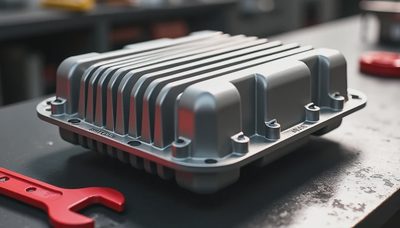
- **Drain the fluid**: Remove the drain plug from the transmission pan. Expect about 3-4 liters to come out. The torque converter retains a lot of fluid; a full change requires draining the converter separately or performing multiple drain-and-fills.
- **Replace the filter**: The filter is typically accessed by removing the pan. Use a new gasket or seal.
- **Refill with the correct Mercedes ATF fluid**: Use the exact spec number. Fill through the fill plug until fluid begins to drip out.
- **Reach operating temperature**: Start the engine, cycle through gears (P-R-N-D in sequence), and let the transmission reach 80°C. With the engine running, continue filling until a steady drip appears. Reinstall the fill plug.
- **Check for leaks and test drive**: Verify smooth shifts and no warning lights.
On the spec sheet, the number that decides it is the temperature procedure. Skipping it can lead to over- or underfilling, which causes harsh shifts or transmission damage.
Reference Box: Key Specs for Mercedes ATF Fluid
| Spec | Viscosity (cSt @ 100°C) | Typical Application | Service Life |
|------|--------------------------|---------------------|--------------|
| 236.10 | 7.0 – 7.5 | 5-speed (pre-2005) | 60,000 miles |
| 236.12 | 5.5 – 6.0 | 7G-Tronic (2004–2014) | 80,000 miles |
| 236.14 | 5.5 – 6.0 (high shear) | Updated 5G-Tronic | 80,000 miles |
| 236.15 | 4.5 – 5.0 | 9G-Tronic (2014+) | 100,000 miles |
These viscosity values are approximate. Always verify with the OEM data sheet. The **Mercedes ATF fluid** spec defines the additive package and base stock requirements.
Frequently Asked Questions About Mercedes ATF Fluid
**Q: Can I use a generic ATF that says "meets 236.12"?**
A: Only if it is actually licensed by Mercedes-Benz or tested to the full specification. Generic claims sometimes mean only a single bench test passed. Use a known brand like Shell, Mobil, or Fuchs that lists the exact Mercedes spec on the label.
**Q: How often should Mercedes ATF fluid be changed?**
A: Mercedes originally claimed "lifetime" fluid, but most independent shops recommend 60,000–80,000 miles for severe service (towing, hot climate). For normal driving, 80,000–100,000 miles is conservative. Check the owner's manual; some newer models have a service interval.
**Q: What if I accidentally put the wrong fluid in?**
A: If it's just a top-off, you may get away with it, but expect rough shifts eventually. If a full fill was used incorrectly, drain immediately and refill with the correct **Mercedes ATF fluid**. A transmission flush may be needed if drivability issues develop.
**Safety and Disposal:** Used ATF is hazardous waste. Collect it in a sealed container, label it, and recycle at an approved facility. Never pour it down drains or on the ground. Spills should be absorbed with kitty litter or a spill pad and disposed of properly.
Here's the chemistry, here's the spec, here's what to do with it: Match the number, follow the procedure, and your customer's Mercedes will shift like new for years to come.



No comments yet — be the first to share a thought.