After reading this guide, you will be able to look up what oil quench rate means, identify the variables that control it, and connect cooling behavior with hardness, cracking, distortion, and shop safety. The oil quench rate is not one universal number printed on every container. It is the result of heat transfer between a hot steel part and a specific quenching oil under defined conditions.
In the classroom, I explain it this way: the quenchant must remove heat quickly enough to produce the required metallurgical transformation, but not so aggressively that the part cracks or moves out of tolerance. Here's the chemistry, here's the spec, here's what to do with it.
Reference Box: Oil quench rate is a measured cooling response, not simply the viscosity grade of the oil. Bath temperature, agitation, part geometry, loading, and oil condition all influence the result.
What the oil quench rate actually describes
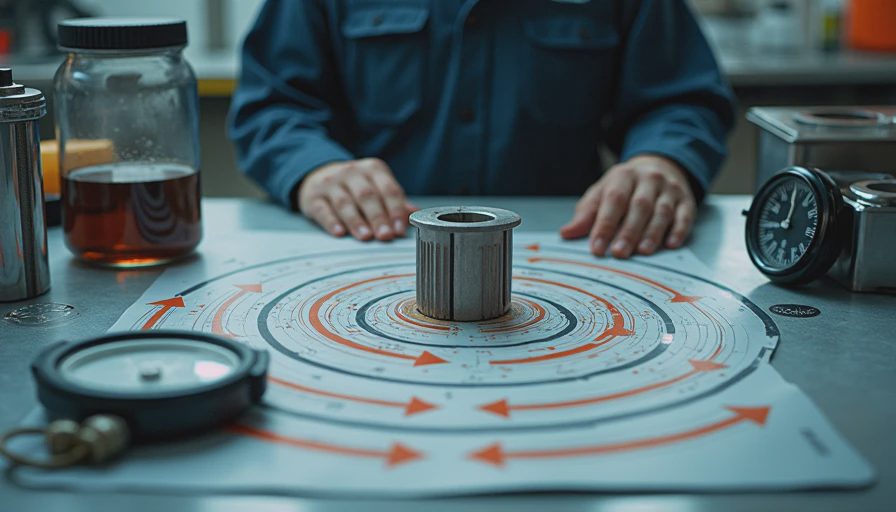
When a heated steel component enters an oil bath, cooling occurs in stages. First, a vapor blanket can surround the part. This film slows heat transfer and is often called the vapor-blanket stage. As the film collapses, boiling becomes more vigorous and cooling accelerates. Finally, convection carries heat away as the part approaches bath temperature.
The oil quench rate describes how quickly the workpiece loses heat through those stages. A cooling curve records temperature against time, often using a standardized probe or test assembly. Two oils with similar kinematic viscosity can produce different curves because their base oils, additives, flash points, and surface behavior differ.
That distinction matters at the parts counter. Telling a customer that a thicker oil always quenches slower is an incomplete answer. Viscosity affects circulation and film behavior, but the formulation and operating condition determine the complete cooling curve. A fast quench oil and a slower marquenching oil are selected for different combinations of steel grade, section thickness, hardness target, and dimensional control.
Variables that change cooling performance
Bath temperature is one of the first variables to check. Many conventional quench oils operate near 100 to 160 degrees Fahrenheit, while specialized products use higher temperatures for reduced distortion. Warmer oil generally lowers viscosity and can improve circulation, but it also changes the heat-transfer stages. The manufacturer’s operating range is more useful than a rule based only on viscosity.
Agitation is equally important. A still bath can allow a persistent vapor blanket to remain on a flat surface, producing uneven cooling. Controlled pumps, propellers, or directed flow break up that film and help fresh oil reach the metal. Excessive agitation, however, can raise cooling severity and increase distortion risk. Record the actual flow condition whenever a process is qualified.
Load size and arrangement also matter. A basket packed with gears, shafts, or fasteners can heat the bath and restrict oil movement. Parts touching one another can cool differently from isolated parts. A quench tank that worked well for a small batch may deliver a noticeably different oil quench rate during a heavy production load.
Oil condition is another practical concern. Oxidation, sludge, water contamination, and repeated thermal exposure change the fluid’s performance. Water is especially dangerous because it can cause violent boiling and unpredictable cooling. A maintenance program should include regular sampling, visual inspection, temperature checks, and removal of accumulated scale or sludge.
Matching cooling severity to the steel and part
Steel hardens when the austenitized structure cools rapidly enough to avoid unwanted transformations before martensite forms. The required rate depends on chemistry and geometry. A shallow-hardening steel may need a faster quenchant than an alloy steel designed for deeper hardening. A thin edge cools faster than the center of a thick shaft, so the same bath can produce different microstructures in one component.
Hardness is not the only target. A very severe oil quench can produce high residual stress, cracking, soft spots caused by uneven cooling, or distortion that appears during tempering. A slower oil quench may improve dimensional stability but fail to reach the specified hardness at the core. The correct choice is therefore a process decision, not a contest to find the fastest oil quench rate.
On the spec sheet, the number that decides it is the tested cooling curve under the stated method and condition. Review the supplier’s data alongside the steel maker’s heat-treatment recommendations. ASTM E1461 covers thermal diffusivity and conductivity measurements, but it is not a universal acceptance standard for every quench oil. For quenching practice, use the quenchant supplier’s test method, internal process controls, and the applicable heat-treating specification.
How technicians should evaluate a quench bath
Start with process history. Note the oil name and type, tank volume, normal bath temperature, agitation setting, load mass, and part geometry. Then compare those conditions with the original qualification record. If hardness or distortion has changed, do not replace the oil blindly before checking contamination, temperature control, circulation, and loading.
A useful shop sequence is straightforward. Inspect the bath for water, foam, sludge, and unusual odor. Verify the temperature with a calibrated instrument rather than trusting a panel display. Check pumps and nozzles for restricted flow. Confirm that baskets are not blocking circulation. Send a representative sample for viscosity, water, insolubles, flash point, and oxidation-related testing when the process is critical.
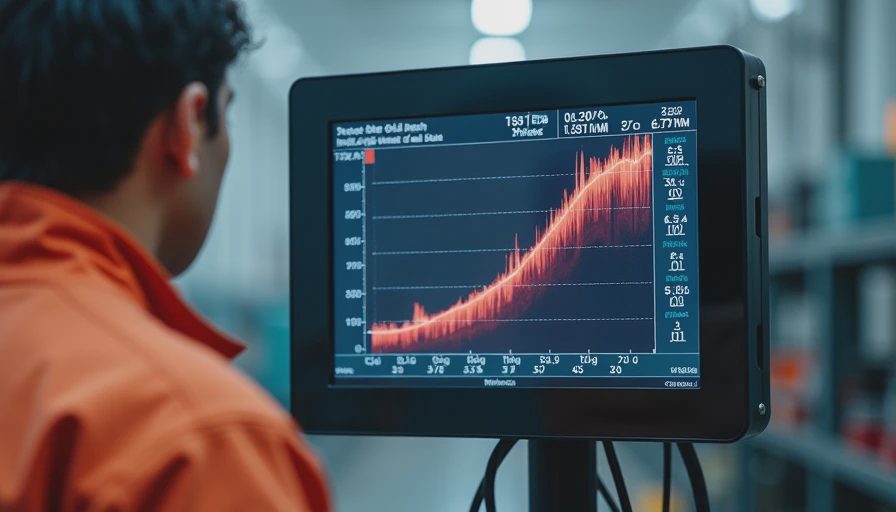
A hardness test alone cannot explain every quench problem. Sectioned parts, dimensional measurements, and metallographic examination can reveal whether the issue is inadequate core cooling, a vapor-pocket problem, excessive severity, or a furnace-side error. If a batch is failing, preserve the records before changing several variables at once.
Safety, storage, and used oil handling
Quench oil is combustible, hot, and capable of producing irritating vapors. Keep ignition sources away from the tank, maintain suitable ventilation, and use guarding around open baths. Operators need eye protection, heat-resistant gloves appropriate to the task, protective clothing, and training for handling hot baskets and splashing fluid. Never introduce water into a hot oil tank.
Storage containers should be closed, labeled, and kept away from incompatible materials and unnecessary heat. Spill kits should contain absorbent suited to petroleum fluids, and floors should be maintained to prevent slip hazards. Follow the facility’s fire protection plan and applicable OSHA requirements rather than improvising after a spill.
Used quench oil should not be poured into a drain, onto soil, or into a stormwater system. Collect it in a compatible, clearly labeled container and use an approved recycler or waste contractor. Requirements vary with contamination and local rules, so the generator remains responsible for proper classification and documentation. Good disposal practice protects the shop and prevents a fluid problem from becoming an environmental one.
A practical troubleshooting checklist
If parts are too soft, first verify furnace temperature, soak time, steel identity, and the actual oil quench rate under production conditions. Then inspect agitation and loading. A soft result is not proof that the oil itself is bad.
If parts crack, look for excessive severity, sharp geometry, decarburization, preexisting defects, and delayed transfer from furnace to tank. Check whether the bath is too cool, too aggressively agitated, or contaminated with water. Cracking often reflects several stresses acting together.
If distortion is the complaint, review orientation, fixturing, transfer motion, bath flow, and the part’s design. A slower or staged quench can sometimes help, but changing fluids without metallurgical validation is poor practice. For high-value work, run a controlled trial with documented hardness and dimensional results.
If your customer asks, the one-line answer is this: oil quench rate is the cooling behavior the part experiences, and it must be controlled rather than guessed. Select the fluid from the steel, geometry, hardness requirement, equipment, and safety plan. Then monitor the bath closely enough to know that yesterday’s process is still today’s process.


No comments yet — be the first to share a thought.