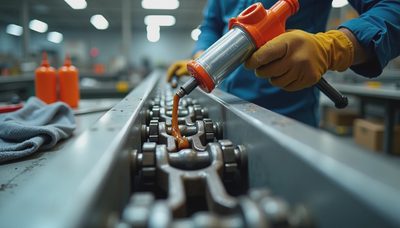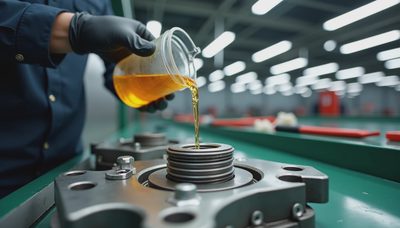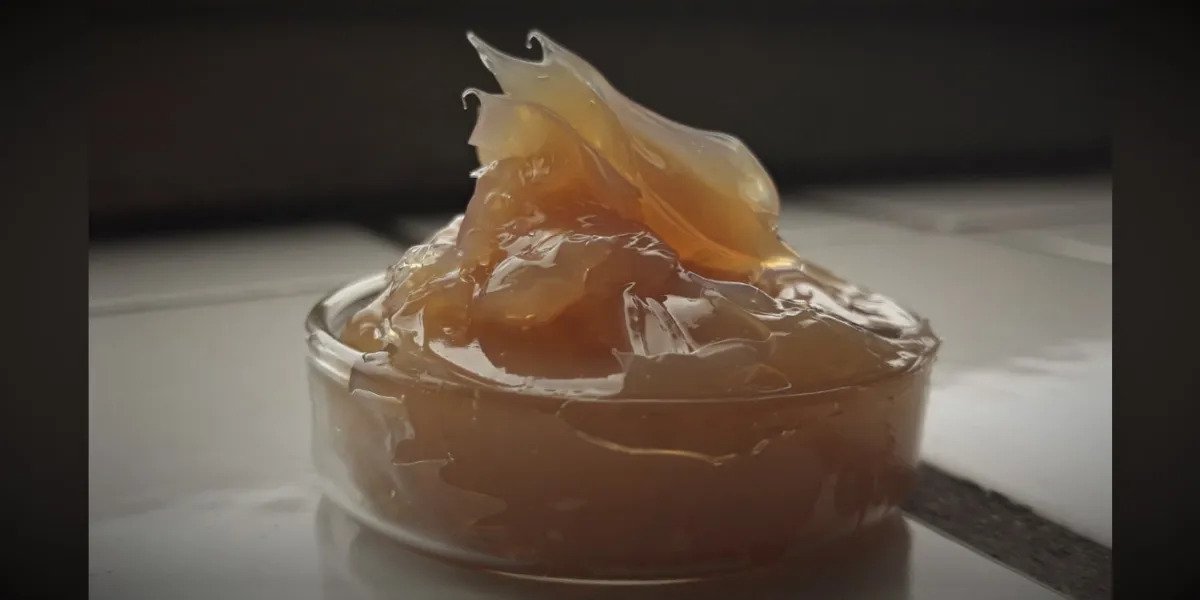
Our blog has previously covered the fundamentals of grease technology and why it often outperforms lubricating oils. Greases find use across a wide range of industries and are particularly well-suited for equipment that operates at irregular intervals or in locations where frequent oil changes are impractical.
That said, the sheer variety of grease types on the market makes selecting the right product a genuine challenge.
Choosing the correct lubricating grease requires weighing several key factors: base oil composition, thickener type, additives, and NLGI grade. Above all, grease consistency demands careful attention — especially in systems where multiple grease formulas must coexist.
To help simplify that decision, Valvoline has put together this comprehensive guide covering the different types of grease and their respective applications.
Every grease is built from three core components: a base oil, performance-enhancing additives, and a thickener. The manufacturing process involves blending 2–15% thickener and additives into the base oil.
The thickener functions much like a sponge — it absorbs the lubricants and additives, then releases them under pressure. Once released, these lubricants reduce friction and form a protective film between engine components.
Grease serves a broad range of industries, including construction, mining, steel milling, automotive, marine, aeronautical, and farming.
Within these industries, lubricating grease performs several critical functions:
While both lubricating grease and oil serve similar purposes, their formulations and ideal applications differ considerably.
Engine oil stands out for its flowability and superior heat dissipation. As it circulates through a system, it carries heat away efficiently. This allows lubricating oils to preserve base oil viscosity and reduce the risk of heat-triggered oxidation and additive breakdown — making them the preferred choice for high-temperature, high-friction environments.
Another advantage of engine oil is the absence of thickeners, which eliminates any risk of thickener incompatibility causing consistency changes that could lead to performance problems.
Additionally, oil allows for more precise control over the volume of lubricant applied to a system.
There are situations, however, where engine oil alone cannot deliver adequate machine lubrication — and that is where grease becomes essential.
Grease is particularly valuable in machinery that operates on irregular schedules or in locations that make routine oil lubrication difficult to perform.
It is also indispensable in vehicles and equipment exposed to demanding conditions such as elevated temperatures, high pressures, heavy loads, or sudden shock loads.
Grease forms a protective seal that creates a lasting barrier against both fluid and solid contaminants, shielding sensitive components from damage. It is frequently applied to worn parts such as seals and connectors, which hold grease more effectively than oil and therefore reduce the likelihood of lubricant leakage.
Base oil is the primary ingredient in any lubricating solution, including greases, typically accounting for up to 90% of the total formulation.
Depending on the base oil used, greases are classified as either mineral or synthetic.
The majority of greases on the market today rely on API Group I and II mineral oils, which offer the broadest range of applications.
Mineral oil does, however, have limitations under demanding conditions — including reduced temperature stability, lower heat resistance, and a shorter service life.
Synthetic greases address these shortcomings effectively. At high temperatures, synthetic oils thin out far less than mineral-based alternatives, offering superior protection. They also resist degradation and oxidation better at elevated temperatures, while maintaining optimal viscosity and flowability in cold conditions.
There are several synthetic grease types, each defined by the type of oil used in its formulation:
Thickeners constitute between 3% and 30% of a grease's total composition.
When combined with base oil and performance-boosting additives, thickeners produce the characteristic semi-fluid consistency of grease.
Greases are divided into two broad thickener categories: soap-based and non-soap-based.
Soap-based thickeners are created through saponification — a process that yields a mixture of soap and water. The water is then removed, leaving behind a soap residue that serves as the thickening agent. The specific acids and bases used in the reaction determine the type of soap thickener produced.
Soap compounds fall into several categories:
The most common types of soap-based greases include the following:
In calcium soap grease, water acts as a structural stabilizer. The grease's inherent water resistance makes it well-suited for components regularly exposed to moisture.
Above 80°C, however, the water evaporates, causing the oil to separate from the thickener. Because of this limited thermal tolerance, calcium soap greases are best suited for plain bearings operating at low speeds and light loads, where temperatures remain below 70°C.
Substituting castor oil fatty acid for water in the formulation significantly improves the thermal stability of calcium soap grease.
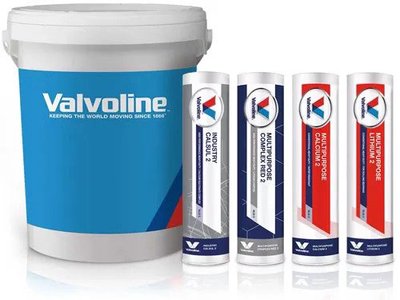
Valvoline Marine Calcium 2 is a premium-grade marine grease engineered for exceptional water resistance. This marine lubricant combines anhydrous calcium, high-viscosity base oil, and titanium to deliver outstanding load-carrying capacity, strong mechanical stability, long service life, and excellent lubrication performance.
Lithium soap grease is the most widely used general-purpose grease available, with applications spanning general industrial use, household electric appliances, and automotive systems. It incorporates mineral or synthetic base oil combined with lithium salt, resulting in excellent thermal stability, mechanical stability, and water resistance.
Valvoline Earth Lithium 2 is a specialty semi-synthetic grease formulated with a blend of mineral and synthetic ester base oils to deliver exceptional performance and dependability. It maintains stability at extreme temperatures and is built to handle heavy loads and severe operating environments.
Aluminum complex grease is formed through the reaction of aromatic carboxylic acid and stearic acid with aluminum hydroxide. The result is a fine-fibered structure with a high dropping point, along with excellent heat stability, water resistance, and mechanical stability.
Valvoline Food Alucom is a high-performance, multipurpose food-grade grease built on an aluminum complex thickener and mineral pharmaceutical oil. Its semi-fluid consistency makes it well-suited for central lubrication systems. The grease is designed specifically for use in food production environments, where incidental food contact is safe.
Lithium complex soap grease is produced through the reaction of lithium hydroxide with a combination of fatty acid and dibasic acid. It offers a high dropping point, outstanding heat and water resistance, enhanced rust prevention, and an extended service life at elevated temperatures.
Valvoline Earth LiCal Complex 2 is a lithium calcium complex grease that incorporates graphite to withstand extreme weather, the most demanding loads, severe mechanical stress, and heavy shock.
Non-soap greases use thickening agents such as clay, polyurea, and calcium sulfonate. These formulations deliver exceptional resistance to heat and water, along with superior pumpability, shear stability, and overall durability.
Polyurea grease is the most widely used non-soap variety. Its thickening system consists of two or more urea groups.
Thanks to its outstanding heat and water resistance, urea grease is an excellent fit for continuous casting lines and iron mills. Many manufacturers opt for synthetic oil-based urea formulations to push heat resistance even further.
Bentonite grease is thickened with organic bentonite and is sometimes called a "grease without a melting point" — a reference to its ability to retain its structure even at extremely high temperatures. While it offers impressive shear stability, its rust prevention performance is limited. Prolonged exposure to temperatures above 200°C can cause it to harden.
Valvoline™ Industry BT 2 is formulated with bentonite and premium base oils, delivering a high-temperature, smooth-textured, extreme-pressure lubricant engineered specifically for bearing applications.
Additional types of non-soap greases include:
Thickener type is the primary factor in determining grease compatibility. When greases are mixed, the result can be classified as compatible, incompatible, or borderline compatible.
Using incompatible greases together can trigger a range of machine performance problems and lead to expensive repairs. For this reason, compatibility assessments are essential whenever a system calls for multiple grease products.
Most grease manufacturers publish detailed compatibility data for their products and are willing to conduct testing on behalf of customers to identify the best-fit solutions.
Before switching to a new grease, users should thoroughly purge any residual old grease from the system.
Additives account for up to 10% of a grease's formulation.
Their purpose is multifaceted: they strengthen desirable grease properties, suppress unwanted characteristics, and in some cases introduce entirely new performance attributes.
Among the most commonly used additives in lubricating grease technology are:
Grease consistency is a standardized property defined by the National Lubricating Grease Institute (NLGI).
The NLGI has developed a numerical scale ranging from 000 to 6 to classify grease consistency — each grease product corresponds to a specific grade on this scale.
NLGI grades indicate how soft or firm a lubricating grease is.
As a reference point, NLGI 000-grade greases are semi-fluid, NLGI 3 is firm, and NLGI 6 is very hard. NLGI 2 grease sees the broadest use across industries.
Consistency is also influenced by thickener type and concentration, as well as base oil viscosity. Higher-consistency greases should use lower-viscosity oil, and vice versa.
NLGI 000, 00, and 0 grades are suited to low-viscosity applications such as enclosed gear drives and open gearing. NLGI 0, 1, and 2 grades are commonly used in highly loaded gearing systems. Higher-numbered grades produce firmer greases, making them a practical choice for equipment prone to lubricant leakage.
Grease has a profound effect on machine and vehicle performance, longevity, and dependability — which is precisely why selection should never be left to chance.
Identifying a grease technology that combines the appropriate base oil, additives, and thickeners for your specific operating requirements is essential. Consulting with your lubricant manufacturer will provide further guidance on grease technology, consistency, and compatibility.
At Valvoline, we welcome your questions. With more than 150 years of experience developing and manufacturing high-quality greases tailored to the demands of vehicles, equipment, and industrial machinery, our team is ready to help. Reach out to your nearest Valvoline distributor or contact our lubrication specialists at [email protected] for any additional information.