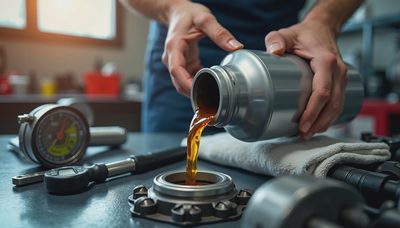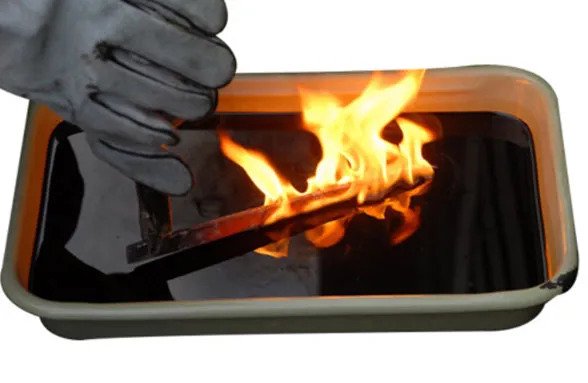
Quenching is an essential step within the heat treatment of metals. The process involves rapidly cooling a metal workpiece to achieve or alter specific characteristics such as hardness, strength, or toughness. By cooling quickly, the time metal remains at elevated temperatures is minimized, which prevents defects that would otherwise develop.
Air, oil, water, and brine are among the most common quenching mediums available. Each medium and application method produces distinct modifications in the metal being treated. Throughout metalworking history, oils have been widely favored and continue to be a standard choice today.
Oil is a preferred quenching medium because it transfers heat rapidly while causing minimal distortion to the workpiece.
Water-based caustic quenchants operate even faster, yet their severity can distort or crack certain materials during the process.
Beyond their speed, oils offer considerable adaptability. Viscosity, temperature, and other characteristics can be tuned through additives to suit a range of applications. This high degree of controllability makes oil an exceptionally versatile medium, helping to streamline metalworking operations overall.
Quench oils serve two principal functions. The first is hardening the component by regulating heat transfer throughout the quench. The second is improving the wetting of the component's surface to reduce undesirable conditions that might otherwise lead to distortion or cracking.
The quenching process itself unfolds across three distinct stages: the vapor stage, the boiling stage, and the convection stage.
The vapor stage begins the moment a component is immersed in quenching oil. A vapor blanket envelops the component, and cooling proceeds slowly during this phase — heat escapes only through radiation across the vapor layer. Introducing additives that increase agitation of the layer is the primary means of accelerating its dispersal. Because this stage is responsible for many of the soft spots that appear in quenched components, reducing its duration as much as possible is highly desirable.
Following the vapor stage is the boiling stage. As the vapor blanket breaks down, nucleate boiling begins. Heat transfer reaches its peak rate during this phase, and both the timing and exact transfer rate are governed by the oil's molecular composition.
The convective stage sets in once the temperature at the component-oil interface drops below the oil's boiling point. Heat transfer during this stage depends on oil viscosity, which itself is influenced by the extent of oil decomposition. The relationship is inverse between heat transfer rate and viscosity, while viscosity increases in direct proportion to decomposition.
Naturally, higher decomposition levels correspond to sludge formation, which produces uneven adsorption and, consequently, uneven cooling rates across the component.
Among the many oils available for quenching applications, two widely used classifications are fast oils and hot oils.
True to their name, fast oils accelerate the cooling of components. They are formulated to shorten the vapor stage while lengthening the boiling stage. These oils are well-suited for low-carbon steel and alloys with low hardenability.
Hot oils operate at elevated temperatures and help ensure that the surface and core of a part do not diverge too greatly in temperature during quenching. This reduces the likelihood of distortion and cracking. Although quenching with hot oils takes more time, the result is more uniform cooling through a part's cross-section, making them ideal for highly hardenable alloys.
Various specific oil types can be grouped within these two broad categories. The following is a general overview of oils commonly employed in quenching applications.
Although not purpose-built for quenching, both new and used engine oils find regular use in the process. Their popularity largely stems from low cost, and they deliver acceptable performance for many applications.
Used motor oil is inexpensive or sometimes obtained at no cost, though it may carry contaminants from prior service. A drawback of both new and used motor oils is that their additives can release foul-smelling toxins when heated during quenching. Inhaling these substances poses health risks, making proper safety equipment and adequate ventilation essential. The contaminants present in engine oils may also leave a thin dark film on finished components.
Food-grade oils are relatively affordable, widely accessible, and environmentally friendly. Vegetable oils in particular offer favorable impact energy values as quenching media, contributing to improvements in toughness, impact strength, hardness, yield strength, and elongation.
Individual vegetable oils differ in their properties — olive oil and palm kernel oil, for instance, tend to produce lower hardness but higher toughness. Selecting the appropriate antioxidants can counteract the viscosity increase associated with oil degradation.
Mineral and transmission oils represent a viable substitute for engine oils in quenching, as they typically lack additives that could interfere with the quenching process.
Mineral oil quenchants perform especially well with oil-hardened steels and steels requiring rapid quench rates. Though they tend to be costlier, their efficiency and greater cooling capacity for steel alloys make them a strong choice.
On the downside, mineral oils carry a notable environmental burden given that they are not biodegradable. Like engine oils, mineral oil can emit toxins into the surrounding air when subjected to very high temperatures.
Specialized quenching oils are engineered exclusively for this purpose. A broad range of commercial products exists, each designed to address specific materials, quench speeds, or other particular requirements.
These oils are formulated to deliver uniform hardening while keeping distortion and cracking to a minimum. Components treated with specialized quenching oils can also be expected to exhibit a smooth surface finish. Given their premium quality and targeted design, they are generally the most costly quenching oil category on the market.
Because quenching is among the most critical operations in metalworking, selecting the appropriate quenching oil for heat-treating a given metal carries significant weight. The right choice helps the metal attain the desired properties — whether hardness, strength, elongation, or toughness — and must be executed with care.
No single quenching oil is without limitations. Each carries its own set of advantages and drawbacks, yet the wide variety of available options means that, with adequate research, a suitable oil can be identified for virtually any application.