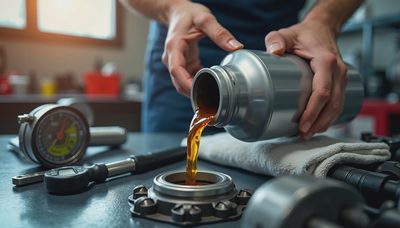
Choosing the right industrial oil prevents costly equipment failure and extends machine life by thousands of hours.
Why This Matters
If you run a home garage, maintain shop equipment, or work on heavy-duty vehicles, you already interact with industrial lubricants daily. Air compressors, hydraulic floor jacks, transmission gearboxes, and even turbine-driven superchargers all rely on specialized fluids to survive. Picking the wrong oil or skipping routine changes doesn't just cause minor noise; it accelerates metal-to-metal contact, triggers internal corrosion, and forces expensive rebuilds. Industrial oils are engineered distillate petroleum products designed to keep friction units running smoothly under specific loads and temperatures. When you match the fluid to the system, you get reliable operation, longer service intervals, extended component life, lower operating temperatures, easier cold starts, and measurable fuel savings. Treating these fluids as generic "grease" is how $500 maintenance turns into a $5,000 teardown.
What You Need to Know
Not all oils perform the same job. According to industrial classification standards like GOST 28549.0-90, lubricants are grouped by application and additive chemistry. Here is what each type actually does in practical terms:
- Hydraulic oils power lifting systems and control mechanisms. They transfer pressure through closed circuits while resisting oxidation (chemical breakdown when exposed to air and heat).
- Gear oils live inside closed gearboxes. They coat mating teeth to prevent pitting and scoring, ensuring long service life and efficient power transfer.
- Compressor oils circulate through air and gas compressors. Built on high-quality mineral base oils with advanced additive packages, they deliver high thermal stability (the ability to maintain lubrication under extreme heat) and exceptional reliability.
- Circulating oils feed closed forced-lubrication systems. They protect bearings, lathe spindles, and mechanical drives while resisting deposit formation and maintaining oxidative stability.
- Turbine oils lubricate and cool centrifugal turbines, turbochargers, turbopumps, and related gearboxes. They reduce shock absorption, friction, and heat dissipation while supporting circulation and hydraulic functions.
- Sliding guide oils coat direction-control components like linear rails and machine ways. They use balanced additive systems to provide precise friction properties and reliable corrosion protection.
- Oils for gas engines handle the unique combustion byproducts and high-temperature environments found in natural gas or LPG-powered equipment.
Viscosity (how thick the oil is at a given temperature) dictates flow speed and film strength. Always match the viscosity grade to the manufacturer's specification, not your gut feeling.
How It Works
Selection and application follow a straightforward logic. First, identify the system type. If you are servicing a hydraulic lift, you need a fluid built for pressure transfer and oxidation resistance. If you are draining a transmission or differential, you need a gear oil formulated to protect teeth under high shear stress. For shop air compressors, select a compressor oil with high thermal stability so it won't break down during continuous cycling. Circulating systems demand oils that resist sludge and protect bearings across long pump cycles. Turbine and turbo applications require fluids that simultaneously cool, lubricate, and dampen shock loads. Sliding guides need oils that maintain a consistent friction coefficient to prevent stick-slip movement.
Once you have the correct type, follow a disciplined replacement routine. Drain the old fluid completely, inspect for metal particles or discoloration, replace filters if applicable, and refill to the exact capacity. Warm the system briefly before draining to lower viscosity and pull out suspended contaminants. Run the equipment through a short cycle, check for leaks, and verify fluid levels at operating temperature.
> Pro Tip: Always warm the engine or machine for 5–10 minutes before draining. Cold fluid stays thick and traps abrasive particles in low spots, meaning you'll leave up to 30% of the old oil behind.
Common Mistakes
Despite what forums say, you CAN overfill your oil, and here is what happens: excess fluid creates foam as moving parts whip it into air bubbles. Foamed oil loses its load-bearing film, causing instant metal contact, overheating, and seal failure. Another widespread myth is that "industrial oils are interchangeable if the viscosity matches." That is dangerously false. Additive packages are chemically tuned for specific environments. Putting a hydraulic fluid in a compressor will strip seals and fail under heat. Running a gear oil in a sliding guide will cause erratic movement and accelerated wear. Some DIYers also skip fluid changes until the equipment sounds rough. By then, oxidation has already created varnish deposits, and corrosion has begun pitting internal surfaces. Regular replacement, as emphasized in industrial standards, is non-negotiable for longevity.
Bottom Line
Industrial oils are precision tools, not generic fillers. Match the fluid type to the exact application, respect viscosity requirements, and stick to a consistent replacement schedule. Consult classification references like GOST 28549.0-90 when selecting lubricants for shop compressors, hydraulic lifts, gearboxes, or turbine-driven components. Do not guess, do not overfill, and do not wait for failure symptoms. Proper selection and timely changes will keep your equipment running cooler, quieter, and longer while saving you thousands in avoidable repairs.