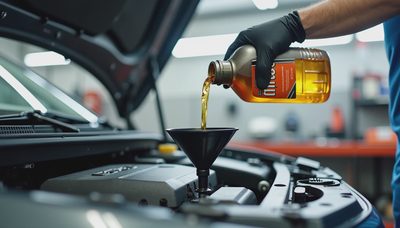
Picking the wrong oil viscosity can wreck your engine—here is how to read the label correctly
Why This Matters
Knowing your vehicle's recommended oil weight is important because engine components rely on specific grades of oil to run smoothly and stay cool at operating temperatures upwards of 200 degrees Fahrenheit. If you are not using the correct viscosity for your engine, the oil may thin out too much to effectively lubricate engine components or be too thick to flow throughout the engine. This guide ensures you make an informed decision about what goes into your car, protecting your investment from premature wear caused by improper lubrication.
What You Need to Know
To navigate the motor oil aisle, you must understand the standards set by the Society of Automotive Engineers (SAE). This organization is responsible for standardizing how we refer to auto oil viscosity specifications. They designate 14 different oil grades on 2 scales, ranging from low to high viscosity.
On the cold scale, you will see grades like 0W, 5W, 10W, 15W, 20W, and 25W. On the high-temperature scale, the grades are 8, 12, 16, 20, 30, 40, 50, and 60. You might see some of these numbers on their own, indicating a single-grade oil like SAE 10W. However, most modern vehicles use multigrade oil, such as SAE 10W-20. If you see the letters "SAE" preceding the oil weight on a jug of motor oil, you know that oil meets the industry-defined viscosity.
Central to this is viscosity, which is a liquid's resistance to flow. In other words, it is how thick the oil is. Engine oils with high viscosity, like 15W-40, are thicker and flow more slowly than low viscosity oils like 0W-20, which flow more easily. The amount that a motor oil's viscosity changes across temperatures is known as its viscosity index.
How It Works
Let's put it all together using 5W-30, one of the most commonly used oil weights, to decode the label.
The First Number: This number represents the oil's cold-temperature viscosity. The lower the number, the better the oil performs in cold weather. For example, 5W oil flows better at low temperatures than 10W oil. In the 5W-30 example, the "5" is the second-lowest cold oil weight, only above a 0 viscosity rating. This means that when the engine is cold, the oil still flows readily.
The "W": This stands for "winter," indicating that the oil is tested for performance in cold temperatures.
The Second Number: This is the oil's high-temperature viscosity. The higher the number, the thicker the oil remains when your engine gets hot. So, 30-weight oil (like 5W-30) will flow better at high temperatures than 40-weight oil (like 10W-40).
Temperature has a big impact on viscosity. Oil becomes thinner at higher temperatures and thicker at lower temperatures. While all oils get thinner and thicker with temperature changes, a heavier-weighted oil like 25W will still be thicker than a 10W oil at the same temperature.
Common Mistakes
Myth: All Oil Numbers Are Random Codes
Many DIYers think the numbers are marketing jargon. They are not. They are precise measurements of flow resistance. Using a 10W-40 when your engine needs 0W-20 means the oil flows more slowly than designed, potentially starving components during cold starts.
Mistake: Ignoring Temperature Impact
Despite what some might assume, viscosity is not static. If you choose an oil based solely on the second number, you ignore cold weather performance. Remember, 5W-30 will flow better at high temperatures than 10W-40, but the first number dictates your cold start protection.
Pro Tip: Not all engines are the same—a four-door sedan, motorcycle, and semi-truck all need different types of oil. Never assume the oil you used in your previous car works for your current one.
Bottom Line
When it's time for your next oil change, you now have the knowledge to determine the best oil grade for your engine. Understanding what engine oil numbers mean allows you to make an informed decision for your vehicle in the future. If you are unsure, bring your car into Tires Plus for fast and friendly service. We'll help you determine the best oil grade for your engine, and answer any questions you have so you can protect your vehicle effectively.