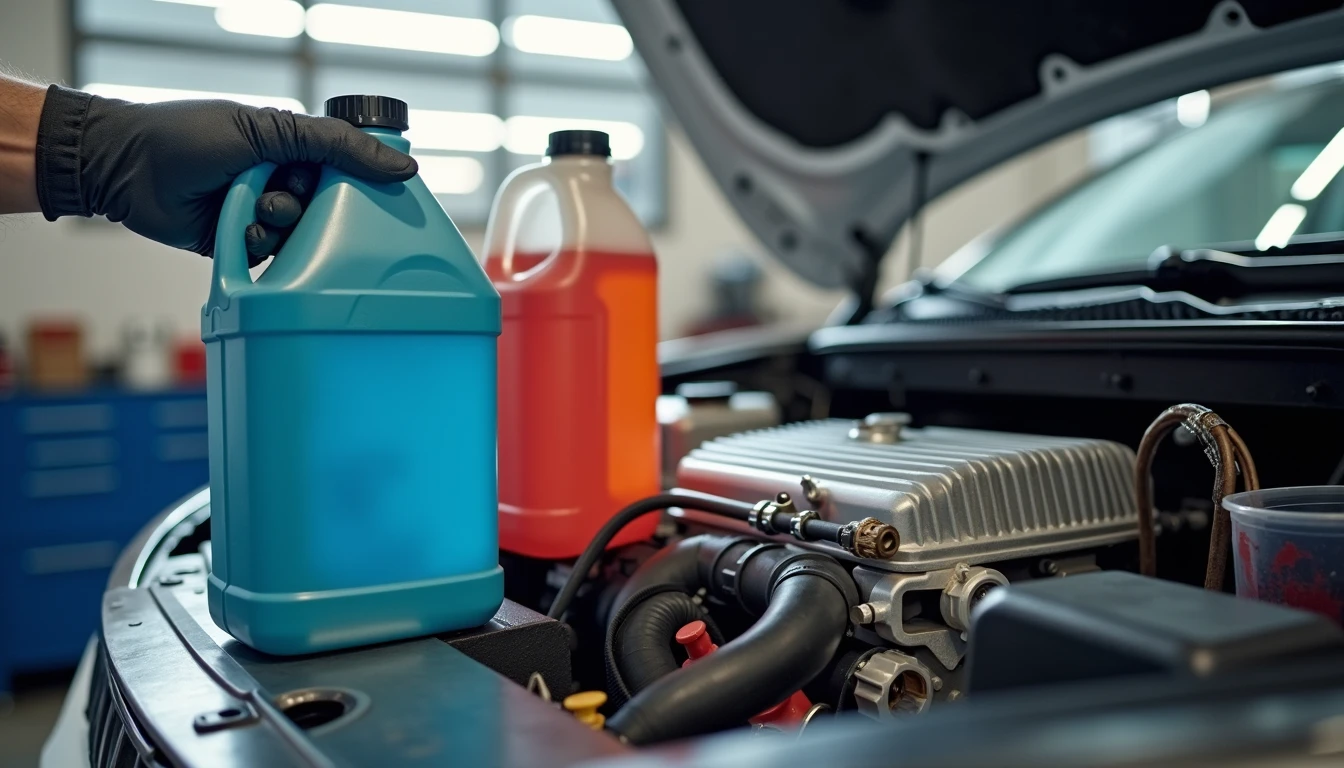
Picking the right engine coolant prevents sludge, cavitation damage, and costly cooling-system downtime
Why This Matters (cost/safety/longevity payoff)
Using the wrong engine coolant (the liquid that carries heat from the engine to the radiator) isn’t just a “color mismatch” problem—it’s a chemistry problem. Different coolants follow different chemical standards, and mixing incompatible coolant formulations can make the corrosion inhibitors fight each other instead of protecting your system.
When that happens, you can end up with:
- Sludge or deposits that restrict coolant flow and reduce heat transfer
- Water pump, liner, and heat exchanger damage from restricted flow and chemical fallout
- Shortened drain intervals (you’ll be forced to change coolant more often)
- Accelerated cavitation damage (erosion/pitting caused by vapor bubbles collapsing on metal surfaces), which can lead to avoidable engine downtime
The practical payoff: select coolant by engine specifications, not by appearance. That one decision helps keep coolant passages clear, protects internal metals, and supports more predictable maintenance planning.
What You Need to Know (specs, types, intervals)
The source breaks coolant into three main categories based on inhibitor chemistry (the additives that prevent corrosion and surface damage). Each type protects differently and fits different engine designs and materials.
1) Inorganic Acid Technology (IAT) coolant
IAT is an older-school approach that protects by quickly coating internal surfaces.
- Protection method: Forms a fast silicate and phosphate layer on iron and copper surfaces.
- Engine fit: Supports older gasoline and diesel engines with cast-iron blocks and legacy metals.
- Maintenance impact: Many IAT options need supplemental additives to defend wet-sleeve liners (removable cylinder liners that contact coolant on their outer surface).
The source also notes ethylene glycol coolant as one option that uses inhibitor packages that favor immediate coverage over long service life.
Pro Tip: If you’re dealing with an older cast-iron engine or older copper/brass components, don’t assume “newest is best.” IAT’s fast-acting surface layer is there for a reason on legacy metals.
2) Organic Acid Technology (OAT) coolant
OAT is designed for longer service behavior by working only where corrosion starts.
- Protection method: Uses organic acids that react only at corrosion sites, so additives aren’t consumed coating everything.
- Engine fit: Serves modern engines with aluminum radiators and exhaust gas recirculation (EGR) coolers (coolers that reduce emissions by lowering exhaust temperature before it re-enters the engine).
- System behavior: OAT coolants avoid silicates to reduce scale formation and deposit buildup.
Pro Tip: If your engine uses aluminum radiators and EGR coolers, OAT chemistry’s “selective protection” is a feature, not a flaw—it helps reduce deposits that can choke coolers and restrict flow.
3) Hybrid Organic Acid Technology (HOAT) coolant
HOAT blends two strategies: quick surface coverage plus long-life chemistry.
- Protection method: Combines a light silicate film with long-life organic acids.
- Engine fit: Can serve mixed-age fleets after complete system conversion.
- System behavior: Balances liner protection with extended drain performance.
- Standardization value: Helps simplify coolant inventory across original equipment manufacturers.
Pro Tip: HOAT can be a practical “standardize one coolant” approach, but only if the cooling systems have been properly converted. Mixing “a little of everything” is where people get into trouble.
How It Works (what compatibility really means and how to choose)
Coolant compatibility is all about whether the inhibitor package can do its job without reacting negatively with other inhibitor technologies.
What happens inside the system
- In a compatible system, inhibitors protect internal surfaces and help prevent corrosion, scale, and localized damage.
- In an incompatible mix, inhibitors can react against each other during operation. The result can be sludge and deposits, which restrict coolant flow and can damage components like water pumps, liners, and heat exchangers.
A practical selection process you can follow
1) Choose coolant based on engine specifications, not appearance.
Color is not a chemical standard. The source is blunt on this: to combat downtime, select coolant based on engine requirements rather than what it looks like.
2) Match the coolant technology to your engine’s design and materials.
Use the “engine fit” notes from the source:
- Older cast-iron blocks / legacy metals: IAT
- Modern engines with aluminum radiators and EGR coolers: OAT
- Mixed-age fleets after complete conversion: HOAT
3) Avoid mixing incompatible formulations.
The risk isn’t theoretical. The source calls out mixing as a cause of sludge/deposits and flow restriction—exactly what ruins water pumps and heat exchangers.
4) Plan maintenance around the chemistry you choose.
Coolant types vary by service life and maintenance planning:
- IAT is built around fast coverage and may require supplemental additives for wet-sleeve liners.
- OAT is built around durability and preserving additives by only activating at corrosion sites.
- HOAT is a blended approach intended to balance liner protection and extended performance.
Pro Tip: If you’re converting a system (for example, going to HOAT for standardization), do it as a complete, deliberate change—not a top-off experiment. Partial mixing is where incompatibility problems start.
Common Mistakes (myths, pitfalls, warnings)
Mistake 1: Choosing coolant by color
The source directly warns against selecting coolant by appearance. Color isn’t a reliable indicator of inhibitor technology or compatibility.
Mistake 2: “It’s all coolant—mixing is fine”
Mixing incompatible coolant and inhibitor technologies can create sludge or deposits that restrict flow. Restricted flow can overheat components and can lead to damage in water pumps, liners, and heat exchangers.
Mistake 3: Ignoring wet-sleeve liner needs on older engines
If you have wet-sleeve liners, the source points out that many IAT options need supplemental additives for liner defense. Skipping that detail can invite liner damage, especially in hard-working diesel applications.
Mistake 4: Assuming “long life” is universal
OAT extends drain intervals by activating only at corrosion sites and avoiding silicates (to reduce scale and deposits). That doesn’t mean it’s automatically correct for every older engine material set or legacy design.
Bottom Line (summary, recommended action)
Coolant isn’t just antifreeze—it’s a corrosion-control chemical system. Use engine specifications to pick the correct coolant technology (IAT, OAT, or HOAT), and don’t mix incompatible formulations. Done right, you avoid sludge, protect pumps/liners/heat exchangers, and reduce cavitation-related downtime.