After reading this guide, you will be able to identify what a water pump lubricant is supposed to do, distinguish automotive applications from industrial ones, and decide when a product belongs in a system. The phrase water pump lubricant covers several different products, and treating them as interchangeable is where expensive mistakes begin. Here's the chemistry, here's the spec, here's what to do with it.
What water pump lubricant actually means
In an automotive cooling system, the water pump is usually lubricated indirectly. The pump bearing is commonly sealed and packed with grease at manufacture, while the mechanical seal is designed to operate with engine coolant on one side and engine oil or air on the other. A bottle marketed as water pump lubricant is therefore not automatically intended to lubricate the bearing. Adding an unapproved oil to coolant can soften elastomers, attack seal faces, reduce heat transfer, or create deposits in the radiator.
Older service practices sometimes used soluble-oil additives in plain-water cooling systems, especially on vintage equipment, agricultural machinery, or racing applications. Those products were formulated to provide corrosion protection and some boundary lubrication for a water pump seal. Modern passenger vehicles normally require a complete coolant meeting the vehicle manufacturer's specification instead.
Reference Box: The one-line rule is that coolant chemistry, not a generic lubricant label, determines whether a cooling-system additive is suitable.
The same wording is used in industrial catalogs for pump packing lubricants, circulating-water treatments, and lubricants for pump bearings. Before selecting anything, identify the pump type, fluid being pumped, seal material, operating temperature, and manufacturer's maintenance instruction.
Automotive cooling systems and product selection
For a late-model car or truck, start with the owner's manual and the coolant specification. The relevant information may identify an original equipment coolant technology, such as conventional inorganic additive technology, organic acid technology, hybrid organic acid technology, or another manufacturer-specific formulation. Color is not a reliable specification. Two orange or blue coolants can use different inhibitor packages, and mixing them can shorten service life or create compatibility problems.
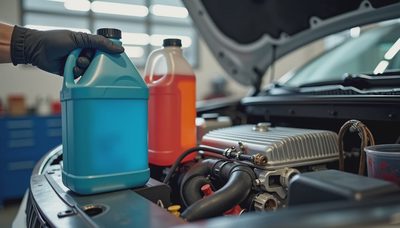
A water pump lubricant intended for an automotive cooling system should clearly state the application, dosage, material compatibility, and limitations. If the label only says it is for industrial pumps, water treatment, or gearboxes, do not pour it into a radiator. The same caution applies to soluble cutting oil, hydraulic oil, two-stroke oil, and dish detergent. Each may appear slippery, but slipperiness is not the performance requirement.
The correct coolant already provides the controlled corrosion protection and seal compatibility the system needs. A typical drain-and-fill may cost roughly $100 to $250 at a shop, depending on vehicle and coolant volume. A failed pump, contaminated heater core, or blocked radiator can cost several times that amount. Saving a few dollars on an additive is poor maintenance economics.

When a lubricant is appropriate for a pump
Some pumps do require a dedicated lubricant, but the lubrication point is usually outside the coolant circuit. A centrifugal pump may have greaseable bearings, an oil bath, or permanently sealed bearings. A diaphragm pump may use a crankcase lubricant separate from the pumped fluid. A mechanical seal can require a compatible barrier fluid or flush plan. In each case, the pump manual identifies the product family and service interval.
For grease, the key questions include thickener type, base-oil viscosity, temperature range, water resistance, and relubrication volume. NLGI consistency numbers describe grease stiffness, but an NLGI 2 grease is not automatically suitable for every bearing. Compatibility between lithium, calcium sulfonate, polyurea, and other thickeners must be confirmed before mixing. ASTM D4950 classifications can help describe automotive service greases, but the equipment maker's instruction remains the controlling requirement.
A water pump lubricant for a dedicated bearing should never be confused with a coolant additive. One protects a loaded metal contact under a bearing's operating conditions; the other, if approved, manages corrosion and seal behavior in a water-based system. They solve different problems.
A practical inspection and service procedure
First, document the pump model, fluid, temperature, and current symptoms. A leak at the weep hole, noisy bearing, rising temperature, or belt dust points toward different faults. Do not diagnose every leak as a lubrication failure. A weep-hole leak often indicates a mechanical seal that has reached the end of its service life, and adding fluid will not repair the seal.
Second, read the manual and product technical data sheet. Look for viscosity, operating range, dilution ratio, pH, elastomer compatibility, and restrictions on use with aluminum, copper, brass, or plastic. On the spec sheet, the number that decides it is the required application and compatibility statement, not the word “lubricant” on the front label.
Third, measure accurately. Overconcentrated additives can increase foaming, change heat transfer, or raise deposit formation. Underconcentration may provide no meaningful protection. Use a clean graduated container, avoid cross-contamination, and record the product, batch, quantity, and date in the maintenance log.
If the system is already contaminated, drain it into an approved container and flush according to the vehicle or equipment procedure. Never open a hot pressurized cooling system. Allow it to cool, wear chemical-resistant gloves and eye protection, and keep coolant away from pets because ethylene glycol is toxic and has a sweet taste.

Industrial pumps, fleet work, and common mistakes
In a fleet shop, the best control is product segregation. Store coolant additives, bearing grease, gear oil, and hydraulic fluid in labeled containers with dedicated transfer equipment. A gray squeeze bottle at the service cart can create more trouble than a complicated formula if nobody knows what it contains.
For industrial water systems, the treatment program may include corrosion inhibitors, biocides, scale control, and seal-compatible lubricity additives. These products are selected through water analysis and equipment requirements, not by searching for the slickest liquid. Follow the supplier's safety data sheet and the facility's chemical-management procedure. OSHA hazard communication requirements generally call for labeling and accessible safety information; local disposal rules can add further obligations.
Common mistakes include adding automotive antifreeze to an industrial loop without checking concentration, mixing incompatible coolants because their colors match, greasing a sealed bearing through a mistaken fitting, and using an engine oil as a seal flush. Another mistake is assuming a noisy pump needs more lubricant when cavitation, misalignment, low suction head, or worn impeller clearance is the real cause.
Storage, disposal, and the one-line customer answer
Keep concentrates in their original, labeled containers, protected from heat and freezing where the product requires it. Do not reuse coolant jugs for drinking water or food storage. Clean small spills with absorbent material, prevent entry into storm drains, and dispose of contaminated absorbent according to local requirements. Used coolant and oily water should go to an appropriate collection or recycling program, not onto soil or down a drain.
If a customer asks whether water pump lubricant belongs in a vehicle radiator, the one-line answer is: only use it when the vehicle or additive manufacturer specifically approves that product for that cooling system. Otherwise, use the specified premixed or correctly diluted coolant and diagnose the pump mechanically.
If your customer asks, the one-line answer is different for an industrial pump: identify the lubrication point, then match the lubricant to the bearing, seal, or barrier-fluid specification. A product that is right for one point can be wrong for another.
Water pump lubricant is useful when its chemistry and application are clearly defined. It is not a universal cure for leaks, overheating, or bearing noise. Verify the system, read the specification, measure the dose, and document the service. That short process protects seals, preserves heat transfer, and keeps a small maintenance question from becoming a complete pump replacement.



No comments yet — be the first to share a thought.