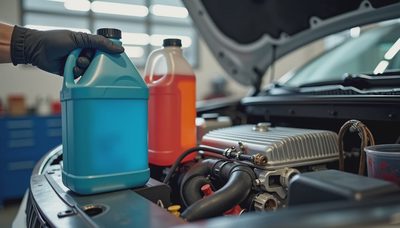
After reading this coolant color chart, you will be able to use fluid color as a clue, identify the important coolant technologies, and select a replacement based on the vehicle specification rather than appearance alone. That distinction matters at the parts counter and in the service bay. A green, orange, pink, blue, or yellow fluid can suggest a formulation family, but color is not an industry standard and does not prove compatibility.
Why coolant color is only a starting point
Manufacturers add dyes for identification, leak detection, and product distinction. The dye itself does not provide corrosion protection, raise the boiling point, or determine whether two coolants can safely mix. Those jobs belong to the water-glycol base and the inhibitor package. In other words, the same color can appear in different chemistries, while related chemistries can be sold in different colors.
A traditional green coolant commonly uses an inorganic additive technology, or IAT, with silicates, phosphates, or both. It has often been associated with older vehicles and shorter service intervals. Orange, red, and some pink products frequently use organic acid technology, known as OAT. Hybrid organic acid technology, or HOAT, can appear yellow, blue, orange, pink, or another shade depending on the supplier and vehicle application. This is why a coolant color chart cannot replace an owner manual, service label, or product technical data sheet.
Reference Box: The one-line chemistry answer is simple: color identifies dye, while the inhibitor package determines protection and compatibility.
Aged coolant adds another problem. Heat, contamination, rust, and depleted inhibitors can turn a bright fluid brown, cloudy, or nearly colorless. Oil contamination may create a greasy film or muddy appearance. A visual inspection can flag trouble, but it cannot confirm the remaining reserve alkalinity, freeze protection, or additive condition.

Coolant color chart by common technology
The following coolant color chart is a field reference, not a universal decoding key. Always match the vehicle's required specification first.
Green is often associated with conventional IAT antifreeze. Older domestic cars, light trucks, and many vehicles built before extended-life coolants became common used this approach. Silicate-containing formulas can protect aluminum surfaces, but the package can deplete more quickly, especially when the cooling system is contaminated or topped up with unsuitable water.
Orange, red, and pink are frequently associated with OAT or extended-life products. These formulas generally rely on carboxylate inhibitors and are designed for longer service intervals in applications that specifically call for them. General Motors Dex-Cool is a well-known example of an orange coolant family, but the color alone does not establish that a bottle meets the required specification.
Yellow and blue products are often HOAT or vehicle-specific extended-life formulations. European and Asian manufacturers have used several distinct inhibitor combinations, including phosphate-containing and phosphate-free packages. A blue coolant in one vehicle is not automatically interchangeable with a blue coolant in another.
Purple, turquoise, and other unusual shades should be treated the same way. Read the label for the applicable OEM approval or specification. If the label only says “universal,” inspect the technical data and confirm whether a complete drain and refill is required before changing chemistry.
How to identify the correct replacement
Start with the vehicle identification number, model year, engine, and service history. The owner manual is the first reference. The radiator or expansion-tank label may provide a second confirmation. For a fleet, record the coolant specification in the maintenance system rather than relying on a technician’s memory or a photograph of the fluid.
Next, check whether the product is concentrate or premixed. Concentrate normally requires dilution with the water quality specified by the vehicle or coolant maker. A 50/50 mixture of antifreeze and suitable water is common, but the correct ratio depends on climate, system design, and product instructions. Too much glycol can reduce heat transfer, while too much water reduces freeze and corrosion protection.
If the existing fluid is unknown, a full drain, flush procedure, and refill with the specified product is safer than guessing from a coolant color chart. Do not open a hot radiator or expansion tank. Allow the engine to cool, wear chemical-resistant gloves and eye protection, and catch every drain stream in a labeled container. Ethylene glycol is toxic to people and animals, and its sweet taste makes spills especially dangerous.
Here's the chemistry, here's the spec, here's what to do with it: identify the required inhibitor technology, remove uncertainty when necessary, and fill to the correct concentration.

Can different coolant colors be mixed?
Color mixing is not the technical question. Inhibitor compatibility is. Some products are marketed as compatible with multiple technologies, but that claim still depends on the label directions and the vehicle application. Mixing can reduce the performance of one or both additive packages, create deposits, or make future diagnosis difficult. A small emergency top-off may prevent overheating, but it should be followed by a planned correction rather than treated as a permanent service.
Do not use color as proof that a coolant is compatible with an aluminum radiator, water pump seal, gasket material, or diesel wet-liner system. Heavy-duty engines may require supplemental coolant additives or a specified nitrite and molybdate balance. Passenger-car coolant requirements can be equally specific. The coolant color chart helps you ask the right question; it does not answer the question by itself.
If a customer asks whether orange can replace green, the one-line answer is: only when the replacement product meets the vehicle's required specification and the system is serviced according to the product directions. A complete exchange is usually easier to defend than an uncertain mixture.
Testing, service intervals, and warning signs
Use a refractometer or an approved coolant tester to check freeze protection, but remember that concentration testing does not measure inhibitor health. Test strips and laboratory analysis can provide additional information for fleets and high-value equipment. Look for correct level, clear appearance, no oil film, and no unexplained sediment. A cooling system that repeatedly loses fluid needs leak diagnosis, not repeated topping off.
Service intervals vary by coolant technology, vehicle, operating conditions, and manufacturer instructions. Severe duty, long idling, dusty work, and poor water quality can accelerate problems. During service, inspect hoses, clamps, radiator seams, the water pump area, and the pressure cap. A weak cap can lower system pressure and allow boiling or coolant loss even when the fluid itself is correct.
A coolant color chart is most useful when paired with a written inspection record. Note the product name, specification, concentration, date, mileage, and amount added. That record prevents a later technician from treating an unknown color as a known chemistry.
Safe storage and disposal
Store new coolant in its original, clearly labeled container with the cap secured. Keep it away from food, children, pets, drains, and floor drains. Collect used coolant separately from used oil because recycling streams and disposal rules differ. Never pour antifreeze onto soil, into a storm drain, or into a septic system. Contact a local household hazardous-waste program, recycling center, or approved automotive-fluid collector for accepted drop-off procedures.
The practical conclusion from this coolant color chart is straightforward: color can narrow the possibilities, but the specification makes the decision. Read the manual, verify the formulation, protect yourself during service, and document what went into the cooling system.



No comments yet — be the first to share a thought.