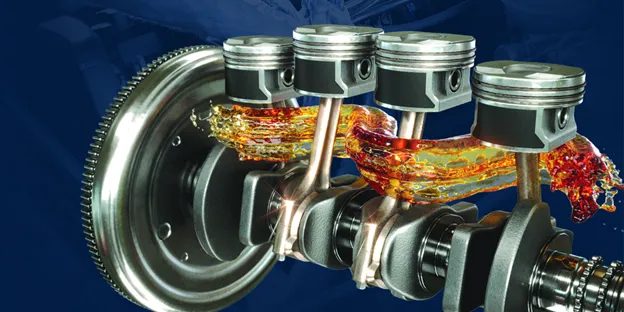
Modern production processes and industries face increasingly demanding performance standards. To stay competitive and maintain profitability, businesses must achieve peak operational efficiency while meeting stringent safety requirements and controlling costs. These pressures drive demand for more sophisticated lubrication solutions capable of sustaining industrial operations at the highest level. Synthetic oil and lubricants are among the products that answer this call.
These lubricating fluids were developed specifically to address the limitations of mineral or conventional oil. Through molecular-level engineering and the integration of more sophisticated additive systems into their formulations, synthetic oil and lubricants offer numerous advantages over their conventional counterparts.
What makes synthetic oil beneficial? Below are the top 8 advantages worth understanding.
Synthetic lubricants are manufactured from artificially constructed chemical compounds. These synthetic compounds are derived from petroleum molecules that undergo a process of breakdown followed by reconstruction. This rebuilding process results in synthetic oils possessing a more uniform molecular structure — a property of considerable importance. It enables smoother, more consistent machine lubrication, which translates to reduced power consumption and greater operational efficiency.
Mineral oils are derived from natural sources that contain a wide variety of chemical compounds, including waxes, oxygen, sulphur, nitrogen, phosphorus, and others. These compounds pose a problem because they negatively affect both the performance and service life of the oil. Specifically, they accelerate oxidation and oil degradation, promote sludge and deposit formation, and contribute to higher evaporation rates — particularly under elevated operating temperatures.
Being synthetically produced, synthetic lubricants contain significantly fewer impurities and contaminants compared to mineral oils. This purity directly contributes to the next notable advantage of synthetic oil.
Because of their cleaner compositional profile, synthetic oils deliver greater stability and durability than mineral oils. These qualities are especially critical in applications involving extreme temperatures and demanding working conditions.
Unlike mineral oils, synthetic fluids maintain their stability when subjected to low and high temperatures, water, fuel contamination, acids, and other combustion byproducts present in machine engines. Regarding water exposure in particular, synthetic oil is non-hydrolytic — meaning it remains stable in humid environments and does not emulsify when it comes into contact with water.
Taken together, the enhanced oxidation stability of synthetic oil contributes directly to improved engine performance.
Among the most significant advantages of synthetic oil is its higher viscosity index. A higher viscosity index signals that synthetic oil resists changes in viscosity caused by temperature fluctuations. This directly influences flowability: synthetic oils maintain strong flow rates at low temperatures while resisting thinning at high temperatures. The result is a thicker protective film and greater defense against wear and tear.
Synthetic oils possess a higher flash point, making them well-suited for high-temperature applications. Their lower flammability makes them a preferred choice in industries where fire hazards are prevalent. This characteristic also aligns with the growing emphasis on safety standards and requirements across industrial sectors.
As a general rule, synthetic oil and lubricants have a considerably longer service life than mineral oils, requiring less frequent changes. A typical change interval falls around every 5,000 to 7,000 miles, while certain full HD synthetic oil products support even longer drain intervals.
These extended drain intervals reduce a portion of overall maintenance costs — one of the factors that justify the premium price of synthetic oil. Furthermore, the outstanding anti-wear properties of synthetic lubricants contribute to greater engine and machine efficiency and reliability.
Another advantage of synthetic oil, stemming from its higher traction coefficient, is improved energy efficiency. In practical terms, a higher traction coefficient means that an engine running on synthetic oil demands less force or horsepower to move heavy loads.
Certain synthetic oil and lubrication products are highly biodegradable, making them excellent options for use in environmentally sensitive settings. Because synthetic oils are free of phosphorus and sulphur, they find application in the food industry, for example. In industries such as forestry, mining, and petroleum exploration and production — where oil spills and environmental contact can occur and pose risks to wildlife and flora and fauna — synthetic oils represent a rational, responsible, and often required choice.
Synthetic oil and lubricants are undeniably more advanced than their traditional mineral-based counterparts. While their price point is considerably higher, they prove cost-effective over time. Their enhanced stability translates to longer service life and extended drain intervals. Their chemical makeup and sophisticated additive systems boost engine performance and guard against wear and tear, improving overall reliability. Their superior viscosity characteristics make them resistant to temperature variation and suitable for a broad range of applications, particularly in extreme conditions. And for applications in sensitive environments, certain fully biodegradable synthetic lubricants are an ideal fit.




No comments yet — be the first to share a thought.