When a customer asks what falls under auto chassis parts, the one-line answer is: everything that holds the vehicle together and connects it to the road. After this post, you'll be able to identify the major components, know what wears out, and understand which lubricant specs belong at each grease point.
Here's the chemistry, here's the spec, here's what to do with it. I'm not recommending a brand; I'm giving you a framework I used in the lab and now teach in class.
What Counts as an Auto Chassis Parts System?
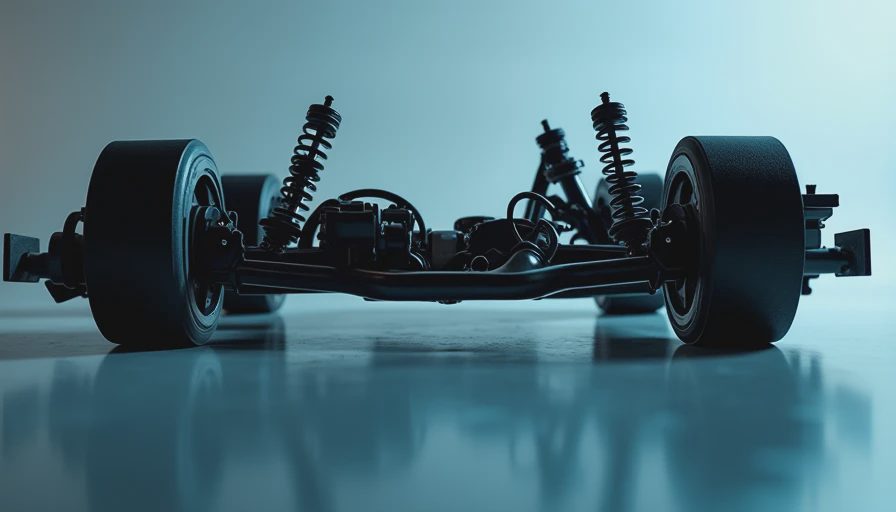
The phrase auto chassis parts covers the load-bearing and linkage components that keep the body aligned over the wheels and transfer steering and braking forces to the pavement. Main categories: frame or unibody structure, body mounts, suspension arms, ball joints, tie rods, steering linkage, wheel bearings, and brake mounting hardware. If a part is bolted to the frame and moves as you drive, it is likely a chassis part.
Frame, Body Mounts, and Cradle Bushings
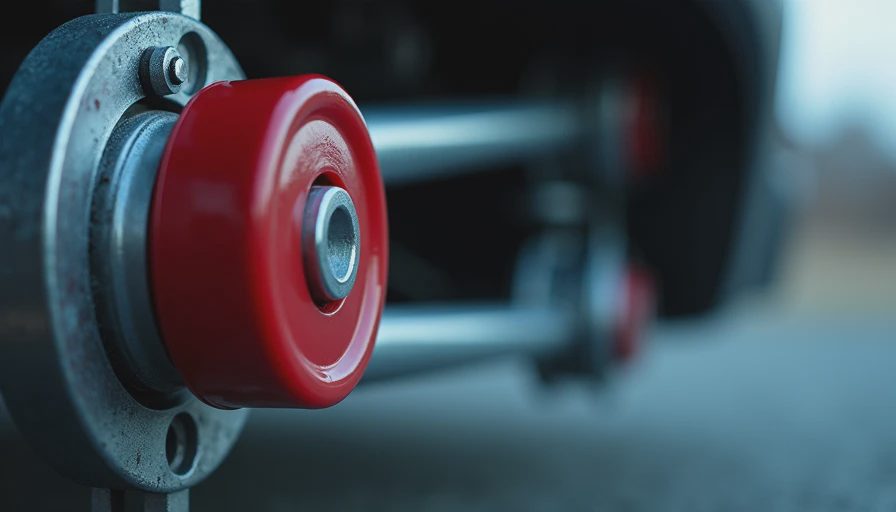
The frame is the structural backbone. On body-on-frame trucks, the frame rails carry the load; on unibody cars, subframes and body mounts do the same job. Body mounts are rubber or polyurethane pucks that isolate the cabin from road noise. When they collapse, you get clunks over bumps and a shifting steering column. Replacement body mounts for a half-ton truck cost $150 to $400 in parts and labor. On cars, subframe bushings swell with age and fluid contamination, making the front cradle feel loose under hard braking.
If you are pricing auto chassis parts for a front-end repair, inspect the body mounts and cradle bushings at the same time as the control arms. A customer may approve control arms only, then blame you when the clunk returns because the mounts were still soft.
Suspension Arms, Ball Joints, and Bushings
Control arms connect the frame to the steering knuckle and control vertical wheel travel. The rubber bushings at the inner pivot degrade with heat, oil, and age. Ball joints are the pivots between the control arm and the knuckle; a worn joint clunks on bumpy roads, causes uneven tire wear, and makes the steering feel loose.
When you price a front suspension job, the arms, ball joints, and bushings often come as a single assembly from aftermarket suppliers. Expect $300 to $800 per side including parts and labor at an independent shop. This category of auto chassis parts is where quality differs most between economy and premium lines; the difference is usually bushing durometer and boot material.
Steering Linkage and Tie Rod Ends
The steering gear turns the wheels through inner and outer tie rods, idler arms, and pitman arms. This group of auto chassis parts sees the most concentrated force on the car next to the wheel studs. A worn tie rod end can cause a high-speed shimmy, a pull to one side, and inside-edge tire wear.
The basic shop check is to grab the tie rod and feel for vertical play. On the ground, rock the wheel and watch the socket. Quality outer tie rods cost $40 to $120 each; the real cost is the alignment afterward, typically $80 to $150. Replacing tie rods as a pair is the smart practice.
Brake Mounting Hardware, Wheel Bearings, and the Grease Angle
Brake caliper brackets, slide pins, and wheel bearing hubs fall under the broad definition of chassis components. Grease is what keeps these parts alive. On a traditional tapered roller bearing, the grease spec matters: NLGI #2 lithium grease is the default for most wheel bearings, but the correct grade depends on the OEM spec and operating temperature. Here's the chemistry: thickener type controls drop point, base oil viscosity controls load-carrying capacity. Don't mix greases from different thickener families; they can bleed and separate.
If your customer asks, the one-line answer is: use the grease in the service manual and repack bearings on the recommended interval. Wheel bearing replacement runs $250 to $550 per wheel including races and seals. For caliper slide pins, use a high-temperature synthetic brake grease.
How to Inspect Auto Chassis Parts and When to Replace
A solid inspection routine for auto chassis parts catches worn components before they become dangerous. With the car on a lift, check bushings for cracks, ball joint boots for tears, and control arm bolts for corrosion. Rock the wheel for bearing play, spin the hub for grinding, and check brake pad wear for evenness.
Replace control arms, tie rods, and ball joints as pairs to keep alignment even. If one bushing is broken, the other side is likely close to failure. When ordering, match thread pitch and taper size; a metric taper instead of SAE can leave a clunk after one week. Quality aftermarket parts are fine, but the torque spec and sequence are not optional.
Common Questions About Auto Chassis Parts
Q: How long do chassis parts last?
A: Ball joints and tie rods typically last 80,000 to 150,000 miles depending on road conditions and maintenance. Bushings and body mounts can go 100,000 or more, but inspect them whenever you see uneven tire wear.
Q: Can I replace chassis parts myself?
A: Yes, but you need a lift, torque wrench, and alignment after. Control arm bolts are often torqued under load; skip that and the bushings will fail early.
Q: Are OEM parts worth the extra cost?
A: For critical steering and suspension parts, the precision of the taper and ball stud matters. Aftermarket quality has improved, but match the exact part number and thread size.
Bookmark this page for the next time a customer asks whether a clunk is the strut or the tie rod. If you understand the parts, the lubrication points, and the torque specs, you stop guessing and start confirming the diagnosis.

No comments yet — be the first to share a thought.