If you own a diesel vehicle, knowing the DPF filter location is more than a trivia question. It saves you time during inspection, helps you spot a theft or damage, and lets you plan regeneration cycles intelligently. The DPF filter location varies by make and model, but there are consistent patterns across pickup trucks, vans, and passenger cars. By the end of this post, you'll be able to walk up to almost any diesel on the lot and point to the DPF in under a minute.
Why Knowing the DPF Filter Location Matters
Diesel particulate filters trap soot from exhaust gas to meet EPA emissions standards. A clogged or damaged DPF kills engine performance and triggers warning lights. If you don't know where it lives, you can't check for physical damage, loose connections, or signs of a forced regeneration that got too hot. On the shop floor, I've seen techs spend fifteen minutes hunting for a DPF on a Ram 2500 when they could have found it in thirty seconds. Knowing the DPF filter location also helps you avoid accidental damage during other repairs — for example, jacking up a truck under the DPF bracket can crack the ceramic substrate.
Another practical reason: DPF theft is on the rise because scrap recyclers pay for the precious metals (platinum, palladium, rhodium) inside the catalyst portion integrated into many DPFs. If you know exactly where your DPF sits, you can check for cut exhaust pipes or missing bolts the moment your truck starts sounding loud. And for the DIY owner, locating the DPF is step one in any cleaning or replacement job.
Common DPF Filter Locations by Vehicle Type
On most light-duty diesel pickups and SUVs, the DPF is mounted directly under the vehicle, between the turbocharger outlet and the muffler. The typical setup looks like a cylindrical can, roughly 12 to 18 inches long, with a temperature sensor and differential pressure sensor hoses attached. On Ford 6.7L Power Stroke trucks (2011 and later), the DPF filter location is under the cab on the passenger side, close to the exhaust downpipe. On Ram 2500 and 3500 with the 6.7L Cummins, the DPF sits under the hood on the exhaust manifold side, directly behind the turbo — you can see it from above if you remove the engine cover. On Chevy/GMC Duramax L5P trucks, the DPF is under the cab, driver side, ahead of the muffler.
For diesel passenger cars like Volkswagen TDI or BMW 3-series diesels, the DPF filter location is usually under the hood or directly underneath the engine bay. Because space is tight, many manufacturers integrate the DPF into the exhaust manifold or close-coupled catalytic converter assembly. On a 2015 VW Golf TDI, for example, the DPF is attached to the front of the engine, below the exhaust manifold, and wrapped in a heat shield. On a BMW 328d, the DPF is under the car, forward of the rear axle, near the mid-pipe.
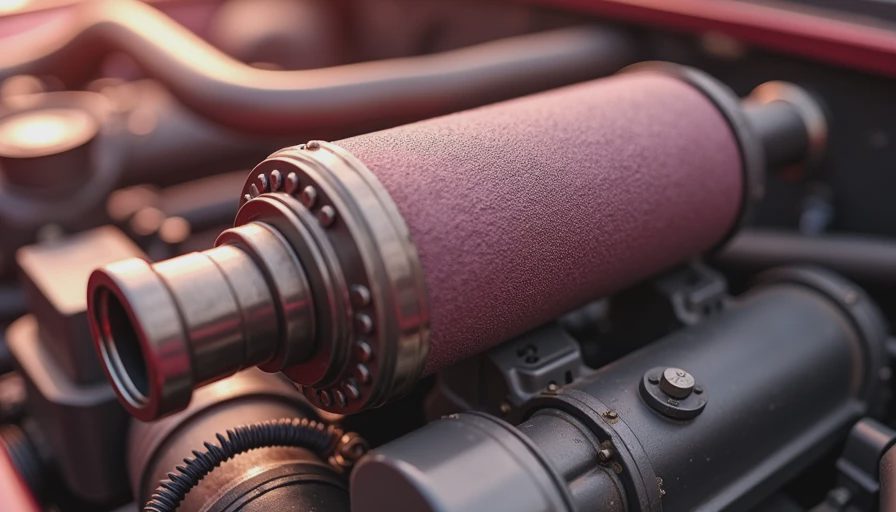
Heavy-duty trucks (Class 8) often have the DPF mounted vertically behind the cab or horizontally under the frame rail. The DPF filter location on a Freightliner Cascadia is usually on the passenger side frame rail, just behind the cab, in a large rectangular box. On International ProStar, it's on the driver side similar position.
How to Visually Identify the DPF
Even if you're not sure of the exact model layout, here's what to look for. The DPF is typically a stainless-steel can with a flange at each end. It will have two small-diameter hoses or nipples connected to it — these are for the differential pressure sensor that monitors soot load. The can is larger in diameter than the exhaust pipe. It may have a heat shield or be wrapped in a reflective blanket. On some vehicles, there is a metallic nameplate or emissions label nearby that says "Diesel Particulate Filter." If you see a round can with two sensor ports and a large diameter change, you've found the DPF filter location.
Compare it to the catalytic converter: a catalyst is usually shorter and may have a wider body, but the DPF is longer and has those two pressure sensor lines. On modern duallies, the DPF often sits above the frame rail, not hanging low, to avoid ground clearance issues.
What to Do When You Locate the DPF
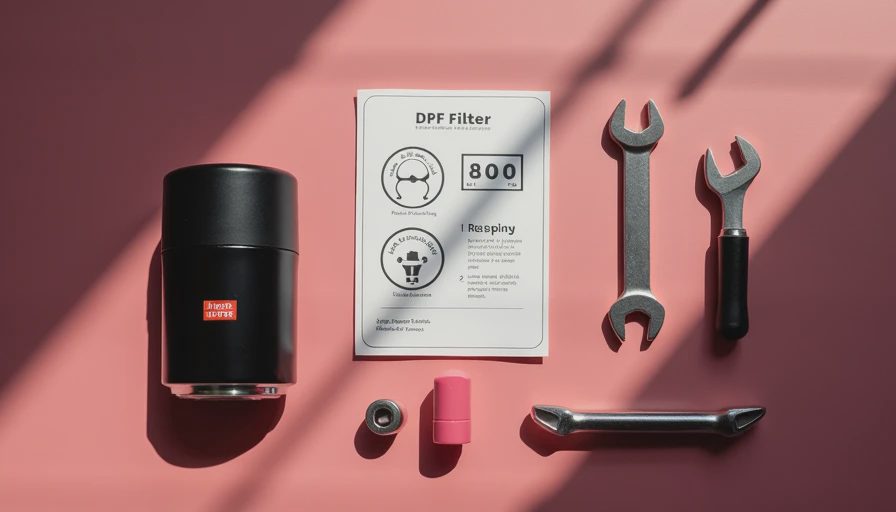
Once you have identified the DPF filter location, inspect the can for dents, rust through, or signs of cracking. Check the flex joints for leaks. Look at the pressure sensor hoses for brittleness or melting — they often fail from heat cycling. If you are planning a cleaning, you need to remove the DPF, which usually requires unbolting the flange connections (typical 14mm or 15mm bolts) and disconnecting the two sensor hoses. On some trucks, you may need to remove a heat shield first. Always let the exhaust system cool completely — the DPF can stay hot for hours after shutdown.
If you suspect a clogged DPF, you can check the exhaust back pressure with a scan tool or mechanical gauge. Normal pressure at idle is under 1 psi; above 3 psi at idle indicates a restriction. If the DPF is plugged, forced regeneration may clear it, but if not, removal for professional cleaning or replacement is needed. The DPF filter location matters for this step because some trucks require you to detach a mid-pipe before the DPF can slide out.
Safety and Disposal Reminders
Never attempt to clean a DPF with compressed air or insert any tool into the substrate. The ceramic material is fragile and expensive to replace. If you remove the DPF for any reason, store it in a dry place away from moisture. When replacing a DPF, the old unit should be recycled as scrap metal; many auto parts stores accept them for core return. Avoid burning the soot off with a torch — that can damage the substrate and may release hazardous particulates. Always wear gloves when handling a used DPF because the ash contains fine metal oxides. If your customer asks, the one-line answer is: locate the DPF, inspect for damage, and never force regeneration without checking the differential pressure sensor first.
Final Thoughts
The DPF filter location is a fundamental piece of knowledge for anyone maintaining a modern diesel. Whether you're a fleet mechanic checking a truck line or a DIY owner trying to diagnose a check-engine light, being able to find the DPF quickly saves time and prevents misdiagnosis. Start by looking under the cab on pickups and under the hood on passenger cars. Use the pressure sensor hoses as your prime visual clue. And remember: here's the chemistry, here's the spec, here's what to do with it.

No comments yet — be the first to share a thought.