If you are working on a Nissan 5.6L V8 engine, knowing the correct firing order is essential for diagnosing misfires, replacing spark plugs, setting up ignition timing, or verifying distributorless ignition system operation. Here is the Nissan 5.6 firing order, cylinder numbering, and practical information to use on the shop floor.
The firing order for the Nissan 5.6L V8 engine (found in models like the Armada, Titan, and Patrol, with engine codes VK56DE, VK56VD) is 1-8-7-3-6-5-4-2. This applies to all generations of the 5.6L VK series. Cylinders are numbered with odd numbers on the left bank (bank 1, passenger side on RWD models) and even numbers on the right bank (bank 2, driver side on RWD models). Specifically, from the front of the engine, the left bank cylinders are 1-3-5-7, and the right bank cylinders are 2-4-6-8.
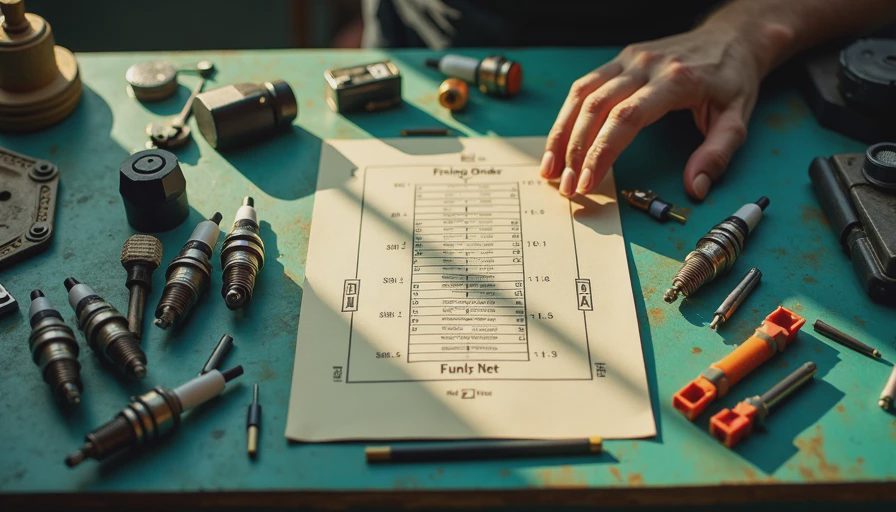
Understanding the Nissan 5.6 Firing Order
The Nissan 5.6 firing order 1-8-7-3-6-5-4-2 is designed to balance the firing pulses across the crankshaft for smooth operation. Each cylinder fires 90 degrees of crankshaft rotation apart. This sequence minimizes vibration and reduces stress on the crankshaft bearings. If you are replacing ignition coils or spark plugs, always note which cylinder each component comes from, especially if you are diagnosing a misfire. The firing order pattern is stamped on the intake manifold or printed in the factory service manual for these engines.
Cylinder Numbering and Layout for the Nissan 5.6L V8
Correct cylinder identification is critical before using the Nissan 5.6 firing order. On the VK56 engine, cylinder 1 is on the front left (passenger side on most RWD applications). Facing the engine from the front, the left bank (bank 1) is cylinders 1, 3, 5, 7 from front to rear. The right bank (bank 2) is cylinders 2, 4, 6, 8. If you are working on a model with a different orientation, verify by checking the coil pack connectors—bank 1 typically has the brown or gray connectors on early models. The correct order is essential when checking timing or performing a compression test.
Why Firing Order Matters for Engine Performance
Using the correct Nissan 5.6 firing order is not just a matter of numbers—a mistake can cause backfiring, rough running, or engine damage. The ignition coils fire in this sequence, and the fuel injectors follow the same order. If a spark plug wire (on older models) or coil is connected to the wrong cylinder, the engine will misfire severely. The ECM (engine control module) uses the crank and cam position sensors to determine which cylinder is on its power stroke and then fires the coil at the correct time. If the firing order is mixed up due to a wiring error, the engine may not start at all. The Nissan 5.6 firing order ensures that the power strokes are evenly spaced, which prevents harmonics that could fatigue the crankshaft.

Common Symptoms of Incorrect Firing Order
If you suspect a problem related to the Nissan 5.6 firing order, look for these signs. A single misfire code (P0300 random, or P0301-P0308 specific cylinder) can be caused by a crossed coil or wire. The engine may run rough under load, hesitate during acceleration, or produce a popping sound from the intake or exhaust. In severe cases, backfiring can damage the catalytic converter. If you are working on a vehicle that sat with a damaged harness, check that the coil pigtails are plugged into the correct cylinders referencing the Nissan 5.6 firing order. Always label coils and wires before disconnecting them.
How to Verify the Firing Order on Your Nissan 5.6
To confirm the Nissan 5.6 firing order on an engine you are servicing, follow these steps:
- Locate the cylinder numbering. On the VK56, look at the intake manifold casting—some have raised numbers near each runner. Alternatively, refer to the factory service manual sticker on the underside of the hood.
- Determine which bank is bank 1. Typically, bank 1 is on the passenger side for rear-wheel-drive vehicles. You can also identify it by the position of the camshaft position sensor (bank 1 is usually on the front of the right bank? Actually, bank 1 has the cam sensor for cylinders 1-4, bank 2 for 5-8, but check the manual).
- Use a multimeter to check coil primary resistance if you suspect a dead coil, but for verifying order, simply trace the harness. The ECM fires coils in the order of the crankshaft position sensor signals.
- If you are installing new coils, plug each coil into its original connector. If the wires are unmarked, use a test light or meter to find which wire fires for each cylinder while cranking. That is the definitive way to confirm the Nissan 5.6 firing order without a diagram.
Reference Box: Key Firing Order Specs
- Firing order: 1-8-7-3-6-5-4-2
- Cylinder direction: Left bank front (#1), right bank front (#2)
- Engine codes: VK56DE, VK56VD
- Ignition system: Distributorless (coil-on-plug)
- Spark plug gap: 0.043 in (1.1 mm) for most models—check your year
Using the correct Nissan 5.6 firing order will save you diagnostic time and prevent unnecessary parts replacement. Whether you are a seasoned technician or a serious DIYer, always double-check your cylinder numbering against the service diagram before assuming a misfire is a bad component. If your customer asks, the one-line answer is: the Nissan 5.6 firing order is 1-8-7-3-6-5-4-2, with cylinders arranged 1-3-5-7 on the left bank and 2-4-6-8 on the right.


No comments yet — be the first to share a thought.