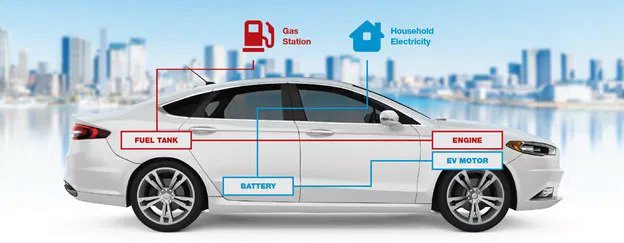
Awareness of electric and hybrid vehicles among the general public continues to grow. While the average consumer today may not fully grasp the mechanics behind how a hybrid engine operates (covered in detail throughout this article), most people recognize that these vehicles are far kinder to the environment than conventional cars powered solely by internal combustion engines.
Mass production of hybrid vehicles in the US began in 1999, and while significant progress remains to be made, most consumers now understand that hybrid technology represents a greener path forward — one that points toward a cleaner and more sustainable future.
Full hybrid electric vehicles, or FHEVs — particularly those equipped with capabilities such as regenerative braking or automatic engine shutdown at idle — deliver meaningful gains in fuel economy while cutting CO2 emissions. These advantages explain why FHEVs have grown increasingly attractive to OEMs working to comply with European emissions legislation, viewing this technology as a practical bridge until more advanced diesel and fully electric vehicles reach widespread adoption.
Despite the steady rise in green vehicle adoption, public knowledge remains limited when it comes to:
This article addresses each of those questions in turn.
A hybrid vehicle draws on two distinct energy sources for movement: an internal combustion system and an electric drivetrain. Because these vehicles rely partly on electricity, their dependence on conventional fossil fuels is reduced — resulting in lower emissions and improved miles-per-gallon performance.
Three fundamental units power today's modern hybrid vehicles:
At their core, hybrid electric vehicles are driven by a combination of an internal combustion engine and an electric motor that stores energy in a battery pack. That battery is replenished through both regenerative braking and the combustion engine itself. The additional output from the electric motor enables the vehicle to power auxiliary systems and reduce engine idling when the car is stationary.
Together, these features deliver improved fuel economy while preserving overall driving performance.
Hybrid vehicles can be categorized based on two key factors: the degree of hybridization and the type of powertrain configuration employed.
The classification of hybrid vehicles by hybridization level breaks down as follows:
Powertrains are responsible for transferring engine power to the wheels. Whereas a conventional powertrain consists of the engine, transmission, driveshaft, suspension, and wheels, hybrid powertrains include additional components and can be arranged in series, parallel, or series-parallel configurations — each designed to extract the maximum benefit from the hybrid system.
Among these, the series-parallel configuration achieves the greatest fuel efficiency by operating as a series powertrain at lower speeds while switching to gas-only propulsion at higher speeds. This flexible architecture consumes less fossil fuel, minimizes exhaust emissions, and delivers peak overall efficiency.
Hybrid engines generally operate at lower temperatures than their conventional counterparts. The electric motor offloads a portion of the work from the internal combustion engine, which means the IC engine often cannot reach the elevated temperatures needed to evaporate water that condenses inside the engine oil. Because hybrid engine oil also runs cooler, it may struggle to adequately lubricate all moving engine components.
Choosing the correct hybrid engine oil for your vehicle significantly reduces wear and tear, limits sludge buildup, and extends the overall service life of the engine.
A further complication arises because lubricants in hybrid vehicles can come into contact with electrical components and become electrically charged — a situation that can lead to serious failures. For this reason, hybrid engine oils and transmission lubricants must possess electrical and conductivity properties that differ from those of conventional vehicle oils, ensuring full compatibility with the insulating materials and coatings they encounter.
Oxidation presents yet another challenge unique to hybrid engines compared to traditional IC engines. Elevated temperatures accelerate oxidation and oil breakdown, which in turn raises conductivity levels and can inflict damage on seals and bearings. The appropriate fluid must be selected to cool electrical components and suppress oil oxidation; failure to do so risks interference within the motor's delicate electrical and electronic systems.
The correct hybrid lubricants address all of these challenges, safeguarding both the vehicle's engine and the integrity of the fluids over the long term.
Hybrid vehicles introduce new and distinctive powering architectures characterized by higher average engine loads combined with shorter engine run times. These modified operating conditions and unique circumstances give rise to specific demands, which include:
2. Oil for the drivetrain
When accelerating in a hybrid vehicle, the car seamlessly transitions between its two power sources at precisely the right moment to maximize energy efficiency. As noted above, this propulsion approach lowers fuel consumption and reduces CO2 output — but it also introduces a set of distinct challenges.
Those challenges include:
Given that hybrid vehicles operate under these specific conditions, low oil temperatures are a common occurrence. Additive chemistry in hybrid oil must therefore be formulated to withstand this demanding environment, where water ingress and sludge formation can trigger serious long-term oil degradation.
When biofuels enter the picture as well, the degradation process accelerates even further — particularly in HEV applications — making it all the more important to use only the highest-quality hybrid oil available for hybrid vehicle engines.
There is a modest distinction between hybrid engine oil and standard internal combustion engine oil, though some argue the difference is too small to matter.
In reality, the IC engines found in hybrid vehicles — whether diesel or gasoline — are conventional internal combustion engines for which standard oils can technically be used. Even vehicle manufacturers often publish identical specifications for both hybrid and conventional engine oil.
Consequently, many oils carrying approvals for non-hybrid IC engine vehicles are also approved for use in hybrids. That said, a subtle but potentially meaningful difference does exist over the longer term.
Because hybrid vehicles rely on their electric motors to handle a significant share of the workload, the combustion engine does not run continuously — and this results in an operating temperature that is typically lower than in non-hybrid vehicles. The repeated switching between the IC engine and the electric motor can also produce an unusually high number of cold starts.
This is the primary reason we recommend using dedicated hybrid engine oil rather than conventional alternatives.
Hybrid oil is engineered with optimized temperature-viscosity characteristics that allow it to protect against wear and corrosion at critical lubrication points even under cold conditions — and to do so quickly enough to safeguard both the engine and the oil itself. For these reasons, hybrid vehicle owners are advised to use:
This is precisely why Valvoline has created a line of oils and transmission fluids formulated specifically for hybrid vehicle applications.
On the transmission side, hybrid vehicles rely almost exclusively on automatic transmissions. Modern automatic transmissions are both efficient and capable of providing the level of automation required to handle seamless switching between the IC engine and the electric motor.
This creates additional complexity when it comes to identifying the optimal transmission oil for hybrids. During acceleration and braking, substantial energy is directed to the electric motor functioning as a generator — generating more heat than equivalent systems in conventional vehicles. The close physical proximity of the gearbox housing to the electric drive unit compounds this issue, since the heat generated by that interaction can push temperature stress as high as 180°C.
For hybrid transmission oil, our recommendation is: VALVOLINE HYBRID DRIVELINE.
Valvoline Hybrid Driveline lubricants are fully synthetic fluids engineered to deliver outstanding performance, superior lubrication, and maximum protection for hybrid vehicles. Formulated with premium base stocks, high-grade additives, and antioxidants, they enhance durability, improve transmission efficiency, and elevate the performance of the vehicle as a whole.
The Valvoline Hybrid product range includes two premium transmission fluids — Valvoline Hybrid DCT and Valvoline Hybrid ATF fluid. Both are specifically engineered to be fully compatible with the materials and electrical components present inside the transmission, offering premium protection and superior hybrid performance alongside exceptional resistance to wear and tear.
Like conventional internal combustion engine vehicles, hybrid cars require routine and consistent oil changes. The key difference is that hybrid oil changes generally do not need to happen as frequently — particularly for drivers who spend most of their time at lower urban speeds.
This is because at lower speeds, hybrid vehicles place minimal strain on the IC engine, with the electric unit carrying the majority of the load. It is only when the vehicle is driven at higher speeds that the IC engine operates at full power.
Even so, it is advisable to change the oil in your hybrid at the same intervals recommended for conventional vehicles — every 5,000 miles — to keep the engine in good health.
Drivers who choose synthetic oils can extend that interval to between 7,000 and 10,000 miles between oil changes. Synthetic oils offer enhanced protection, though it is still wise to consult the manufacturer's guidelines before extending drain intervals.
Valvoline has engineered a premium range of hybrid oils and lubricants incorporating intelligent fluid technology designed from the ground up for hybrid vehicle use. Valvoline Hybrid products undergo rigorous laboratory testing and are specifically optimized to deliver superior protection under the demanding operating conditions hybrids present.
Laboratory evaluations have confirmed outstanding results across oxidation resistance, corrosion protection, water tolerance, and wear prevention — with double-digit performance gains over conventional oils and compliance with recognized industry benchmarks including API and ACEA standards.
Below is our hybrid oil product lineup:



No comments yet — be the first to share a thought.