After reading this reference, you’ll be able to look up what a timing belt does, when it needs replacement, and why an oil or coolant leak near the cover matters. The short answer: replace it at the vehicle manufacturer’s mileage or age interval, whichever comes first. If the service history is unknown or the belt is contaminated, have the engine evaluated rather than waiting for a warning noise.
What the belt does
A timing belt connects the crankshaft to one or more camshafts so the valves open and close in step with piston movement. It has teeth that engage matching sprockets. Depending on the engine, it may also drive the water pump or other components.
That synchronization matters. On an interference engine, pistons and valves occupy some of the same space at different times. If the belt breaks or jumps enough teeth, they can collide, potentially bending valves and causing other damage. A noninterference design generally avoids piston-to-valve contact from that loss of timing, but the engine will still stop. Verify the design for the exact engine; do not assume based on the vehicle badge alone.
Reference Box: A timing belt is a scheduled maintenance part, not an accessory drive belt. A failed accessory belt can disable important systems, but it does not normally control valve timing.
When to replace a timing belt
Use the manufacturer’s maintenance schedule for the specific engine, model year, and market. The interval is typically expressed in miles and years. Time matters because the belt and related components age even when a vehicle sees little use. Some manufacturers specify different intervals for severe service or particular operating conditions, so read the notes attached to the schedule.
If a used vehicle has no reliable replacement record, treat the belt’s age as unknown. A receipt should identify the vehicle, date, mileage, and work performed. A sticker under the hood can be a useful clue, but it is not a substitute for a detailed record. If the interval cannot be established, plan service promptly.
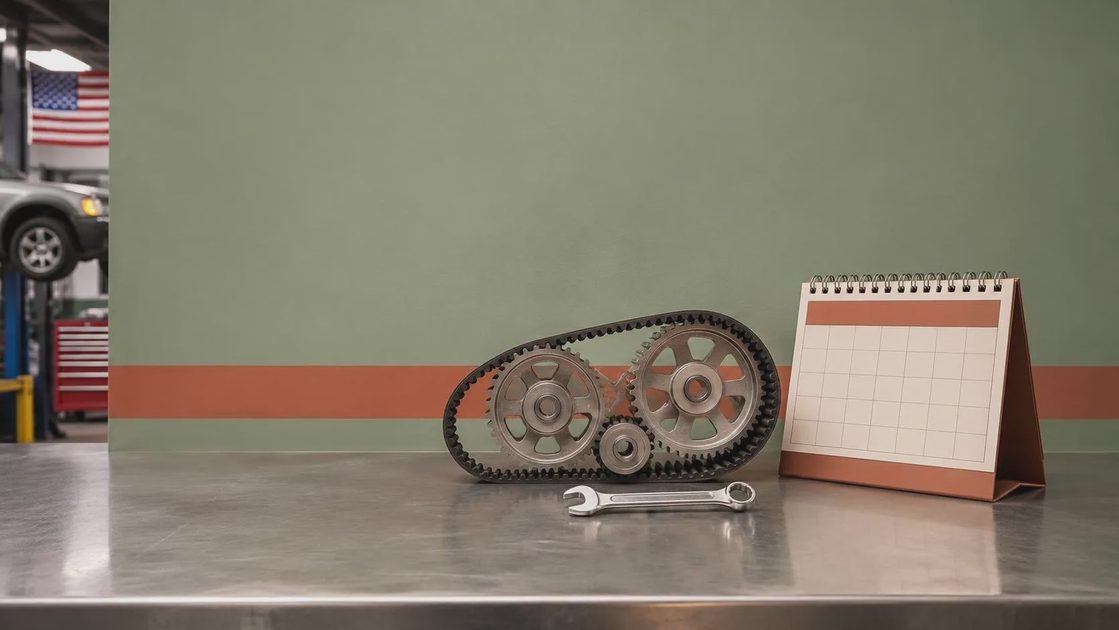
Do not rely on appearance alone. A belt can look acceptable through a limited inspection opening and still be due by age or mileage. On many engines, the cover prevents a complete inspection without substantial disassembly. A quiet engine does not prove that the belt, tensioner, or idler is healthy either.
A timing chain is a different system, usually lubricated by engine oil. Chains can wear and require service, but do not apply a belt replacement interval to a chain engine, or assume every chain lasts for the life of the vehicle. Confirm which system the engine actually uses.
What to replace during service
A sound estimate identifies the timing belt and the parts that support it. Depending on the engine and service procedure, a technician may recommend a tensioner, idler pulleys, fasteners, and seals. If the water pump is driven by the belt or is difficult to reach without removing it, replacing the pump during the same job may save duplicated labor later. It is not automatically necessary on every engine.
Ask the shop to separate required parts from optional preventive work. The manufacturer’s procedure may call for particular fasteners to be replaced or tightened using a specified sequence and torque. Correct alignment and tension matter as much as the new belt: an installation error can damage an engine even when every part is new.
If the pump is replaced, coolant may need to be drained and refilled. Use the coolant specification called for by the vehicle manufacturer, mix concentrate to the prescribed ratio, and follow the correct filling and air-bleeding procedure. Color alone is not a dependable way to establish coolant compatibility.
Oil, coolant, and wet-belt engines
Most conventional timing belt systems are intended to run dry. Oil or coolant inside a dry-belt cover is a reason to find the leak and follow the vehicle and belt manufacturer’s guidance on replacement. Possible sources include camshaft or crankshaft seals and, where applicable, a leaking water pump. Simply wiping the belt clean does not establish that its condition is acceptable.
Here’s the chemistry, here’s the spec, here’s what to do with it. Elastomers and reinforcing materials are selected for a particular operating environment; exposure to a fluid they were not designed to handle can change their properties. For a dry system, repair the source of contamination and replace affected components as the service information directs.

Some engines instead use a belt designed to operate in engine oil, often called a wet belt or belt-in-oil system. For those engines, the exact engine oil approval is important. An SAE viscosity grade describes oil flow characteristics, but it does not by itself establish that the oil meets the vehicle manufacturer’s belt-related requirements. Check the owner’s manual or service information for the required approval and change interval.
Reference Box: On the oil container, look for the exact manufacturer approval required for that engine, not just a matching viscosity grade or a claim that the oil is suitable for many vehicles. Use the manufacturer’s procedure to assess and service a wet belt; do not assume dry-belt inspection rules apply.
Warning signs and safe next steps
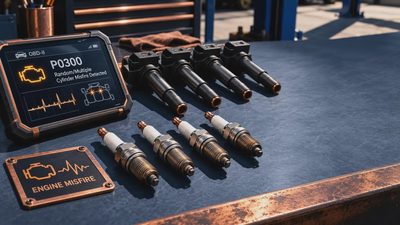
A squeal, ticking noise, rough running, misfire, or no-start condition can have several causes. None is a reliable stand-alone diagnosis of a timing belt problem. Oil or coolant leaking from behind the timing cover also warrants attention, even if the engine runs normally.
If the engine suddenly stops and belt failure is suspected, avoid repeated cranking. Arrange a tow and have a technician verify mechanical timing and assess potential internal damage. A broken belt on an interference engine may turn a routine maintenance job into a larger repair, but the extent cannot be determined from the symptom alone.
If your customer asks, the one-line answer is: follow the engine-specific replacement schedule, investigate leaks, and keep records of the belt and related components replaced. For fluid handling, collect drained oil or coolant in suitable labeled containers, keep them separate, and use an appropriate local collection or recycling facility. Wear eye protection and chemical-resistant gloves, and clean spills promptly so they do not reach drains.
No comments yet — be the first to share a thought.