If you have ever stood at the parts shelf and wondered **what does 5W 30 mean**, this is the quick reference to keep. After this post, you will be able to look up what each number means, how SAE viscosity grades work, why the "W" matters for cold starts, and when 5W-30 is the right choice. Here's the chemistry, here's the spec, here's what to do with it.
The short answer: what the numbers actually mean
If your customer asks, the one-line answer is this: **5W-30 is a multigrade engine oil viscosity defined by SAE J300**. The **5W** describes how the oil performs in cold temperatures, and the **30** describes its viscosity once the engine is at operating temperature.
The W does **not** mean weight. It means **winter**. That point gets missed all the time at the counter. A lower winter number generally means the oil flows more readily during cold starts. That matters because most engine wear happens in the first moments after startup, before full oil film is established.
The second number, 30, is tied to the oil's viscosity range at hot test conditions. In practical terms, it tells you the oil should stay thick enough at operating temperature to protect bearings, cam surfaces, and other loaded parts.
Reference Box:
**SAE J300** sets the viscosity limits for engine oil grades such as 0W-20, 5W-30, and 10W-40.
A common mistake is thinking 5W-30 turns from a 5-weight oil into a 30-weight oil. That is not how the spec works. It is one oil formulated to meet both a cold-temperature requirement and a hot-temperature requirement.
Why 5W-30 behaves differently when cold and hot
To really answer **what does 5W 30 mean**, it helps to think in terms of viscosity control. All oils thin out as temperature rises. That is basic fluid behavior. What formulators do is choose base oils and additives so the finished oil remains pumpable in cold weather and still lands in the proper viscosity band when hot.
For the 5W side, the oil must pass low-temperature cranking and pumping tests. Those are laboratory methods tied to SAE J300, and they are there for a reason: an engine has to be able to turn over and move oil through galleries on a cold morning.
For the 30 side, the oil is tested at 100 degrees C for kinematic viscosity, usually using **ASTM D445**. A 30-grade oil must fall within a defined viscosity range at that temperature. That range is what separates it from a 20-grade or 40-grade oil.
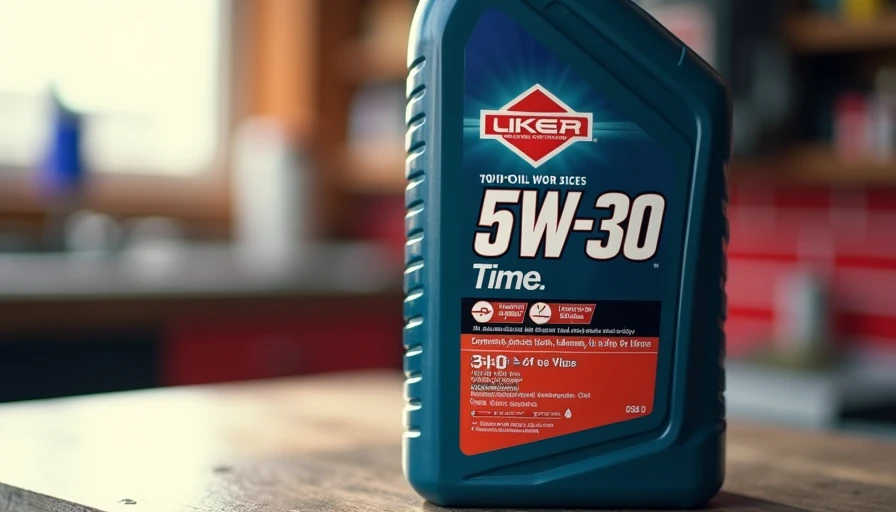
Reference Box:
**Cold grade = startup flow and cranking. Hot grade = viscosity at operating temperature.**
In older teaching language, you will still hear people say "thicker" or "thinner" oil. That is fine as shorthand, but on the spec sheet, the number that decides it is the SAE viscosity grade, not a guess based on feel from the bottle.
Why manufacturers specify 5W-30 in the first place
Automakers choose oil grades to balance wear protection, fuel economy, emissions-system durability, and startup performance. That is why **what does 5W 30 mean** is not just a label question. It is tied directly to engine design.
Many engines were designed around 5W-30 because it provides a practical middle ground for a wide range of U.S. climates. It is thin enough for reliable cold starts in many conditions, but still robust enough at operating temperature for everyday passenger cars, light trucks, and some older SUVs.
That does not mean it is automatically the best oil for every engine. Newer designs often call for 0W-20 or 0W-16 to reduce pumping losses and support fuel economy targets. Some higher-load or higher-temperature applications call for 5W-40, 0W-40, or another grade entirely.
The right move is simple: start with the owner's manual and then verify the required service category. In gasoline engines, that usually means an API category such as **API SP**. Some vehicles also require an ILSAC specification such as **GF-6A**.
Reference Box:
**Viscosity grade and performance spec are separate.** A bottle can be 5W-30 and still be wrong if it does not meet the required API or OEM specification.
What 5W-30 does not tell you
One of the most useful parts of this discussion is understanding what 5W-30 does **not** mean. The grade tells you about viscosity performance, but it does not tell you the full additive chemistry, drain interval, or whether the oil is conventional, synthetic blend, or full synthetic.
Two different 5W-30 oils can have different detergent levels, oxidation resistance, volatility, and deposit-control performance. They can also carry different approvals from vehicle manufacturers. That is why a technician should read the back label, not just the front.

For example, a modern full synthetic 5W-30 typically gives better cold-flow consistency, oxidation resistance, and high-temperature stability than an older conventional formula. That does not change the grade definition. It changes how well the oil maintains performance in service.
If your customer asks whether 5W-30 is "better" than 10W-30, the one-line answer is: not universally. It is usually better for colder startup conditions, but the correct choice is the one the engine manufacturer specifies.
When to use it, when not to, and a few shop-floor cautions
In everyday service, 5W-30 is a common recommendation for many gasoline engines built over the last couple of decades. It often fits drivers who want one practical grade for mixed weather, commuting, and normal maintenance intervals.
Do not substitute blindly, though. If an engine is labeled for 0W-20, jumping to 5W-30 without a valid reason can affect oil flow, fuel economy, and in some cases variable valve timing response. If an engine calls for a European OEM-approved 5W-30, a generic 5W-30 without the right approval may still be the wrong product.
Also remember basic handling practice. Store engine oil in sealed, labeled containers, keep dirt and water out of open bottles, and clean spills promptly because oil is a slip hazard. Used engine oil should be collected and recycled through an approved program. Do not dump it on the ground, in drains, or in household trash. In the U.S., used oil management is covered by EPA rules, and good shop practice matters.
So, **what does 5W 30 mean** in plain English? It means the oil is engineered to act like a 5W oil in cold conditions and a 30-grade oil at operating temperature, within the limits defined by SAE J300. That is the chemistry, the spec, and the action step: use the grade the engine calls for, and match it with the right API and OEM requirements.