If you're reading this, you probably have a car making a sound that you suspect is wheel bearing noise. As a former lubricant chemist and now an instructor, I've helped many technicians and DIYers identify that specific growl or hum that signals a bearing issue. Here's the chemistry, the spec, and what to do with it.
Wheel bearing noise is one of those sounds that, once you learn it, you never forget. It typically presents as a low-frequency rumble or growl that changes with vehicle speed, often getting louder when you turn one direction. The root cause almost always involves a breakdown in the lubricating film inside the bearing assembly. Bearings rely on a thin layer of grease to separate rolling elements from races. When that grease degrades, gets contaminated, or simply runs dry, metal-to-metal contact begins and noise follows.

What Does Wheel Bearing Noise Sound Like?
The classic description is a rhythmic growling, humming, or rumbling that increases with speed. Unlike tire noise, which might be a steady drone, wheel bearing noise often changes pitch when you load the bearing by turning left or right. For example, if the noise gets louder when turning left, the right-side bearing is likely the culprit, and vice versa. A failing bearing may also produce a clicking or grinding sound if it has progressed to severe damage.
Reference Box: The key spec that decides whether a bearing will be quiet is the NLGI grade and consistency of the grease. For most automotive wheel bearings, an NLGI #2 lithium-complex grease with EP additives is standard. If the grease is too soft, it can leak out. Too stiff, and it won't properly coat the rolling elements. The base oil viscosity also matters — typically around 220 cSt at 40°C for high-speed bearings.
Common Causes of Wheel Bearing Noise
Lack of lubrication is the number one cause of wheel bearing noise. But even if the bearing is packed with the right grease at the factory, contamination can still occur. Water intrusion from driving through deep puddles or pressure-washing near the seals can wash out the grease and cause corrosion. Overheating from excessive braking or towing can break down the grease's thickener structure, turning it into a puddle of oil and leaving the bearing dry.
Seal failure is another frequent culprit. Once the seal is compromised, dirt and moisture enter, and the grease becomes a grinding paste. If your customer asks, the one-line answer is: "Wheel bearing noise usually means the grease is gone or contaminated — it's not self-healing."
How to Diagnose Wheel Bearing Noise
Diagnosis is straightforward if you have a lift and a stethoscope, but you can also do it on the ground with care. The first step is to replicate the noise on a test drive, noting which direction amplifies it. Then, lift the vehicle and spin each wheel by hand, listening for roughness or play. A wheel bearing with excessive play will feel loose when you rock the tire top and bottom (for a loose bearing) or side to side (for worn ball joints, but that's another topic).
For a more precise check, use a chassis ear or mechanic's stethoscope placed on the knuckle near the bearing while spinning the wheel. You'll hear a distinct growl or grinding if the bearing is worn. If you have any doubt, compare with the other side — a good bearing is nearly silent.
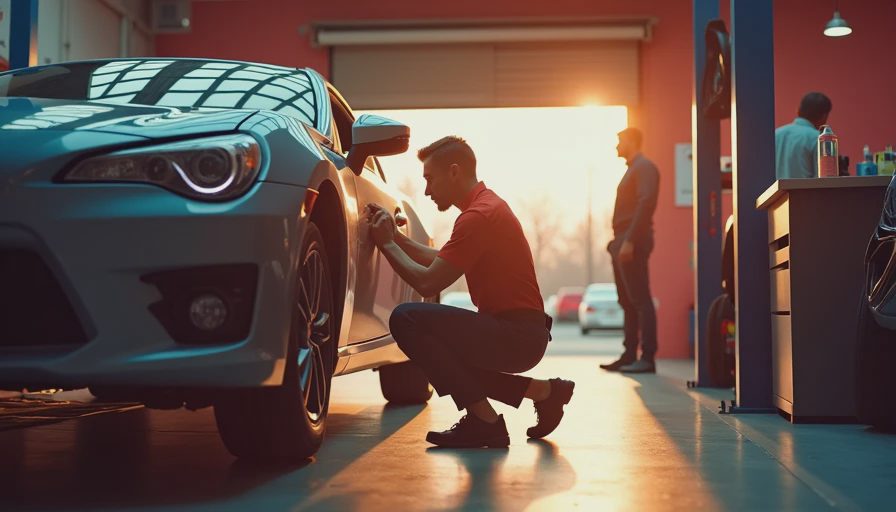
Preventing Wheel Bearing Noise with Proper Lubrication
Here's where the chemistry comes in. The grease you choose matters. For modern sealed bearings, the factory fills them with a life-of-the-bearing grease, and you don't touch it until replacement. But for serviceable bearings (still common on trailers and older vehicles), repacking them on schedule with a quality wheel bearing grease is critical. Use a grease that meets NLGI #2 consistency and has corrosion inhibitors, extreme pressure additives, and a high dropping point (above 260°C).
When repacking, clean all old grease out first — don't just add new on top. Incompatible thickeners can turn into a liquid mess. Most wheel bearing greases use lithium or lithium-complex thickeners, and mixing with calcium or polyurea can cause the grease to separate. Check the label. If you're not sure, flush the hub with a solvent and start fresh.
When to Replace a Wheel Bearing
If you hear wheel bearing noise consistently, the bearing is already damaged. Noise means the rolling elements or races have pitted or spalled. Grease can't fix that — only replacement will restore smooth operation. The good news is that most modern wheel bearings come as pre-assembled hub units with the bearing and hub integrated. The job is relatively straightforward: remove the axle nut, unbolt the hub, and press in a new one. For older adjustable bearings, you need to set preload correctly — too loose will cause noise and play, too tight will overheat and fail quickly.
Reference Box: The spec for preload on tapered roller bearings is usually 10-20 inch-pounds of rolling torque with the nut torqued to spec. Refer to the vehicle service manual for exact values.
Final Thoughts
Wheel bearing noise is a clear signal that something is wrong inside the bearing assembly. Don't ignore it — a seized bearing can lead to a wheel separating from the vehicle. Whether you're a DIYer or a pro, the diagnostic steps are the same: find the noise, check the lubrication, and replace if necessary. And when you do replace, use the right grease for the application. Here's the chemistry, the spec, and what to do with it: pack it tight, seal it right, and listen for silence.

No comments yet — be the first to share a thought.