After reading this guide to martempering vs quench and temper, you will be able to explain the cooling sequence, expected microstructure, distortion risk, and practical uses of each process. These terms describe steel heat treatments, not lubricants or coolant types, but the distinction matters at the repair bench, machine shop, and parts counter. Here's the chemistry, here's the spec, here's what to do with it.
The short answer
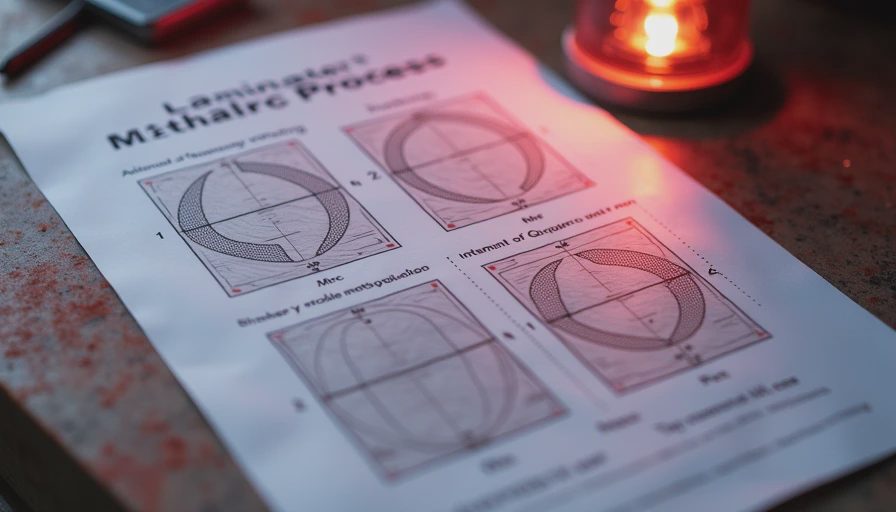
Martempering and conventional quench and temper both aim to produce useful strength and hardness in steel. The difference is how the part is cooled after austenitizing. In martempering, the hot steel enters a bath held just above the martensite-start temperature. It pauses there long enough for the part's temperature to become more uniform, then cools through the martensite range. The part is tempered afterward.
With conventional quench and temper, the austenitized part goes directly into a fast quench, commonly oil, water, polymer solution, or sometimes gas. The surface cools before the core, creating temperature differences and transformation stresses. Tempering follows to reduce brittleness and adjust hardness.
Reference Box: Martempering is an interrupted quench designed to reduce temperature gradients before martensite forms. Conventional quench and temper uses a direct quench followed by tempering.
The practical comparison in martempering vs quench and temper is therefore not simply “which gets harder?” Both can produce martensite. The better question is whether the part needs lower distortion and cracking risk badly enough to justify a more controlled process.
How the two cooling paths work
A steel part is first heated above its critical transformation range so its structure becomes austenite. The exact temperature depends on the alloy and grade. A plain medium-carbon steel, a low-alloy gear steel, and a tool steel do not share one universal recipe. The furnace atmosphere, section thickness, loading pattern, and surface condition also influence the result.
In direct quenching, the part leaves the furnace and immediately enters the selected quenchant. Heat moves from the outside toward the center. If the surface transforms to martensite while the core is still hot and expanding or contracting differently, residual stress develops. Sharp corners, keyways, holes, and abrupt section changes concentrate that stress.
Martempering interrupts this sequence. The part is transferred into a hot salt bath or another controlled medium above the martensite-start temperature. The holding period is not intended to create bainite or pearlite. It allows the surface and core to approach a more even temperature. The part is then cooled through the martensite range, often in air or a suitable liquid, before tempering.
Martempering vs quench and temper for distortion control
This is where martempering vs quench and temper becomes important in production. Lower temperature gradients generally mean less warping and a lower chance of quench cracking. That can be valuable for thin rings, precision shafts, small gears, dies, and parts with difficult geometry. A reduction in scrap can offset the cost of a salt bath, transfer equipment, temperature controls, and additional process monitoring.
Martempering does not eliminate distortion. The steel still changes volume as austenite transforms to martensite, and alloy composition can make that change substantial. The part may also move because of uneven chemistry, nonuniform heating, prior cold work, or an imbalanced section. The process reduces one major source of stress; it does not make geometry irrelevant.
Direct quench and temper remains common because it is straightforward, widely available, and adaptable to large batches. Oil quenching equipment is familiar in many commercial heat-treat shops. Water or polymer can provide faster cooling when the steel requires it, although faster cooling can increase stress and cracking risk.
Hardness, toughness, and the role of tempering
Neither method should be judged by as-quenched hardness alone. Fresh martensite is hard but brittle, and its internal stress can be high. Tempering reheats the steel below the critical transformation range, allowing controlled precipitation and stress relief. Tempering temperature and time determine the final balance between hardness, strength, toughness, and dimensional stability.
A low tempering temperature preserves more hardness but leaves greater brittleness. A higher temper usually sacrifices some hardness for improved toughness and service reliability. Some alloy steels also require attention to temper embrittlement, retained austenite, or secondary hardening. The correct cycle comes from the material specification and qualified process data, not from a generic chart.
In martempering vs quench and temper, the final mechanical properties can be very similar when the same steel, effective section, and tempering schedule are used. Martempering's advantage is often dimensional control and consistency rather than a dramatic increase in maximum hardness.
When each process makes sense
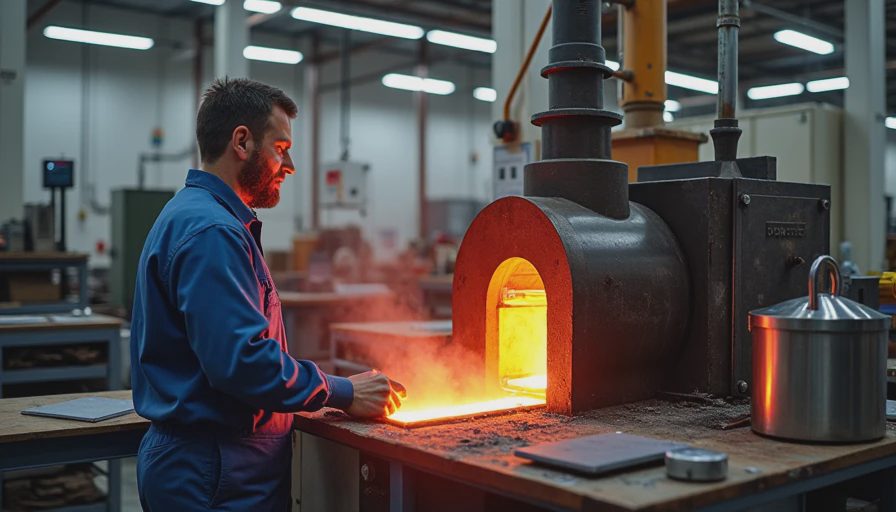
Choose martempering when a part has a high distortion risk, expensive machining, thin cross sections, or a geometry that has produced cracking during direct quenching. It can be useful for precision components where a few thousandths of an inch matter after heat treatment. It is also attractive when the customer would otherwise need extensive straightening, grinding, or corrective machining.
Choose conventional quench and temper when the part is relatively forgiving, the design allows machining after heat treatment, production volume favors existing equipment, or the steel requires a cooling rate that a martempering bath cannot provide. Large forgings and heavy sections may also need a process designed around their slower core cooling behavior.
For a shop decision, compare the entire cost: furnace time, quenchant maintenance, bath controls, transfer time, inspection, straightening, grinding, scrap, and delivery schedule. A cheaper heat-treatment invoice can become expensive if ten percent of a precision batch needs rework. Conversely, a specialized process is not automatically economical for a rugged bracket with generous tolerances.
A practical inspection checklist
Start by confirming the steel grade and its hardenability. Next, record the largest section thickness, sharp transitions, holes, threads, and required hardness range. Ask whether the drawing specifies a maximum distortion, straightness limit, case depth, or metallographic structure. Those details often decide between processes more reliably than the part name.
After treatment, inspect hardness at defined locations rather than one convenient flat spot. Check dimensions before and after heat treatment, and use magnetic-particle or another appropriate nondestructive test when cracking is a concern. For critical components, review a cross-section for decarburization, inadequate transformation, excessive retained austenite, or an incorrect tempered structure.
Reference Box: The controlling documents are the steel producer's data, the customer's drawing, and the qualified heat-treatment procedure. ASTM E18 covers Rockwell hardness testing; ASTM E384 covers microindentation hardness testing. Neither standard chooses the process for you.
The shop-floor conclusion
The cleanest explanation of martempering vs quench and temper is this: both processes can create tempered martensite, but martempering adds a controlled equalization step before the steel transforms. That step can reduce thermal gradients, distortion, and cracking, especially in demanding geometries.
If a part is failing because of warpage or quench cracks, investigate martempering rather than simply increasing quenchant speed. If the part is stable, tolerant, and already processed successfully by direct quench and temper, changing methods may add cost without improving service life. Confirm the grade, section size, hardness target, and dimensional requirement before choosing.
If your customer asks, the one-line answer is: martempering is a controlled interrupted quench for better dimensional stability, while quench and temper is the simpler direct-quench route followed by tempering. The right choice is the one that delivers the specified structure and dimensions repeatedly.




No comments yet — be the first to share a thought.