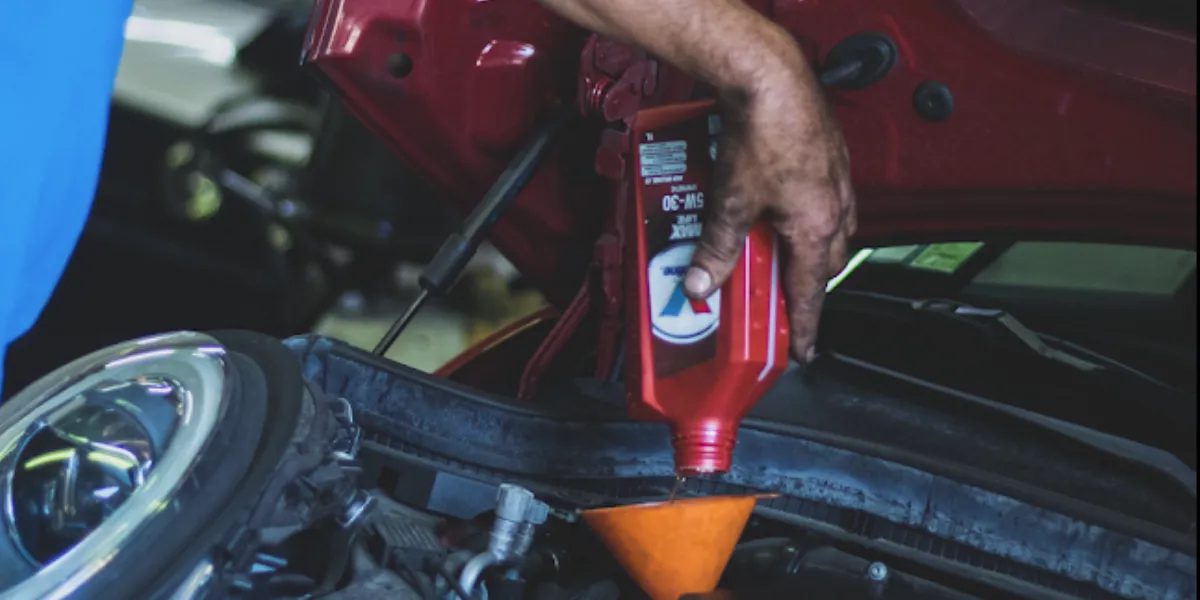
Picture a metal component from your car. Your immediate mental image is probably something smooth and polished. To the naked eye and fingertip, that's accurate enough — but zoom in with a microscope and you'll find a completely different story: a jagged, pitted landscape of holes, ridges, peaks, and valleys. This microscopic reality applies to every metal surface, including the components inside your vehicle's engine.
As an engine accumulates age and mileage, that already-rough surface deteriorates further — holes deepen, cracks widen. Left unprotected, engine components begin to break down against one another, sapping horsepower, reducing fuel efficiency, and shortening engine life. Standard engine oils do offer a protective barrier, but in some situations that film simply isn't thick enough to bridge the larger gaps and crevices. That's precisely why newer, thicker oil formulations have been developed — ones capable of thoroughly coating even aging heavy-duty diesel engines running around the clock. Engine components must never make direct metal-to-metal contact, which is why high mileage lubrication matters so deeply for both personal and commercial vehicles. This guide will walk you through everything you need to know, quickly and clearly. Let's explore how high mileage lubricants actually work.
Modern engineering has dramatically redefined what qualifies as "high mileage." Standard passenger vehicles routinely reach 500,000 to 600,000 kilometers, and heavy-duty diesel engines can surpass even those figures.
Understanding the distinction between highway kilometers, city kilometers, and heavy-duty kilometers is equally important. Highway driving is the gentlest on an engine — it involves fewer start-stop cycles, no heavy hauling, and sustained operation that lets the engine reach optimal working temperature and peak efficiency. City driving and heavy-duty operation are far more punishing by comparison. An engine with 100,000 city or commercial kilometers can exhibit wear comparable to a highway-driven engine with 200,000 kilometers.
Some owners decide to transition to a specialty high mileage lubricant at the 300,000-kilometer mark, while others make the switch much sooner — around 100,000 kilometers. As a general benchmark for everyday drivers, a vehicle crossing the 150,000-kilometer threshold is commonly regarded as a high mileage vehicle.
Many vehicle owners take a gamble by running low-quality oil in their engines. The short-term savings can be appealing, but the long-term consequences include gunk building up inside the engine's crevices. Oil deposits feed the formation of additional deposits, triggering chemical reactions that eventually convert the oil into sludge. Once that occurs, friction between metal parts rises sharply and damage follows. Fortunately, selecting the right lubricant from the start is all it takes to sidestep this outcome.
Owners noticing power loss, blowby, or unusual noises from the cylinders or other engine components are almost certainly dealing with a mechanical failure. That type of problem requires a qualified mechanic — it's beyond what any high mileage lubricant or specialty heavy-duty grease can address. By contrast, a well-cared-for engine that has covered significant kilometers without showing signs of mechanical failure can continue delivering strong performance with the right high mileage lubricant supporting it.
Purpose-built high mileage lubricants are packed with additives and seal enhancers specifically designed to stop both internal and external leaks. This improvement typically becomes apparent after one or two oil changes, potentially eliminating oil spots on your driveway and preventing costly oil burn. Generally speaking, high mileage oil formulas are engineered to benefit vehicles with over 120,000 kilometers — but the exact timing of when, or whether, to make the switch is a decision that rests with you or your lubrication technician.
To help guide that decision, consider the following key points:
Every vehicle owner who wants to keep their fleet running well for the long haul should commit to scheduled maintenance and consistent oil changes using high mileage products.
While conventional engine oils deliver the basic protection an engine needs, high mileage lubrication works like a concentrated vitamin boost for a tired, well-used engine. It helps restore worn components and guards against further deterioration. In many cases, these specialty oils include seal conditioners that revitalize aging seals to stop leakage — resulting in improved oil consumption, less frequent oil changes, reduced downtime, and fewer engine problems down the road.
Beyond what standard oils offer, high mileage lubricants incorporate antioxidants, detergents, and a range of other additives that help an older engine keep functioning properly. These components deliver enhanced cleaning action, resistance to sludge and grime buildup, and superior friction protection.
High mileage oils are typically formulated with full-synthetic base oil or a blend of synthetic and conventional oils. This base provides robust protection at elevated temperatures while remaining fluid enough in cold conditions to work well across all climate types. Synthetic oil is essentially indispensable in heavy-duty diesel vehicles engaged in demanding hauling and towing, as well as in performance cars built for racing. In summary, high mileage oil is fundamentally a synthetic oil — but one enhanced with additional performance and protection benefits tailored to older engines.
Much like regular engine oils, high mileage oils come in a variety of formulations with differing additive packages. On the surface they can appear nearly identical, which makes selecting the right product for your specific needs somewhat challenging. The key differentiator among high mileage oils on the market is additive concentration. To help users navigate these choices, responsible manufacturers like Valvoline publish safety data sheets for reference. Users can also consult the Valvoline Lubricant Advisor or contact customer support to confirm they're selecting the most appropriate product.
High mileage lubricants are also available in a range of weights based on viscosity. Viscosity describes how thick an oil is and how readily it flows — a fundamental lubricant property. It is expressed numerically, as in 5W-30 or 10W-40. The first number reflects the oil's resistance to thickening in cold conditions (the "W" denoting winter performance), while the second number indicates its resistance to thinning under heat. Certain high mileage products, such as MaxLife High Mileage, are offered in multiple viscosity grades to accommodate different operating conditions — in this case, 5W-30, 5W-40, 10W-40, and 15W-40.
As vehicles age and accumulate kilometers, susceptibility to wear-related breakdowns naturally increases. As previously noted, conventional oils provide baseline protection but fall short of delivering the specialized additives and conditioners that offer:
Using a thicker high mileage oil can make cold starts more demanding, particularly in low temperatures. These oils may also reduce flow throughout the engine and increase overall oil pressure, meaning greater pressure is needed to push the oil through seals and gaskets.
It's also worth noting that modern motor oils are generally backward-compatible with older vehicles, so using a new-generation high mileage oil in an older engine is well within the intended design of these products and unlikely to cause any complications. The reverse situation, however — putting an older service category oil into a newer vehicle — is a different matter entirely. No manufacturer endorses this practice, and it appears in no owner's manual. It likely won't damage the engine outright, but disregarding manufacturer recommendations is never wise, particularly when a vehicle is still under warranty.
This question has no single correct answer. One camp argues that as mileage climbs, more frequent oil changes become necessary because looser tolerances allow for increased blowby and soot contamination. The opposing view holds that the manufacturer's recommended intervals are fine — or could even be stretched slightly — since break-in wear is already complete and the warranty has likely expired. Neither position is entirely right or wrong.
For a high mileage diesel or any other engine type that has received consistent maintenance, longer oil change intervals may be sustainable. Well-broken-in engines have had their sharp edges worn smooth over time, meaning metal-to-metal contact is less likely — especially when properly lubricated. That said, worn cylinders and rings in older engines can allow blowby, complicating matters. For heavy-duty fleets and race vehicles, ordering a fluid analysis is the most reliable way to get a complete and accurate assessment of engine condition.
For everyday drivers thinking about transitioning to high mileage oil and potentially extending their oil change intervals, the following considerations are worth keeping in mind:
Let's recap what this comprehensive guide has covered. High mileage oils do carry a higher upfront cost, but the advantages for older vehicles more than justify the investment. Specialty high mileage lubrication can meaningfully improve performance and oil consumption in both heavy-duty diesel engines and passenger vehicles. It can also put an end to oil leaks appearing on your driveway, while helping your vehicle remain road-worthy for longer.
Even if an older vehicle passes an engine inspection without showing signs of wear, switching to high mileage lubricants is still a sound preventive measure. These oils won't harm an old engine — but they may well prevent future problems from developing. If you're still weighing the decision, reach out to Valvoline's experts and take time to review the owner's manuals for your vehicles.
Today, as has been true for more than 150 years, Valvoline's mission is to connect vehicle owners with the highest-quality lubrication products available. Our lineup includes premium oil, heavy-duty grease, coolant, and a full range of fluids for commercial and private vehicles of every type. And for the older vehicles that have given years of faithful service — Valvoline's high mileage lubrication line is readily available both in stores and through online retailers.
Every product and service we offer is the outcome of dedication, rigorous testing, and continuous innovation. Through sustained investment in evolving technology, Valvoline has kept pace with — and often led — the development of products that deliver efficiency, safety, and long-term value to users. When you need a lubrication solution you can trust, choose Valvoline and let us take care of all your needs.



No comments yet — be the first to share a thought.