This guide will help you identify a battery, prepare it for transport, and find the right collection point. The short answer on battery recycling is straightforward: keep batteries out of household trash, separate them by chemistry, and take them to a collection program that accepts that specific type. A car battery, a cordless-tool pack, and a swollen phone battery do not all belong in the same bin.
Start with the battery label
The label tells you more than the shape does. Look for terms such as lead-acid, lithium-ion, lithium metal, nickel-metal hydride, or alkaline. If the label is missing, do not guess based on voltage alone. Ask the collection facility how it wants an unidentified battery handled.
Reference Box: A rechargeable lithium-ion battery is not the same chemistry as a nonrechargeable lithium metal battery. Both can create fire hazards if damaged or short-circuited, but a collector may handle them differently.
For battery recycling purposes, common shop batteries fall into several groups. Conventional automotive starting batteries are usually lead-acid, including absorbed glass mat, or AGM, types. Power tools often use rechargeable lithium-ion packs. Hybrid and electric vehicles may contain high-voltage lithium-ion or nickel-metal hydride battery assemblies, depending on the vehicle. Small electronic devices can contain lithium-ion cells, lithium coin cells, or other chemistries.
Alkaline household batteries are a separate case. Local rules differ, and some collection programs accept them while others do not. Even where household disposal is allowed, a collection program may be available. Check your local solid-waste authority rather than assuming the automotive battery counter takes every type.
Where to take each type
For lead-acid car batteries, start with an auto parts retailer, battery retailer, service shop, or municipal collection facility that accepts them. Call before transporting one: acceptance policies can depend on battery size, condition, and whether you are buying a replacement. A retailer may charge a refundable core deposit when selling a battery; ask what documentation and return conditions apply.
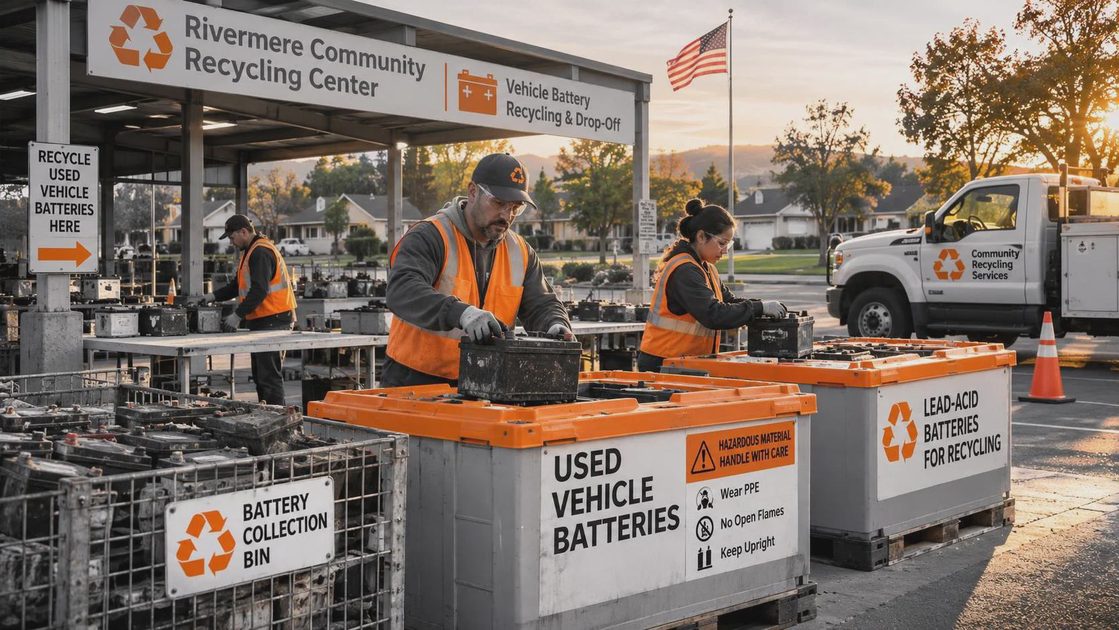
For small rechargeable packs, look for a participating battery collection site or household hazardous waste facility. Confirm that it accepts the particular pack, especially if it is unusually large, damaged, or still installed in a device. A drop-off box designed for intact consumer batteries is not automatically suitable for a leaking power-tool pack.
For EV and hybrid high-voltage assemblies, contact the vehicle manufacturer, a qualified service facility, or a recycler equipped to handle that assembly. These batteries can retain dangerous voltage after the vehicle is switched off. Removing covers, disconnecting high-voltage components, or dismantling a pack is work for trained personnel following the manufacturer's procedures.
A municipal recycling search tool can be a useful starting point, but confirm the destination directly. For battery recycling, the useful question is not just whether a site accepts batteries; it is whether it accepts your chemistry, size, and condition, and how it wants the terminals protected.
Make the trip without a short circuit
A battery can discharge rapidly when metal bridges its terminals. Before transport, protect exposed terminals using nonconductive tape or place each small battery in an individual clear plastic bag, following the collector's instructions. Keep batteries away from keys, loose fasteners, and other metal objects. Do not stack unprotected batteries together.
Keep a lead-acid battery upright in a sturdy, acid-resistant container during transport. Secure it against tipping, and do not carry it loose in the passenger compartment. Wear suitable eye protection and chemical-resistant gloves when handling a battery that may be leaking. Battery acid can cause serious burns and damage clothing and vehicle surfaces.
Do not open a battery, drain its electrolyte, or pour it into a drain or onto the ground. The electrolyte is part of the waste the receiving facility is equipped to manage. A sealed-looking AGM battery is still a lead-acid battery; do not treat it as an ordinary dry cell.
For battery recycling, put an intact lithium-ion pack in a stable position where it cannot be crushed or punctured. Do not remove cells from a tool pack or a device merely to fit them into a collection box. Ask the receiver whether it accepts the whole device.
Damaged batteries need a different route
A swollen, leaking, hot, smoking, or visibly damaged battery is not routine drop-off material. Do not charge it, squeeze it, or place it in a public collection box. If it is hot, smoking, or actively venting, move away and call the fire department; do not handle it. Follow local emergency instructions.

If the battery is damaged but cool and not actively venting, avoid touching leaked material. Contact the local household hazardous waste program, fire department's nonemergency line, or a qualified battery handler for instructions before moving it. Tell them the chemistry if known, what damage you see, and whether the battery is installed in equipment.
If acid contacts skin or eyes, immediately flush with plenty of water and seek medical help. For eye exposure, continue flushing while arranging urgent care. Do not attempt to neutralize chemicals on a person's skin. For a spill, keep people away and follow the facility's spill plan; do not improvise cleanup without the right equipment and training.
What shops and fleets should document
Commercial battery recycling is not necessarily governed by the same collection rules as household drop-off. Businesses should identify the waste, determine which federal, state, and local requirements apply, and use an authorized handler. Many spent batteries can be managed under universal waste rules, but eligibility and requirements depend on the battery, its condition, and state law. A damaged or leaking battery may need different management.
Keep collection areas protected from weather and vehicle traffic. Segregate incompatible battery types, protect terminals, and use containers appropriate for the contents and condition. Train employees to recognize damaged units and know whom to notify. For a fleet, that means the person removing a battery and the person arranging pickup need the same instructions.
Record the battery type, quantity, pickup date, and receiving company; retain shipping and recycling documentation as required by your operation and jurisdiction. Check labeling, accumulation time limits, and transportation requirements with your environmental compliance contact and transporter. Hazardous materials shipping rules can apply even when a battery is destined for recycling.
What happens after collection
Battery recycling separates usable materials from a product that can also contain hazardous substances. Lead-acid processors recover lead and manage the acid and plastic components. Lithium-ion processing varies by facility and battery chemistry; preparation may include discharge and dismantling before materials are separated for further recovery. Not every component becomes a new battery, and the process is not the same for every pack.
If your customer asks, the one-line answer is: identify the chemistry, protect the terminals, and call an appropriate collector before moving a damaged battery. That is the practical connection between the chemistry and a safe disposal decision.



No comments yet — be the first to share a thought.