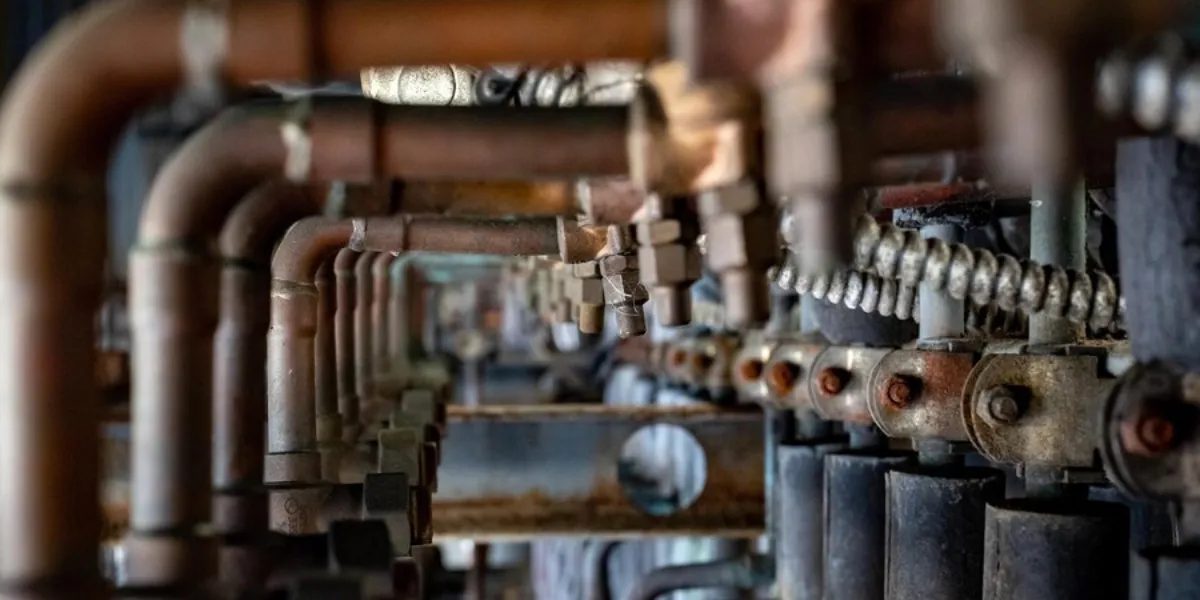
When a vehicle or machine is exposed to oxygen alongside moisture, the conditions for rusting are created. Rust stands as the most widespread form of corrosion and poses a serious threat to your fleet and equipment alike. Left unchecked, it can degrade performance and dramatically shorten operational lifespan.
This is precisely why rust prevention is regarded as a fundamental element of vehicle and machine upkeep — and it begins with selecting the appropriate rust-preventive coating.
The following sections outline the most commonly encountered types of rust-preventive coatings and the key characteristics worth evaluating before making your selection.
Rust-preventive oils are purpose-built to lubricate and shield metal surfaces against atmospheric rust and corrosion. These formulations generally consist of polar compounds that bond to metal surfaces, establishing a protective barrier that keeps moisture from attacking the underlying material.
Corrosion and rust prevention products serve a broad range of industries. In the automotive sector, for instance, they are routinely applied to braking systems, cooling systems, and other critical vehicle components to boost performance. Beyond strong corrosion resistance, rust-preventive oils also function as effective lubricants.
Industrial settings benefit equally from rust-preventive coatings. They find use in water-containing machinery, grinding coolants, cleaning agents, and water rinse systems. They are also commonly applied to heavy-duty equipment operating under harsh conditions as well as machinery kept in indoor storage.
Rust-preventive coatings come in several distinct varieties, which can be categorized according to their protective mechanisms and their chemical composition.
When grouped by function, rust-preventive oils fall into three categories: hard coatings, passivates, and conversion coatings.
Hard coatings typically incorporate ceramics and metal carbides, making them highly resistant to both wear and corrosion. Their defining characteristic is an exceptional level of hardness that surpasses that of most conventional materials.
This outstanding hardness is precisely why hard coatings are chosen to protect machine surfaces subjected to extreme temperatures and the most punishing operational demands.
Passivation refers to the process of enhancing a metal's resistance to corrosion. As the term implies, its core purpose is to render the metal chemically less reactive, thereby lowering its susceptibility to rust.
Machine components are coated with an acidic passivation solution that reacts directly with the surface. This process promotes the formation of a thin corrosion layer that functions as a natural seal, guarding the parts against further deterioration.
Chemical Conversion Coatings
Conversion coatings interact with the metal surface to generate a complex, non-porous protective film. In essence, a chemical reaction occurs at the surface, transforming the metal into a thin layer that resists corrosion.
Several types of chemical conversion coatings exist, and the appropriate choice depends on the specific metal involved. Iron phosphate coatings, for example, are suited to steel, whereas zinc phosphate coatings are the preferred solution for galvanized steel.
When classified by formulation, rust-preventive coatings fall into three categories: water-based, oil-based, and solvent-based.
Water-Based Rust Prevention Coatings
Water-based rust-preventive coatings are widely adopted across commercial applications. They offer a practical alternative to oil-based products and are particularly well suited to indoor machinery and equipment.
These coatings perform well on an extensive range of metal substrates, including cast iron, carbon steel, galvanized steel, stainless steel, aluminum, and copper. They can also be applied to both ferrous and non-ferrous surfaces.
Water-based anti-rust solutions deliver several notable advantages: excellent wetting characteristics, non-flammability, and cost-effectiveness. A particularly valued quality is their transparency and compatibility with overpainting.
They also represent an environmentally responsible choice, helping organizations reduce emissions of organic volatile compounds (OVCs) that are commonly associated with solvent-based coatings.
Oil-Based Rust Prevention Coatings
Oil-based rust preventives are formulated using mineral oils as their foundation. They deposit a thick protective film on treated surfaces and carry a flash point of approximately 200°C. The corrosion protection they provide typically extends up to six months.
Solvent Rust Prevention Coatings
Solvent-based rust-preventive oils outperform the previously described options in terms of flexibility, effectiveness, and longevity. They form a barrier film that blocks both water and oxygen from reaching and corroding the metal.
Solvent-based coatings offer several practical advantages. Notably, they are compatible with most lubricating oils, which means existing surface films do not need to be removed before the solvent coating is applied.
The method used to apply rust-preventive coatings varies according to product type and formulation. Immersing the component directly in the product is among the most thorough application approaches available, though spray and brush application are equally viable alternatives.
Prior to applying or removing any rust-preventive coating, always consult the manufacturer's technical data sheets and follow their guidance on how to properly prepare the metal surface.
The success of your rust-prevention program ultimately hinges on the products you select. Always verify that your chosen solutions are compatible with the specific vehicle or machine components involved and that they conform to applicable industry standards.
Still searching for the most reliable anti-rust solution? Every product in Valvoline's lineup incorporates potent anti-corrosion and anti-oxidation additives designed to minimize rusting risk and extend the service life of your vehicles and machinery. Valvoline also partners with Tectyl, a recognized leader in rust-preventive coating technology.
For further details on rust-prevention products and solutions, do not hesitate to reach out to us.
No comments yet — be the first to share a thought.