After reading this post, you will be able to explain the difference between fresh and used engine oil, identify the exposures that deserve attention, and choose practical controls for a shop or home garage. The short answer to can motor oil cause cancer is that risk depends heavily on the oil's condition, its chemistry, and how a person contacts it. Fresh, properly formulated oil is not handled like a known cancer-causing product, while used engine oil deserves more caution because it can contain contaminants formed or collected during service.
Fresh oil, used oil, and the chemistry that matters
Fresh motor oil is a blend of base oil and additives. The base stock can be mineral oil, synthetic hydrocarbon, or another approved fluid, while additives control oxidation, deposits, wear, corrosion, and viscosity. A product meeting an API service category and the vehicle maker's requirements has been formulated for controlled use in an engine. That does not make it harmless: fresh oil can irritate skin and eyes, and repeated contact can remove protective skin oils.
Used oil is a different exposure. During thousands of miles, it collects soot, fuel residues, combustion byproducts, microscopic metal particles, and degraded additive material. High temperatures can also create compounds that were not present in the new product. Some used mineral oils have been associated with skin irritation, dermatitis, and occupational skin-cancer concerns, particularly when contact is repeated and prolonged. The risk is not created by one accidental drop on a forearm; it is reduced by preventing routine exposure over months and years.
Reference Box: The key distinction is condition. Fresh oil is a formulated lubricant; used oil is a contaminated process fluid that requires controlled handling and disposal.
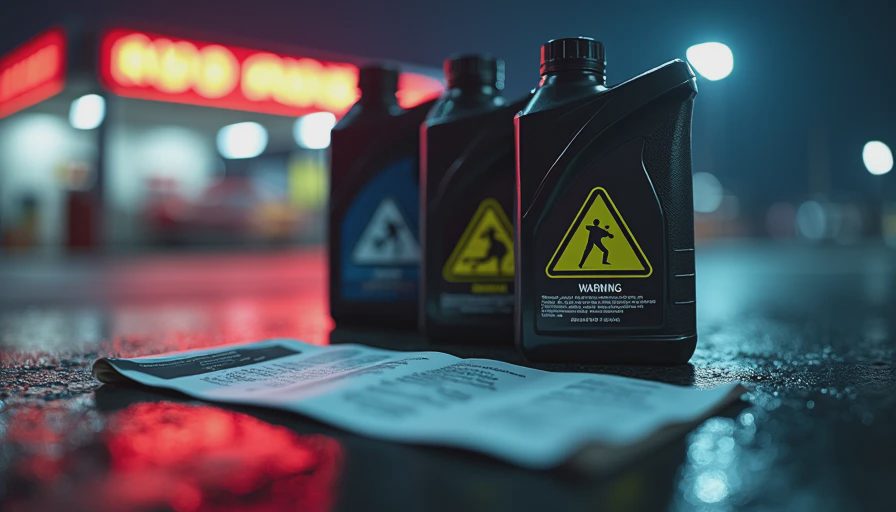
Can motor oil cause cancer through skin contact?
The practical concern is usually skin contact with used oil, oily rags, or parts coated in crankcase residue. Oil can remain under fingernails, inside glove cuffs, and in small cuts. A technician who wipes hands with a shop towel and continues working may spread the residue to the wrists, face, steering wheel, lunch container, or phone. That repeated pattern matters more than a single brief contact.
Wear chemical-resistant gloves suited to the task, such as nitrile gloves with adequate thickness for draining and parts cleaning. Thin disposable gloves can tear, so keep extra pairs at the drain station. Safety glasses help prevent splashes during filter removal or transfer. Wash with soap and warm water rather than gasoline, brake cleaner, or solvent. Solvents can increase skin damage and create a separate inhalation or fire hazard.
If oil gets into the eyes, flush with clean water for at least 15 minutes and follow the product safety data sheet. For persistent redness, rash, pain, or a wound that does not heal, seek medical advice. A safety data sheet gives the product-specific first-aid and exposure information; keep it accessible rather than buried in an office file.
Inhalation, fumes, and shop air
Many people asking can motor oil cause cancer are actually worried about fumes. Ordinary engine oil does not normally produce a dangerous vapor cloud at room temperature, but heated oil, mist, smoke, and exhaust are different matters. A leaking oil stream hitting an exhaust manifold can smoke and irritate the respiratory system. Compressed-air blowdown can turn residue into an aerosol that travels farther than the original spill.
Use local exhaust when a vehicle is running indoors, and never rely on an open garage door as the only control for carbon monoxide. Keep oil away from hot exhaust components when possible. Do not use compressed air to clean oily clothing or blow residue from a workbench. Absorb spills with an appropriate pad or granular material, place the waste in a labeled container, and follow the facility's waste procedure.
The SAE J300 viscosity grade, such as 5W-30, tells you how the oil flows at specified test temperatures. It does not tell you that a product is safe to breathe or safe for skin. Likewise, an API SP license addresses engine performance requirements, not personal protective equipment.
How to reduce exposure in a garage or fleet shop
A good control program is straightforward. First, keep drain pans stable and large enough to catch the expected volume. A tipped pan creates more exposure than the oil change itself. Second, use a pump or closed transfer method when moving used oil into a storage drum. Third, keep clean and dirty tools separate so a contaminated ratchet does not end up on a parts counter.
Store used oil in a sound, closed container labeled clearly as used oil. Never mix it with gasoline, antifreeze, brake cleaner, solvents, or unknown chemicals. Mixing complicates recycling and can change the waste classification. EPA used-oil management rules under 40 CFR Part 279 provide a federal framework, while states and local programs can add requirements. Most service shops use a licensed recycler or municipal collection program; follow that program's acceptance rules.
Wash reusable clothing separately from household laundry when it has visible oil contamination. Do not keep oily rags in a pile, especially near heaters, welding areas, or battery-charging stations. Use a self-closing metal rag container where required by the shop's fire-safety program. Good housekeeping is not cosmetic here; it prevents skin transfer, slips, and fire hazards at the same time.
What technicians should tell customers
If a customer asks can motor oil cause cancer, avoid both extremes: do not say every drop is carcinogenic, and do not say used oil is harmless. Explain that fresh oil should not be used as a skin cleanser, while used oil should be treated as a contaminated fluid. A small incidental splash should be washed off promptly. Repeated contact is the behavior to eliminate.
Recommend nitrile gloves, eye protection, hand washing, and professional collection of drained oil. A customer changing oil on a driveway should place cardboard or an absorbent mat beneath the vehicle, secure the drain pan, and transfer the fluid without pouring it into soil, a storm drain, or household trash. Many auto-parts stores, service centers, and local recycling programs accept used motor oil, but call ahead because limits differ.
For shop managers, the useful investment is usually not an expensive chemical cabinet. It is a reliable drain system, enough gloves, accessible washing facilities, labeled containers, and training that takes five minutes at the service meeting. Those controls address the actual exposure route.
A two-minute safety checklist
Before starting an oil service, inspect the drain pan, put on gloves and eye protection, and confirm where the used oil will go. During the job, keep hands away from the face, avoid wiping with bare rags, and clean spills immediately. Afterward, wash exposed skin, dispose of absorbent material correctly, and inspect gloves for tears.
Do not diagnose a serious disease from a single exposure or from a skin rash alone. Persistent dermatitis, unusual sores, breathing symptoms, or repeated workplace exposure deserve evaluation by a qualified health professional. Bring the product name and safety data sheet if available.
So, can motor oil cause cancer? Used oil is the material that demands the most respect, especially with repeated skin contact and poor shop hygiene. Fresh oil still requires basic chemical safety. Here's the chemistry, here's the spec, here's what to do with it: select the right API and SAE product for the engine, control contact, ventilate against fumes and exhaust, and send used oil to an approved collection route.



No comments yet — be the first to share a thought.