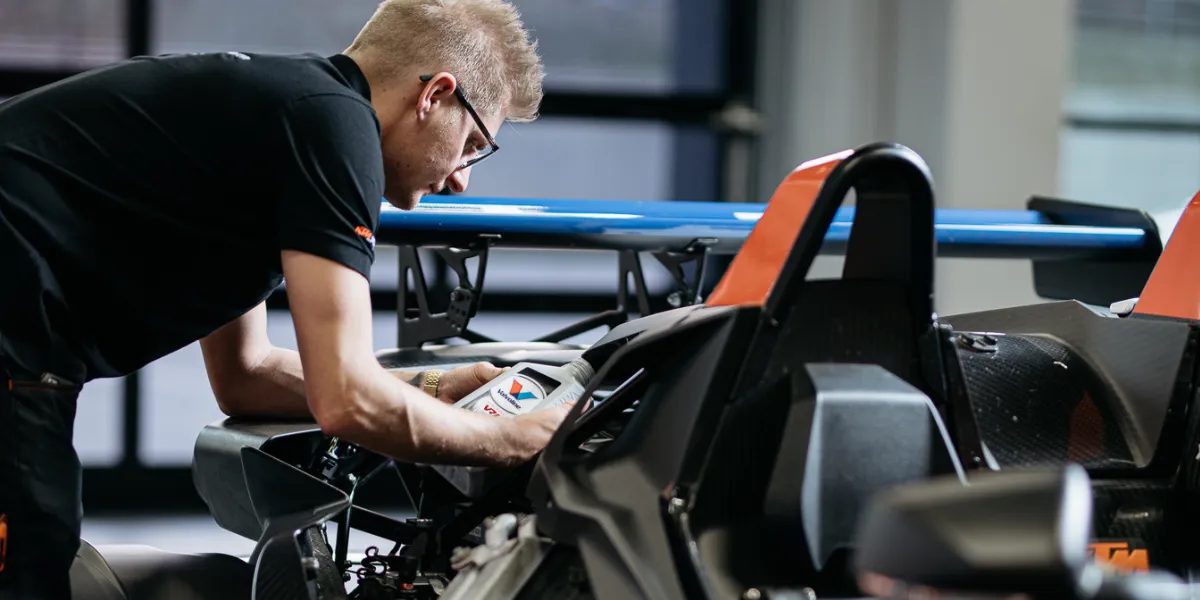
For a racecar driver, nothing is more devastating than a mechanical failure or breakdown on the track. Such an event can rob a driver of valuable seat time and set them back by weeks.
And it goes without saying that no one wants to lose — particularly when racing involves financial stakes.
With that in mind, here is a guide to help you keep your racecar in prime condition from the start of the season to the finish.
Maintaining your vehicle properly demands that you develop a comprehensive long-term maintenance strategy and commit to following it.
Numerous factors contribute to keeping a vehicle race-ready. Despite being widely understood, these factors are frequently neglected when it matters most.
The best way to prevent oversight is to create a detailed maintenance checklist covering every area that requires attention. This ensures nothing slips through the cracks.
Your checklist should include these ten essential steps:
The very foundation of any maintenance plan should be keeping your racecar thoroughly clean.
There is an obvious cosmetic benefit to washing your car — a gleaming, spotless surface is undeniably satisfying to look at. But cleanliness goes far beyond appearances when it comes to racecars.
Dirt and grime allowed to build up can inflict real damage. Accumulated grime can conceal body damage and promote rust, while abrasive grit gradually wears down the paint, driving up maintenance expenses over time.
Because dirt buildup directly degrades vehicle performance, learning to keep your racecar clean is a non-negotiable part of ownership.
You might instinctively reach for a pressure washer, but that would be a mistake. While pressure washers excel at blasting away stubborn grime, they create serious risks for racecars. The force of the water is strong enough to drive moisture past brake calipers, into the engine, and through the transmission. Contact with delicate components under such conditions can cause damage that simply cannot be undone. Instead, we strongly recommend the tried-and-true method of soap and water. It takes more time, but it is entirely safe and leaves your racecar spotlessly clean.
Inspecting your racecar frame for damage is a safety-critical step that should never be skipped.
The frame endures enormous stress during every race, absorbing impacts and forces that accumulate over time. For this reason, every section of the frame must be examined carefully for signs of deterioration.
If you discover cracks, broken tubes, failed welds, or damaged bumpers and nerf bars, do not delay — bring the vehicle to a qualified professional for repair or replacement. Ignoring structural damage puts both you and other drivers at serious risk every time you take the wheel.
While going over the frame, take the opportunity to check every bolt on the vehicle. Grab your wrenches and work through them systematically, testing each one for proper tightness. As this becomes a routine practice, you will begin to recognize which bolts tend to loosen faster than others — knowledge that helps you plan your time more efficiently.
Another advantage of bolt inspections is that they require you to examine your racecar up close, often bringing other hidden problems to light that might otherwise have gone undetected.
The suspension demands a thorough inspection at the beginning of every season and each time the vehicle returns to competition.
Every component of the suspension must be disassembled, carefully examined, cleaned, adjusted, and lubricated. This level of attention is what separates minor upkeep from the kind of care that prevents major mechanical failures.
There are specific items to focus on. Start by inspecting all bearings and re-lubricating them fully before reinstallation — if they appear worn, replace them outright. Next, pull the quick-change gears from the rear of the vehicle and verify they are functioning correctly, replacing any that are not performing as expected.
Pay close attention to the suspension linkages as well. Look for visible signs of damage such as cracks or bends. Use a spindle checker to confirm that the spindle eyes are properly aligned, which will indicate whether bending has occurred. Evaluate the straightness of ball joints, rod ends, and arm mounts as well.
Wherever it is needed, apply lubricant liberally.
Alongside keeping engine coolant and other fluid levels maintained, chassis maintenance is another task every racecar driver should complete on a weekly basis.
Proper chassis inspection begins with removing all torsion bars. Once removed, go over the chassis carefully, watching for anything that appears abnormal or out of place.
If the chassis looks to be in good order, you can reinstall the torsion bars — but first, clean and lubricate each one thoroughly before returning them to their correct positions.
This is also an ideal time to assess the shocks for any damage or fluid leaks. Clean and lubricate the cables responsible for shock adjustment.
Once everything has been serviced, return all components to their correct settings for a smooth and predictable driving experience.
Both the wheels and tyres on your racecar must be maintained in excellent condition at all times to ensure maximum performance and safety on the track.
Despite the punishment racecar wheels endure, many drivers neglect to inspect them properly. The demands placed on racecar wheels far exceed those on standard road car wheels, making cracks, bends, and other damage a frequent reality — yet these issues are often overlooked. Left unaddressed, such damage poses a real danger to the driver and the vehicle alike. Any irregularity you spot on your wheels should be investigated without delay.
Tyres serve as the direct interface between your vehicle and the racing surface, which makes their condition absolutely critical. Keep them clean by removing dirt and debris after every race, paying special attention if the track surface is dirt. Store your tyres away from direct sunlight, since UV exposure accelerates rubber hardening and degradation. Perhaps most importantly, always maintain correct tyre pressure — proper inflation significantly reduces the likelihood of a blowout and contributes to a safer overall ride.
The engine is what gives your racecar its power. Engine failure can effectively end your racing season, making a consistent engine maintenance routine absolutely essential.
Thorough engine checks involve many components. Begin by examining all hoses and gasket seals and verifying the tension on every belt. Set valve lashes and check the timing. Additionally, clear any built-up dirt and grime from the carburettor and apply lubricating fluid generously to ensure flawless operation.
These represent the core areas of engine maintenance, but feel free to extend your inspection to other engine components as well. Consistent checks not only improve performance but also give you the opportunity to catch emerging problems before they escalate into costly failures.
To allow your engine to perform at its highest capability, you must change your oil filter and replace the engine oil on a regular schedule.
Engine oil is the essential fluid that keeps every moving engine component properly lubricated, guarding against friction, grinding, and mechanical wear. It also plays a key role in dissipating combustion heat and, working alongside engine coolant, prevents the engine from overheating. On top of that, engine oil actively cleans the engine by carrying contaminants to the oil filter, stopping them from obstructing engine function.
Beyond regular oil changes, selecting the right engine oil for your racecar matters just as much. Racing applications demand oils specifically engineered to perform under punishing conditions — extreme heat, massive pressure loads, and continuous high stress. The oil must maintain its stability and deliver reliable protection against accelerated wear.
This is precisely why we recommend high-performance formulations like Valvoline VR1 Racing Motor Oil, which is engineered to deliver maximum performance alongside outstanding engine protection.
It is also worth noting that changing oil in a racecar differs from a standard oil change. Each time the oil is replaced, the filter should be opened and inspected for metal particles — their presence signals a problem elsewhere in the engine. Always inspect gaskets for leaks at the same time, catching issues before they have a chance to worsen.
The close of each racing season is the right moment to conduct your annual fuel system inspection.
A well-maintained fuel system pays dividends in multiple ways. A clean, contaminant-free system delivers purer fuel to the engine, translating into improved efficiency and stronger performance. Greater efficiency means less fuel consumed per mile, which in turn lowers both running costs and maintenance expenses.
Allocate dedicated time to inspect every element of the fuel system in detail. This includes servicing the fuel tank, checking all fuel lines, and confirming that injectors are operating correctly. Remove the nozzles, clean them completely, and reinstall them. Swap out the fuel filters, adjust the valves, inspect the fuel line, and examine the spark plugs.
After all components have been cleaned and reinstalled, run a final verification to confirm that everything is functioning as it should.
For the safety of yourself and every other competitor on the track, your brakes must always be maintained in excellent working order.
Brakes take tremendous punishment during racing, and inspecting them before every race should be treated as your highest priority. Effective braking controls your vehicle's power delivery and keeps you in command, helping you avoid dangerous situations on the track.
Brakes must also be completely free of moisture, which can accumulate as a result of improper washing techniques. For optimal performance, brakes need to be fully dry and filled with the correct level of brake fluid. Bleeding your brakes annually is essential for purging excess moisture from the system.
Furthermore, brake caliper piston seals are susceptible to deterioration from the intense heat generated during racing. Annual inspection of these seals is mandatory, though more frequent checks are even better practice.
The radiator's purpose is to regulate engine temperature. A blocked or leaking radiator will cause your engine to overheat rapidly, creating a serious performance and reliability problem.
This is why a regular radiator cleaning schedule is necessary. Rinse dirt away every few weeks — and more often if dirt roads are part of your racing environment. Use a low-pressure cleaner to flush the radiator from back to front. While cleaning, take the time to examine radiator hoses and hose clamps for any signs of leakage or wear.
Use this opportunity to verify your engine coolant level as well. Since coolant is your primary defence against overheating, always ensure the system is adequately filled.
Keeping your racecar in excellent condition is fundamental to competitive success. A vehicle that is not properly maintained will suffer in terms of speed, engine efficiency, and overall performance — and can ultimately create safety hazards for everyone on the track.
Regular inspection of the frame, chassis, and suspension, combined with consistent tyre and brake checks, should sit at the top of every maintenance schedule. Do not overlook fluid changes, radiator cleaning, and ongoing engine monitoring either.
The bottom line is this: diligent racecar maintenance is what makes flawless track performance possible.


No comments yet — be the first to share a thought.