If you're chasing a rough idle, a hesitation under load, or a check engine light for a lean condition, the first data stream I pull up is the MAP sensor readings. The manifold absolute pressure sensor tells the engine computer how much vacuum the intake manifold has, which translates directly into engine load. On the spec sheet, the number that decides it is the voltage output versus manifold pressure. Here is the chemistry, here is the spec, here is what to do with it. After this post, you will know what healthy MAP sensor readings look like, how to test them with a scan tool, and how to tell whether the sensor or the wiring is lying to you.
What a Healthy MAP Sensor Reading Looks Like
At idle, a warm engine pulls high vacuum, so the absolute pressure inside the intake manifold is low. Most MAP sensors output a voltage from 0 to 5 volts, with lower voltage at idle and higher voltage at wide-open throttle. On a typical GM sensor, you'll see about 1 to 1.5 volts at idle and 4.5 to 4.8 volts at wide-open throttle. On Ford sensors, the scale can be reversed or frequency-based, so always check the service manual. The key is to compare your MAP sensor readings with the manufacturer's specified voltage table. If your customer asks, the one-line answer is: at idle, expect low voltage; at wide-open throttle, expect near 5 volts.
Reference Box: a normally aspirated engine at sea level sees about 14.7 psi atmospheric pressure. At idle with 20 inches of vacuum, absolute pressure drops to around 4.9 psi. On a 0-5 volt sensor, that usually reads around 1 volt. That relationship is the whole game.
Altitude matters too. A sensor at 5,000 feet will idle at a lower voltage because atmospheric pressure is lower. If you compare readings without accounting for altitude, you can misdiagnose a perfectly good sensor. Always look up the predicted MAP value for your zip code or use a scan tool that displays kPa.

How to Test MAP Sensor Readings With a Scan Tool
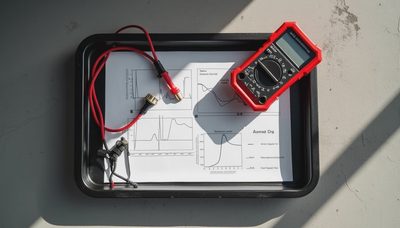
Set up your scan tool and look at the live data PID for MAP. On a warm engine at idle, the reading should match the expected absolute pressure for your altitude. At sea level, that's about 14.7 psi or 101 kPa. At 5,000 feet, it sits around 12.2 psi. If you see a reading that jumps around or sticks, the sensor may be failing. You can also backprobe the signal wire with a multimeter. With the key on, engine off, the sensor should read close to 4.5 volts on a 0-5 volt scale. Crank the engine with the throttle closed; the voltage should drop. This tells you the sensor responds to vacuum. Compare your MAP sensor readings to the actual vacuum reading from a hand pump if you want to be precise.
A hand pump lets you test the sensor off the vehicle. Calibrate it to 0 psi, apply vacuum, and watch the voltage decrease smoothly. Most sensors should give a steady change between 0.5 and 4.5 volts. Any dead spots mean the sensor is worn out.
Common Causes of Abnormal MAP Sensor Readings
Sometimes the sensor is fine, but the reading is still bad. A vacuum leak lets unmetered air into the manifold, which raises absolute pressure and makes the sensor read higher than it should. A clogged air filter can have the opposite effect at wide-open throttle. Wiring problems, a corroded connector, or a bad ground can skew the signal. Check the vacuum line to the sensor for cracks and carbon buildup. In my class, we see a lot of failed sensors that simply got contaminated with oil vapors from a dirty PCV system.
If you see a P0107 or P0108 code, the PCM has detected a MAP reading that's below or above the expected range. P0107 is a low input; P0108 is a high input. Those codes point to wiring, vacuum, or the sensor itself. Let the code guide your test.

Cleaning or Replacing a Faulty MAP Sensor
Cleaning a MAP sensor is a low-risk fix if the contamination is light. Use a mass air flow sensor cleaner, not brake parts cleaner, and spray the sensing element carefully. Let it air dry completely in a ventilated area. Reinstall and clear the code. If the MAP sensor readings still look off, replace the sensor. Most are located on the intake manifold or on a vacuum line; the job usually takes less than thirty minutes. OEM parts run anywhere from forty to a hundred and twenty dollars, depending on the make. Aftermarket sensors are cheaper but pay attention to the offset calibration.
Once the new sensor is in, start the engine and verify that the idle reading matches the expected psi or kPa. Road test under load and watch the readings follow the throttle. If the sensor was contaminated, also check the PCV valve and the vacuum lines. That prevents a repeat failure.
When to Call a Professional
If you have run through the tests and the MAP sensor readings are still inconsistent, there may be a PCM issue or an internal engine problem like a worn camshaft affecting vacuum. That's when you need a shop with a lab scope and smoke machine. You don't want to keep throwing parts at it. A proper diagnosis is worth the labor cost.
Keep this reference handy, and you'll be able to separate a bad sensor from a bad engine in a couple of minutes. The next time a car comes in with a P0107 or a rough idle, start with the MAP sensor readings and work through the test sequence. You'll save time, avoid comebacks, and explain the fix to your customer with confidence.

No comments yet — be the first to share a thought.