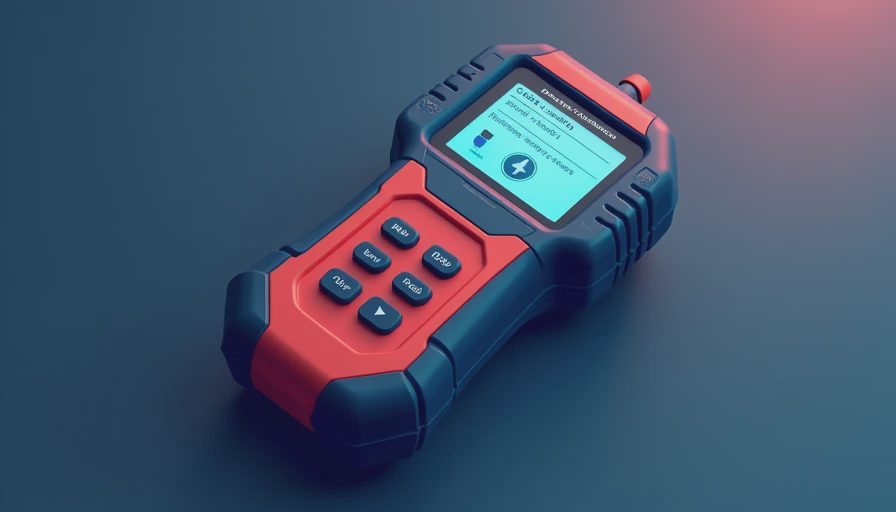
If you need to look up P0420 at the parts counter, in a fleet bay, or beside a driveway diagnostic scanner, this guide covers the code's meaning, likely causes, testing sequence, and repair decisions. P0420 is not a direct command to replace the catalytic converter. It is an OBD-II result showing that the engine computer believes catalyst performance has fallen below its expected threshold.
What P0420 actually means
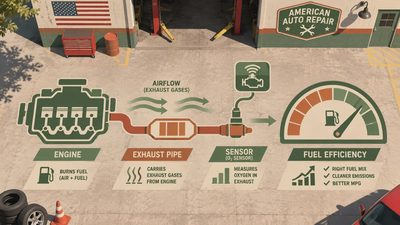
The formal description is usually "Catalyst System Efficiency Below Threshold, Bank 1." On an inline four-cylinder engine, there is only one bank. On a V6 or V8, Bank 1 is the side containing cylinder number one. The powertrain control module compares oxygen sensor behavior before and after the catalytic converter. A healthy converter stores and releases oxygen as the exhaust mixture changes. The downstream sensor should therefore show a steadier signal than the upstream sensor.
Reference Box: P0420 means the computer detected insufficient oxygen-storage or conversion performance from the Bank 1 catalyst. It does not identify the failed component by itself.
The converter uses precious-metal catalyst material to promote oxidation of carbon monoxide and unburned hydrocarbons and reduction of nitrogen oxides. It does not burn fuel like a second combustion chamber. It relies on the correct exhaust temperature and a controlled air-fuel mixture. Persistent misfires, excessive oil consumption, coolant entering the cylinders, or rich fueling can damage that chemistry over time.
A P0420 code may appear with no obvious drivability complaint. The vehicle can start normally, idle smoothly, and pass a casual road test while the check-engine light remains on. Fuel economy can be unchanged, or it can decline if the underlying mixture problem is still active.
Common causes before the converter
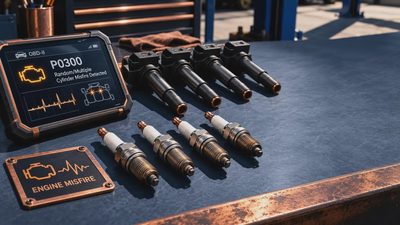
A converter is expensive enough that diagnosis should begin with the engine conditions feeding it. Look for other stored or pending trouble codes first. Misfire codes such as P0300, fuel-trim codes, oxygen-sensor heater codes, and air-fuel-ratio sensor faults deserve attention before condemning the catalyst. A converter exposed to repeated raw fuel from a misfire can overheat and melt internally.
Exhaust leaks are another frequent cause. A small leak between the engine and the rear oxygen sensor can pull outside air into the exhaust stream during deceleration. That extra oxygen can make the control module believe the catalyst is not storing oxygen correctly. Inspect manifold connections, flex pipes, gaskets, welds, and sensor threads. Soot tracks often reveal a leak, although a smoke test is more reliable.
The upstream sensor can become slow or biased from age, fuel contamination, or silicone exposure. The downstream sensor can also drift. Sensor replacement should follow testing, not the assumption that every oxygen sensor is interchangeable. Some vehicles use a wideband air-fuel sensor upstream and a conventional switching sensor downstream, so the part numbers and test methods differ.
Oil or coolant contamination matters because catalyst washcoat can be coated or chemically damaged. An engine using a quart of oil every 800 miles is not ready for a converter-only repair. Fix the consumption source first, or the replacement catalyst may fail again.
A practical diagnostic sequence
Start by recording freeze-frame data, mileage, coolant temperature, engine load, fuel trims, and all current or pending codes. Confirm that the engine reaches normal operating temperature. A thermostat stuck open can keep exhaust temperature and fuel control outside the conditions expected during the catalyst monitor.
Next, inspect the exhaust from the cylinder head to the tailpipe. Check for loose heat shields separately; a rattle is annoying but does not create P0420. Examine sensor wiring near the exhaust for melted insulation, pulled connectors, or corrosion. Use a scan tool to compare upstream and downstream oxygen-sensor data after the vehicle is fully warm.
On a conventional narrowband system, the upstream sensor should switch relatively rapidly as the module adjusts mixture. The downstream sensor should move more slowly and with less amplitude when the catalyst is working. Similar, rapid switching from both sensors supports a low-efficiency diagnosis, but scan data should be interpreted with the vehicle manufacturer's service information. Voltage alone is not a universal pass-fail test.
If the monitor will not run, check enabling conditions and pending faults rather than repeatedly clearing the code. Clearing codes erases useful freeze-frame information and resets readiness monitors. SAE J2012 defines diagnostic trouble code structure, while SAE J1979 describes standardized OBD diagnostic services; neither standard replaces the vehicle-specific test procedure.
Deciding whether the catalytic converter is bad
Once leaks, ignition faults, fuel-control faults, and sensor wiring have been addressed, test catalyst performance. A scan tool with graphing capability can show sensor patterns during a steady cruise and controlled acceleration. An infrared thermometer can compare temperatures at the converter inlet and outlet after a proper warm-up, but temperature readings alone can mislead. A restricted converter and a chemically inactive converter are different problems and require different tests.
Backpressure testing can identify an internally restricted converter. A vacuum gauge, used carefully with the manufacturer's specifications, can also help reveal exhaust restriction. If the substrate has melted, power loss under load, poor acceleration, or a glowing converter may appear. Do not touch exhaust components during testing; catalytic converters and nearby shields become hot enough to cause severe burns.
A replacement converter should match the vehicle's emissions configuration and certification requirements. Universal units can work when properly selected and installed, but fit, oxygen-sensor placement, pipe diameter, and emissions certification all matter. A bargain converter installed on an engine with unresolved misfire or oil consumption is rarely a bargain.
Repair cost and service planning
The repair range depends heavily on vehicle design. Diagnosing the fault may cost roughly $100 to $250 at an independent shop, while a sensor, gasket, or exhaust repair can range from about $150 to $600. A quality direct-fit converter can push the total repair into the $800 to $2,500 range, with some vehicles costing more because of integrated exhaust manifolds, multiple converters, or limited access.
For fleet maintenance, record the code, operating symptoms, previous converter history, oil-consumption rate, and repair date in the vehicle file. A repeat P0420 after a converter replacement should trigger a root-cause review, not another automatic parts order. Compare fuel trims, misfire counts, coolant level, and exhaust-leak inspection results across the vehicle's service records.
If your customer asks whether P0420 is safe to ignore, the one-line answer is that it is not normally an immediate breakdown code, but it should not be ignored indefinitely. The vehicle may fail an emissions inspection, and an unnoticed fueling or misfire problem can increase repair cost. Driving should stop if the check-engine light flashes, the engine misfires badly, power drops sharply, or the converter glows red.
Questions technicians hear most often
Can a fuel additive fix P0420? Usually not. Additives cannot restore a converter whose catalyst material has been melted, poisoned, or worn out. They also should not replace diagnosis of an injector, ignition, or oil-control problem. Use only products approved for the application and never pour unknown chemicals into the fuel system.
Will replacing the oxygen sensor clear P0420? It will help only when testing shows that the sensor is slow, biased, contaminated, or electrically faulty. Replacing it as a guess can waste several hundred dollars and leave the real problem untouched.
How should the old converter be handled? Catalytic converters contain valuable metals and should be removed and recycled through an appropriate automotive recycler or scrap program. Do not cut or crush a converter indoors, and avoid breathing dust from damaged ceramic substrate. Follow local waste rules for contaminated parts and used fluids.
P0420 is best treated as a performance diagnosis, not a parts lottery. Here's the chemistry, here's the spec, here's what to do with it: verify engine health, prove the exhaust is sealed, evaluate sensor signals, and replace the converter only when the evidence supports that conclusion.
No comments yet — be the first to share a thought.