
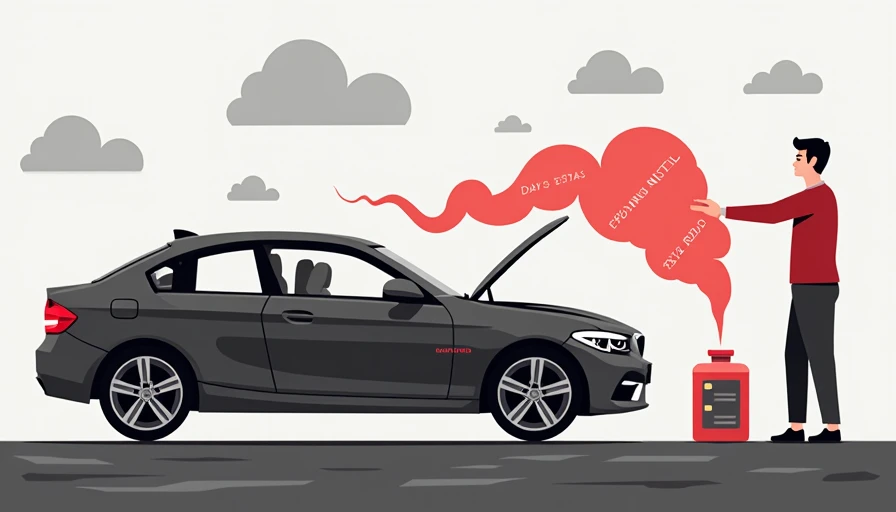
If you're behind the parts counter or under the hood, you've heard this question: "How long can you drive with mixed coolant?" Maybe a customer topped off the green stuff with orange. Or someone mixed two different brands in a pinch. The short answer is: a few days to a few hundred miles, but every mile past that is a gamble. Here's the chemistry, the spec, and what to do with it.
What Happens Chemically When You Mix Coolants
Coolants are not just dyed water. They're a precise blend of ethylene glycol or propylene glycol, deionized water, and a specific additive package—typically silicate-based (IAT), organic acid (OAT), or hybrid (HOAT). When you mix incompatible types, the additives can react. Silicates from old-school green coolant can gel with the carboxylates in OAT, forming a sludgy precipitate. This isn't an urban legend; I've seen it clog heater cores inside 10,000 miles. The mixture may also lose corrosion inhibition, leading to electrolysis that eats aluminum heads. On the spec sheet, the number that decides compatibility is the ASTM D3306 standard—but most coolants that meet it still aren't designed to be blended.
So how long can you drive with mixed coolant before these reactions cause trouble? It depends on the original coolant condition and how much you mixed. A small top-off might hold for a week. A 50/50 blend of green and orange? You're on borrowed time.

How Much Driving Is Safe Before a Flush?
In my 22 years as a chemist and now teaching, the safe window is narrow. If you mixed coolants inadvertently, you can drive normally for about 50 to 100 miles—enough to get the vehicle home or to a shop. Beyond that, the risk accelerates. Why? Because the reaction byproducts are abrasive. The sludge acts like sandpaper in the water pump seal and thermostat housing. I've seen a 1999 Chevy Tahoe lose its heater core after just 200 miles of driving on a 50/50 mix of Dex-Cool (OAT) and conventional green (IAT). The owner drove it for a week thinking “it’s fine if it’s just coolant.” It wasn't.
For a customer asking “how long can you drive with mixed coolant,” the one-line answer is: no more than a trip to the nearest radiator shop. If the mixture is still liquid and not gel-like, you can drive gently—avoid heavy loads and high RPM—to minimize heat stress. But park it as soon as practical.
Signs That Mixed Coolant Has Already Caused Damage
Don't just wait for the check engine light. Look for these symptoms:
- **Foaming in the overflow tank**: indicates chemical incompatibility and loss of surface tension.
- **Gel or crystals in the coolant**: usually green goo or white pasty deposits.
- **Overheating**: especially at idle or low speed, because sludge restricts flow.
- **Sweet smell from the heater vents**: leaking heater core due to corrosion.
- **Discoloration**: muddy brown or rust-colored coolant.
If you see any of these, the answer to “how long can you drive with mixed coolant” becomes zero. Pull over and get it towed. Driving further can warp heads or crack the block.
The Only Safe Procedure: Flush and Refill
Here's the procedure I teach in my Fluids & Lubricants class:
- Drain the current coolant completely. Remove the radiator cap and open the petcock or lower hose.
- Fill with distilled water. Run the engine with the heater on until the thermostat opens.
- Drain again. Repeat until the water comes out clear—usually 2-3 cycles.
- Refill with the correct coolant type for your vehicle. Use a 50/50 premix or concentrate with distilled water.
- Bleed air from the system according to the service manual.
For the professional, note that a chemical flush additive (like Prestone Super Flush) can break down stubborn residue. But for mixed coolant, water flushing is often sufficient. The key spec to look up is the OEM coolant specification (e.g., GM 6277M for Dex-Cool). Never mix brands or colors again if you can avoid it.
FAQ: Quick Answers for the Parts Counter
**Q: How long can you drive with mixed coolant if you just topped off by a quart?**
A: About 50-100 miles. Then flush.
**Q: Can you mix different colors of the same brand?**
A: Not reliably. Even same-brand HOAT and OAT may not be compatible. Check the bottle.
**Q: Will mixed coolant damage a modern aluminum engine faster?**
A: Yes. Aluminum reacts more aggressively with poor inhibitor packages.
**Q: What if the customer drove 500 miles already?**
A: Recommend immediate flush. Look for signs of damage. Warranty may be at risk.
The Bottom Line
How long can you drive with mixed coolant? In practice, a very short distance—no more than 50 to 100 miles. The chemistry works against you from the first pour. A flush costs $100-$150 at a shop. A new water pump or heater core runs $500-$1,200. Your call. For the tech or DIYer, the safest answer is: don't drive it, drain it. Here's the chemistry, here's the spec, here's what to do with it.



No comments yet — be the first to share a thought.