What Should a MAP Sensor Read in Hg? A Technician's Reference
If you're diagnosing a driveability complaint and need the answer to what should a MAP sensor read in hg, this is the reference you'll want open. We'll cover key-on readings, idle vacuum numbers, how altitude changes the picture, and a simple test procedure you can run with a scan tool and a hand vacuum pump. After this post, you'll be able to answer the customer's question in the time it takes to grab a wrench.
What Exactly Does a MAP Sensor Measure?
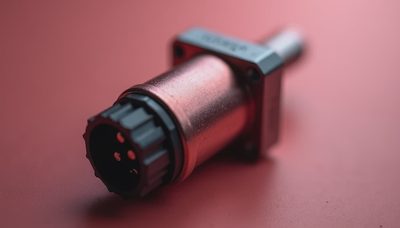
A manifold absolute pressure sensor measures the absolute pressure inside the intake manifold, using the vacuum inside the manifold as the primary signal. On a gasoline engine, the throttle plate creates a restriction; at idle, the engine pulls a strong vacuum, so the MAP sensor reads a low absolute pressure. When you open the throttle wide, manifold pressure rises toward atmospheric pressure, and the reading climbs. The engine computer converts that voltage or frequency signal into a pressure value, then uses it with engine speed to estimate load and fuel requirement.
The unit "in Hg" stands for inches of mercury, a common way to express vacuum and absolute pressure in U.S. shop manuals. A perfect vacuum is 0 in Hg absolute; atmospheric pressure at sea level is about 29.92 in Hg absolute. So the numbers you see on a scan tool for MAP are absolute pressure, not gauge pressure. That distinction matters when you compare readings to a vacuum gauge, which typically shows vacuum in inches of mercury below atmospheric.
What Should a MAP Sensor Read in Hg at Key-On, Engine Off?
With the engine off and the ignition on, a healthy MAP sensor should read local barometric pressure. At sea level, that's about 29.9 in Hg. At 5,000 feet of altitude, expect roughly 24.8 in Hg. The sensor is simply seeing the surrounding air through the intake manifold, and the computer uses this reading to adjust for altitude.

Reference Box: If your shop is at a known elevation, pull up the local barometric pressure from a weather station. The key-on reading should match it within about 0.5 in Hg. If it doesn't, the sensor may be biased, or there could be a wiring issue.
This is also the value the engine computer uses as its barometric reference before startup. On many vehicles, the MAP sensor reading at key-on is stored as BARO, and you can compare it to an actual barometer to quickly check sensor accuracy.
What Should a MAP Sensor Read in Hg at Idle?
At warm idle on a stock gasoline engine, a MAP sensor typically reads between 18 and 22 in Hg absolute. The exact number depends on camshaft timing, throttle bore, and altitude. A stock daily driver with a mild cam and good rings will usually sit around 19 to 20 in Hg. A performance cam with more overlap will pull less vacuum, so you might see 14 to 16 in Hg at idle. That's still normal for that engine, which is why you need to know the base engine's characteristics before condemning the sensor.
Here's the chemistry, here's the spec, here's what to do with it: On a diesel engine, there is no throttle plate, so the intake manifold stays near atmospheric pressure. A diesel MAP sensor at idle should read close to barometric pressure, often within 1 to 2 in Hg. If you test a freightliner or a Ford Power Stroke the same way you test a gasoline V8, you'll get a false failure.

How to Test Your MAP Sensor Readings
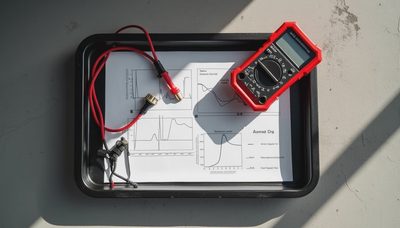
To verify a MAP sensor, you need a scan tool that displays live MAP data and a hand vacuum pump with a gauge. Start with the engine off. Connect the scan tool, turn the ignition on, and record the MAP reading. Compare it to local barometric pressure. Next, apply vacuum to the sensor port with the pump. A typical sensor should respond linearly; for example, at 20 in Hg of applied vacuum, the MAP sensor should read about 10 in Hg absolute if the barometric pressure is 30 in Hg. If the reading stays stuck, the sensor is bad or the signal wire is shorted.
Then start the engine and bring it to operating temperature. At idle, compare the scan tool MAP reading to the known good range for that engine. Snap the throttle open and watch the reading jump toward barometric pressure, then drop quickly back to idle vacuum. If the reading lags or spikes, suspect a clogged vacuum line, a leaking hose, or a failing sensor.
What Does a Bad MAP Sensor Look Like?
A failing MAP sensor often sets codes like P0107 or P0108, but you can also spot it on live data. The reading may sit at a fixed value, or it may read 2 or 3 in Hg off from a known good sensor. The engine usually runs rich or lean, idles rough, or stalls when you put it in gear. A common mistake is replacing the sensor when the problem is actually a cracked vacuum hose or a loose manifold bolt. Check the vacuum circuit before you spend the money.
The One-Line Answer
If a customer asks what should a map sensor read in hg, the one-line answer is: with key-on and engine off, it should read the same as local barometric pressure, and at warm idle on a gasoline engine, it should read around 18 to 22 in Hg absolute. Diesels and modified engines are the exceptions, so verify against known good data for that specific vehicle.

No comments yet — be the first to share a thought.