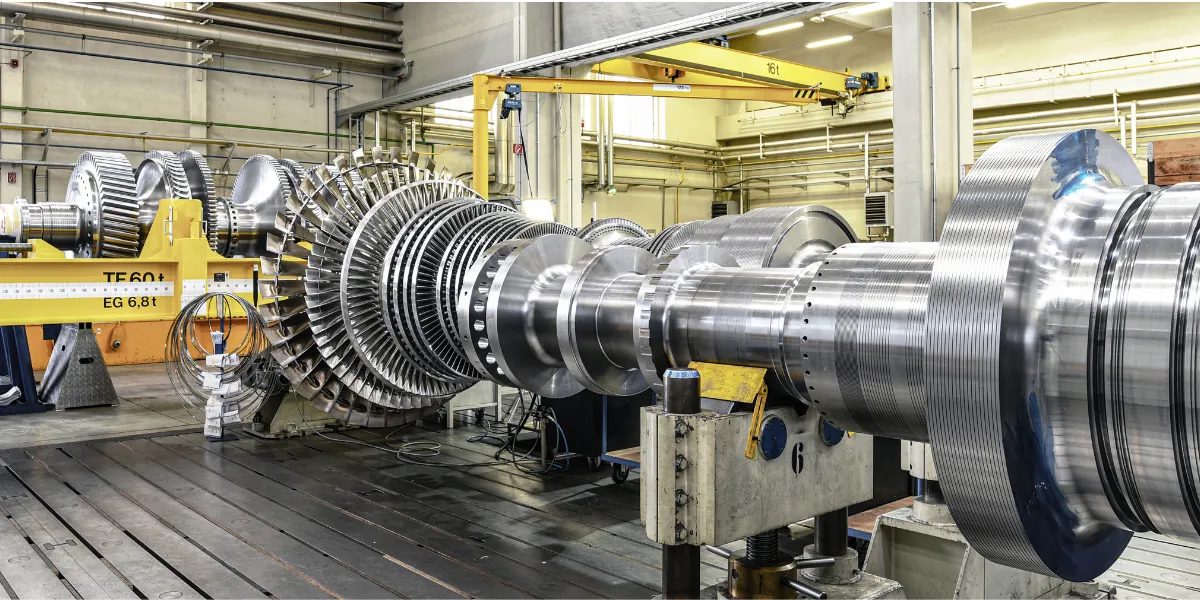
Turbine engines operate by combining compressed air with fuel for ignition. Because they function at significantly elevated temperatures, they demand specialized high-performance lubricants engineered to support their unique operational needs. These specialized products are known as turbine engine oils (TEOs).
What exactly are turbine engine lubricants, and what makes them function the way they do?
This ultimate guide to turbine lubrication has all the answers!
Although turbine oils and hydraulic oils are frequently confused for one another, they serve distinct purposes. These two oil types function within different environments and possess entirely different characteristics.
Hydraulic oil serves several functions within a hydraulic system. Its primary role is acting as a medium for energy transmission — specifically, it carries power through the hydraulic system.
Beyond energy transmission, hydraulic oil delivers advanced anti-wear, lubrication, cooling, sealing, and anti-corrosion capabilities. Its core purpose is to conserve energy, reduce machine wear, and maximize equipment service life.
Hydraulic oils come in several varieties. Categorized by application, they can be power transmission types (suited for hydrodynamic systems) or hydrostatic types (suited for hydrostatic systems).
Turbine oil serves a broad range of industrial purposes. It provides lubrication for air and gas compressors, all varieties of hydraulic devices, bearings, reduction equipment, and Kaplan turbine runner bosses.
Beyond its lubrication capabilities, turbine oil delivers effective cooling and shields the system against sludge buildup, rust, and corrosion.
Turbine oil is commonly categorized based on the turbine type it serves — for example, gas turbine oil, steam turbine oil, and others.
Because turbine oils and hydraulic oils serve different functions across varied applications, their specifications and requirements differ considerably. Hydraulic oils place greater emphasis on anti-wear, anti-foam, and anti-emulsification characteristics. Turbine oils, by contrast, place higher priority on anti-rust, anti-corrosion, and anti-foaming performance.
Like all lubricating oils, turbine oils are formulated from two core components: base oil and additives.
Base oil accounts for 97% or more of any turbine oil formulation. It may be synthetic, semi-synthetic, or mineral in origin.
Additives typically represent just 1% of the turbine oil composition. Despite their small proportion, they are critically important to the overall formula. Carefully selected advanced additives are incorporated to suppress foaming, inhibit rust and oxidation, promote water separation, and more.
Additives are blended into the base oil either to enhance its inherent characteristics or to introduce entirely new properties. The role of turbine oil additives is to extend the usable life of the turbine oil while simultaneously safeguarding turbine components.
Achieving the right balance between base oils and additives is critical to limiting the effects of oxidation and thermal degradation, both of which can lead to sludge and varnish accumulation.
Turbine oil operates under conditions of intense heat and pressure. Its carefully engineered formula allows it to retain its key properties, ensuring continuous lubrication and protection of the turbine. Among these properties are corrosion resistance, enhanced anti-oxidation performance, anti-foaming capability, appropriate viscosity, and high overall stability.
Let's take a closer look at each of these properties:
Viscosity ranks among the most important characteristics of any engine oil. It describes how strongly an oil resists flow. A thin oil, for instance, carries a low viscosity rating, while a thicker oil registers a higher viscosity.
This characteristic varies depending on the turbine type and the operating pressure involved. For example, the viscosity required for a marine turbine equipped with gear reducers differs from that of a smaller unit featuring ring bearings.
For large-scale turbines or those deployed in marine environments, viscosity is a central criterion when evaluating turbine oil quality and performance.
A broad spectrum of viscosity grades is available on the market. Valvoline's turbine oils offer viscosity grades spanning from 32 to 220.
Selecting a viscosity grade that matches the turbine type and its operating conditions is essential to achieving the best possible performance outcomes.
Turbines generate a water-in-oil emulsion as a result of condensation or leaks. Turbine oil must therefore exhibit strong demulsibility — the capacity to effectively separate water — so that it can shed water contamination quickly once it occurs.
This property holds considerable importance for both turbines and general industrial machinery, as it can meaningfully extend the operational life of both the oil and the equipment it protects.
Corrosion is among the most prevalent chemical reactions in industrial settings, triggered by oxidative derivatives present within the oil. Rust, on the other hand, forms when iron or steel surfaces are exposed to both air and water simultaneously.
High-performance turbine oil contains quality additives formulated to inhibit both rust and corrosion, thereby extending the lifespan and operational effectiveness of industrial machinery.
Foaming degrades the performance characteristics of lubricating oil. Because turbine oil is in constant contact with air, the likelihood of oxidation increases substantially. Foaming therefore leads to a notable decline in system performance and can cause equipment malfunction.
Premium turbine oils incorporate defoamers — dedicated additives designed to minimize the risk of foam formation.
Oil oxidizes when subjected to elevated temperatures or prolonged air exposure. This oxidation process generates harmful acids and oxidative compounds that can, in turn, promote the formation and accumulation of deposits.
Oxidation is one of the leading drivers of turbine failure. For this reason, high-quality turbine oil must be fortified with robust anti-oxidation additives.
The turbine's main shaft revolves at exceptionally high speeds, making it highly susceptible to wear and tear. Turbine oil must contain premium anti-wear additives to reduce damage to the main shaft. It should also protect the turbine gearbox from wear, given that the gearbox is responsible for increasing the rotational speed of the main shaft.
Turbine oils are classified into four categories based on turbine type: gas, hydro, steam, and wind turbines. Below is a closer look at each turbine type and the lubricant requirements associated with it.
A gas turbine — also referred to as a combustion turbine — is a form of continuous internal combustion engine. It consists of an upstream rotating gas compressor, a combustor, and a downstream turbine section.
Gas turbines operate under extreme thermal conditions, with temperatures typically ranging from 71ºC to 121ºC. Such demanding operating environments are a frequent cause of premature oil failure, which is why gas turbine oils must be engineered to withstand these elevated temperatures.
Hydro turbines are deployed in hydroelectric power plants, where they convert the energy of flowing water into rotational shaft movement to produce electricity. These turbines begin to rotate or spin as water engages their blades.
This turbine type demands lubricants with high hydrolytic stability and strong demulsibility — properties that extend the service life of oil that is continuously exposed to water. Viscosity stability is equally important for hydro turbine oil performance, given the frequent changes in ambient temperature that these units experience.
Steam turbines are extensively used in power generation applications. They operate on continuous schedules under harsh conditions that may include water contamination and extreme temperature fluctuations, making them susceptible to a range of performance issues.
Effective lubrication is fundamental to the overall operation of steam turbines and ensures they perform at their best. Selecting the right steam turbine oil is a multi-step decision. A quality oil must prevent sludge, rust, and corrosion formation while also enabling efficient system cooling. Above all, it must deliver optimal lubrication to the bearings.
In aero-derivative gas turbines, the lubricating oil comes into direct contact with metal surfaces that can reach temperatures as high as 316ºC. This makes it essential to use oils with exceptional thermal and oxidation stability. These turbines typically call for high-purity synthetic lubricating oils.
Turbine oil quality is central to achieving optimal turbine performance. However, the role of turbine system maintenance must not be overlooked in industrial environments. Neglecting regular inspections and allowing improper maintenance practices can lead to a host of problems, including shortened oil life, increased waste oil output, more frequent downtime, and reduced turbine bearing longevity.
The following turbine system maintenance best practices are worth implementing immediately.
Keeping turbine oil clean directly translates into longer machine and equipment service life. Particulate contamination, in particular, accelerates the degradation of bearings and gears. Oil contamination can arise from many sources, and deposits will accumulate even in initially clean oil.
To preserve the cleanliness of your turbine engine oil, conduct regular system inspections and verify that the filtration system is functioning as intended.
Additionally, consult your OEM supplier regarding the appropriate ISO Cleanliness Level (ISO particle count) for your system. They can offer practical guidance on how to improve system cleanliness.
As noted earlier, water ranks among the most damaging contaminants that turbine engine oil can encounter. Water contamination compromises the integrity of the oil film and can trigger micro-cracking just beneath the metal surface.
This phenomenon — known as hydrogen embrittlement — results from hydrogen being absorbed into the material. The severity of hydrogen embrittlement is proportional to the amount of hydrogen penetrating the surface, and it can progress over time into pitting damage.
Several techniques exist for removing water from lubrication systems, including centrifugal purification and vacuum dehydration. Centrifugal purification is especially effective when dealing with high concentrations of water.
Conduct regular system inspections to detect any oil leakage. Begin by examining bearing seals, cooler tube joints, valve connections, and oil-supply lines. If visible leaks are present but their origin is unclear, seek the assistance of a qualified technician.
Oil analysis is an indispensable element of turbine system maintenance. It delivers valuable insight into the condition of the turbine lubrication system and can detect early indicators of system deterioration or contamination — creating the opportunity to address performance problems before they escalate and to maximize both uptime and turbine longevity.
The turbine oil analysis process is straightforward. Simply collect an oil sample and submit it to a laboratory for testing. The lab will evaluate the oil's condition and identify any contaminants present. Depending on your objectives, sampling can be performed on a daily, monthly, or other scheduled basis.
Not sure where to begin? Valvoline offers a Fluid Analysis Program. We perform a comprehensive oil analysis and deliver results within 48 hours. For preventive recommendations and maintenance guidance aimed at extending your turbine system's lifespan, our lab and technical experts are available for consultation.
High-quality turbine oil is indispensable to the performance and health of any turbine system. It fulfills multiple functions simultaneously, encompassing system lubrication, cooling, and speed reduction.
Because this type of oil must withstand punishing conditions — including high temperatures and elevated pressures — it requires quality base oils paired with high-performing additives. Together, they must deliver advanced anti-rust and anti-corrosion protection, enhanced anti-foaming capability, strong demulsibility, reliable stability, and appropriate viscosity for your industrial machinery.
It is equally important to recognize that selecting the correct turbine oil is only part of the equation. The other half is committing to a regular system maintenance routine, which is what truly extends the life of both your equipment and your lubricants.
For more than 150 years, Valvoline has been engineering and refining turbine oil formulations to deliver superior performance and keep pace with the evolving demands of the modern market.
Our turbine oils are developed to meet the lubrication requirements of water, gas, and steam turbine bearings. They deliver advanced lubrication, cooling, and protection throughout the turbine system. Formulated with the finest quality base oils and enhanced with cutting-edge corrosion and anti-wear additives, Valvoline turbine oils are built for extended service life and consistent, reliable performance.
It is also worth noting that our turbine oils are suitable for use as hydraulic fluids. They are an excellent option for applications requiring oils with outstanding oxidation resistance and anti-corrosion properties. Available across a range of ISO viscosity grades, they are equipped to meet your most demanding operational requirements.
Browse our full line of industrial lubricants or reach out to us for technical guidance and expert recommendations.




No comments yet — be the first to share a thought.