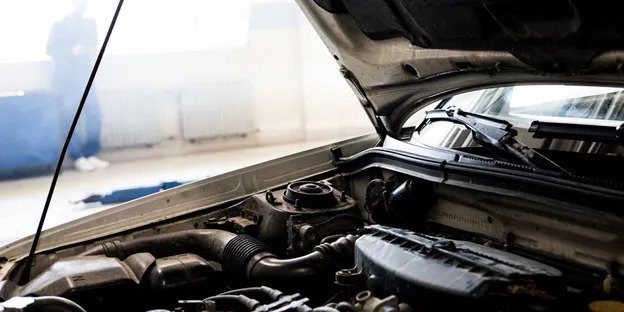
As we cruise down the highway in a comfortable car, the intricate mechanical activity occurring beneath the hood rarely crosses our minds. Whether it's the engine's rumble or the quiet spin of gears, an invisible force makes everything work — lubrication. This often-underappreciated yet vital aspect of automotive mechanics deserves a thorough understanding. Join us as we explore the world of passenger car lubrication, covering its purpose, advantages, varieties, and environmental implications.
At the heart of every mechanical system lies the indispensable role of lubrication. In the automotive world, where engines and components must function with exceptional precision and complexity, this role becomes even more critical. Think of a car's lubrication as its lifeblood — without it, the intricate, finely tuned system can grind to a halt, sometimes with devastating literalness.
The primary function of lubrication is to reduce friction between components in motion. Left unchecked, that friction generates excessive wear and tear, shortening component lifespan and degrading performance. By forming a thin, protective film between moving surfaces, lubricants allow mechanisms to operate without damaging one another.
Beyond friction reduction, lubrication plays an equally vital role in heat dissipation. As components interact and move, they generate thermal energy. Excessive heat causes overheating, which is damaging to the engine and can ultimately lead to total engine failure. Engine oil in particular absorbs and transfers this heat away from engine components, maintaining stable operating temperatures.
Lubrication also acts as a shield against rust and corrosion — two serious threats to a vehicle's performance. When metals are exposed to certain conditions that trigger oxidation, rust can develop. Beyond physically degrading the metal, rust intensifies friction and can cause moving parts to seize entirely. Lubricants address this by forming a barrier that prevents salt, water, and other corrosive substances from reaching metal surfaces.
Finally, lubrication contributes to keeping engines clean. During operation, engines produce an array of contaminants and debris — tiny metal shavings, combustion byproducts, and more. If unmanaged, these particles can inflict serious damage. Lubricants suspend these contaminants and carry them away, maintaining engine cleanliness until the next oil change.
Engine oil stands as the most widely used and essential form of vehicle lubricant. It takes full responsibility for lubricating the combustion chambers of the engine by minimizing friction among moving parts. Maintaining viscosity at elevated operating temperatures is a critical property of engine oil. To extend the service life of engine components, diesel engine oil typically incorporates a range of chemical additives, including dispersants, detergents, and anti-wear compounds.
Types of engine oils include:
Manufacturers generally recommend changing diesel engine oil at regular, scheduled intervals.
Gear oils are commonly used in vehicles equipped with manual transmissions, gearboxes, and differentials. This oil facilitates smooth gear changes and maintains transmission temperature. Depending on the vehicle, automatic transmission fluid (ATF), continuously variable transmission (CVT) fluid, or dual-clutch transmission (DCT) fluid may be required as essential lubricants. To handle high-pressure movements, these fluids typically carry very high viscosity and include extreme-pressure additives containing sulphur compounds. Unlike diesel engine oil, gear oil does not require changes as frequently — it has a considerably longer service life and is typically replaced at 100,000 kilometres.
Brake fluid transmits the force from the pedal to the brakes, making it indispensable to the braking system's operation. Brake fluid variants — dot 3, 4, 5, and 5.1 — differ in their boiling temperatures and chemical composition.
Power steering oil serves a dual purpose: it enables smooth, effortless steering while also reducing friction between gears so they work together seamlessly.
A car's engine generates substantial heat during operation, and this is where coolants prove their value. They carry engine heat to the radiator, where it can be dissipated. Yet a car coolant does far more than simply prevent overheating or freezing.
Many everyday drivers use the terms "antifreeze" and "car coolant" interchangeably, but they are not identical. Antifreeze is a concentrated substance that must be diluted with water before use. The resulting mixture of antifreeze and water constitutes coolant. Alongside concentrated forms, ready-to-use solutions are also available and offer considerably greater convenience.
Like all lubricants, car engine coolants are composed of base oils — propylene and ethylene glycol — along with performance-enhancing additives. They are dyed in distinct colours so consumers can easily differentiate between the various coolants on the market and select the one compatible with their vehicle's existing fluid. Available coolant colours include blue, pink, turquoise, green, orange, and yellow.
Grease can be formulated from petroleum or synthetic chemicals combined with a thickener and additional additives. Similar to oil in composition but thicker in consistency, it is ideally suited for lubricating gears, bearings, and linkages. Among the top-performing high-performance lubricants are silicone-based synthetic greases, which have proven effective in applications involving intense mechanical pressure, such as torque gearboxes.
Penetrating lubricants are highly refined, low-viscosity oils with excellent flow characteristics. They typically come packaged in aerosol-style containers and are applied to corroded or stubborn nuts and bolts. For maximum effectiveness, they should be sprayed and given time to absorb into the surface. Because they wear off rapidly, penetrating lubricants require frequent reapplication.
Dry lubricants offer a convenient, straightforward approach to lubrication. They consist of dry lubricating particles suspended in a carrier liquid such as water or alcohol and are generally packaged in aerosol spray canisters. Once applied, the liquid carrier evaporates, leaving behind a layer of dry lubricant. They are best suited for smaller components — such as hinges and threaded rods — that would otherwise become clogged with grease.
In automotive applications, lubrication does much more than simply reduce heat and friction. To fully appreciate this essential process, it helps to understand the foundational concepts and terminology that underpin lubrication science. At its simplest, lubrication means creating a protective layer between two surfaces in motion to minimize direct contact and thereby reduce friction and wear.
Viscosity ranks among the most critical properties of any lubricant. Commonly described as a fluid's "thickness," viscosity measures a fluid's resistance to flow. Thin, low-viscosity fluids flow rapidly, while thick, high-viscosity fluids move more slowly. Viscosity matters in lubrication because it directly affects a lubricant's ability to form a protective film between mechanical components. The correct viscosity allows the lubricant to sustain that film even under pressure, delivering consistent protection to engine parts.
Two key concepts in automotive lubrication are hydrodynamic lubrication and boundary lubrication. Hydrodynamic lubrication occurs when speed and pressure are sufficient to sustain a thick film of lubricant between moving components. In this state, the lubricant fully separates the surfaces, keeping wear to an absolute minimum.
Under conditions of high load or low speed — such as when a vehicle pulls away from a standstill — the lubrication may shift into a state called boundary lubrication. Here, the lubricant film becomes thinner and intermittent surface-to-surface contact occurs. This condition demands the use of specialized additives in the lubricant to protect surfaces even when a full fluid film cannot be sustained.
Establishing a proper maintenance schedule for your vehicle is essential to ensuring its long-term health and performance — this is more than just advice. Just as the human body requires regular hydration, your car relies on timely, consistent lubrication to keep its sophisticated mechanical systems functioning correctly.
Following the manufacturer's recommended lubrication schedule is paramount. This schedule, typically found in your vehicle's owner's manual, is not arbitrary — it is the product of extensive testing and data collection designed to determine the optimal maintenance intervals for vehicle longevity and performance. Adhering to it protects your warranty while preserving your vehicle's durability and functionality. As one example, users are advised to replace brake fluid dot 3 every two years or 40,000 kilometres.
Because every vehicle is different, service intervals can vary. Several warning signs may indicate that your car is in need of lubrication, including:
Depending on your technical background, you may consider handling your own car lubrication. To do so properly, you will need the correct tools and a clear understanding of how each component is lubricated. Professional lubrication services, while more costly, bring expertise and save you time. Valvoline's Lubricant Advisor is also available to help you identify the best product for your specific vehicle.
The importance of lubricants in keeping a vehicle running smoothly cannot be overstated, but their environmental impact deserves equal consideration. Conventional lubricants frequently contain petroleum and are non-biodegradable, meaning improper disposal can cause significant environmental harm. Used motor oil, for instance, is a leading source of oil contamination in rivers, threatening aquatic life and the quality of water supplies.
For this reason, proper disposal of spent lubricants is essential. They should be collected and taken to designated disposal or recycling facilities, where they can be processed and recycled in an environmentally responsible manner.
The automotive industry is actively advancing toward more environmentally friendly lubricants. Frequently synthetic or plant-based in origin, these products are engineered to deliver the necessary lubricating performance while minimizing negative environmental impact. Valvoline's Ultramax Bio-46 Hydraulic Oil is biodegradable and well-suited for use in demanding industrial vehicles. Looking ahead, we can anticipate a growing range of bio-lubricants designed for passenger cars, motorcycles, and other personal vehicles.
Pulling back the curtain on passenger car lubrication reveals a compelling story woven from engineering, physics, and environmental responsibility. Our journey through the hidden circulatory system of our vehicles has shed light on the diverse roles lubricants play, their sophisticated chemical makeup, the precise balancing act they perform inside our engines, and the importance of disposing of them responsibly. Armed with this knowledge, we can extend the life and performance of our vehicles while making a meaningful contribution to environmental stewardship. The next time you settle back into your running car, spare a thought for the unsung hero — the lubricant — quietly enabling smooth, efficient travel on every road.
Valvoline, a trusted name in automotive lubricants, offers an extensive range of high-performance lubricants for passenger cars. Our engine oil lineup — spanning synthetic, semi-synthetic, and conventional formulations — has been meticulously engineered to deliver superior resistance to wear and friction along with improved fuel economy. Valvoline's premium lubricants address the diverse needs of different vehicle types and driving conditions. Through our network of lubricant advisors and oil analysis services, Valvoline provides comprehensive automotive maintenance support. Our certified specialists and world-class products ensure that your vehicle consistently performs at its peak. With Valvoline, experience everything your car has to offer — going further, faster, and smoother on any road and in any driving condition.


No comments yet — be the first to share a thought.