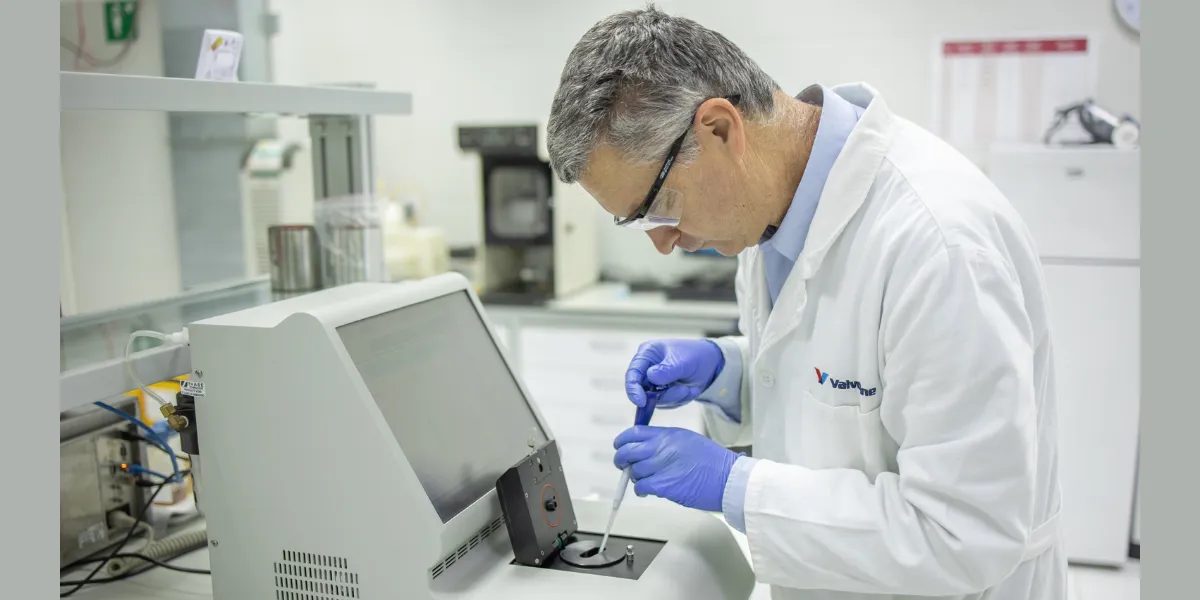
An invisible layer of science awakens the moment a mechanic unscrews a cap or a driver turns the ignition. Lubricants flow, cling, cool, and protect—all within milliseconds. Friction between metal surfaces is held at bay, temperatures stay controlled, and engines endure stresses their original designers once thought impossible. Smaller, faster, hotter, and more efficient than ever, modern vehicles demand lubricants engineered to do far more than simply "oil the engine."
For more than 150 years, Valvoline has stood at the forefront of lubrication change—and continues to do so today. Pioneering low-viscosity synthetics, developing advanced fluids for electric and hybrid systems: Valvoline's laboratories keep pushing lubricant technology into new territory.
Quiet but revolutionary, the past decade transformed modern lubricants into the unsung heroes of mobility. Whether you are a family car owner or a fleet engineer, the science that changed how engines live and breathe is worth understanding.
The lubricant advancement story does not begin in a laboratory—it begins under the bonnet. For the past ten years, automakers have been rewriting engine design rules entirely, driven by efficiency and emissions targets that demanded better engines in every sense.
Around 2010, turbocharged engines powered roughly 25% of new cars sold in Europe. That figure now sits near 65%. More power per litre comes at a cost: higher internal pressures and temperatures that traditional lubricants simply could not handle.
Lubricant developers—Valvoline Global among them—responded by engineering formulations with enhanced oxidation resistance, stronger film strength, and more stable viscosity profiles. Oils like Valvoline HD maintain protection even when temperatures peak in critical engine zones.
Start-stop technology and hybrid drivetrains introduced a new category of stress. Constant engine restarts punish bearings and timing components, requiring lubricants that cling to surfaces even during periods of inactivity. Valvoline's synthetic line was formulated specifically to counter wear across these repeated stop-start cycles.
Start-stop-equipped engines may restart more than 250,000 times over their lifespan—roughly ten times more than conventional engines. Without adequate oil film retention, accelerated wear in key engine parts would be the inevitable result.
Base oil forms the foundation of every lubricant, comprising roughly 70–90% of the final product. Over the past decade, the industry's shift from mineral to synthetic base oils has been nothing short of transformative.
The American Petroleum Institute (API) sorts base oils into five groups, from Group I—the least refined—through to Group V, which covers special synthetics. In 2015, most engine oils leaned heavily on Group II or Group III bases. Today's premium formulations frequently blend Group IV (PAO – polyalphaolefin) and Group V components, achieving superior molecular uniformity and stability.
Synthetic base oils now exhibit:
SynPower and Premium Blue illustrate this transition well. Both use advanced synthetic bases engineered to protect modern diesel and petrol engines alike, even under severe commercial use.
Sustainability has also reshaped base oil production. Refiners now deploy hydrocracking, gas-to-liquid (GTL), and bio-synthetic processes that drastically cut impurities and carbon intensity. Some modern formulations incorporate renewable esters—proof that performance and responsibility can genuinely coexist.
Think of base oils as the structural foundation of any lubricant; additives are what define its character and capabilities. In the past decade, additive chemistry has advanced faster than at any previous point in history.
Additives now account for 10–30% of engine oil, each type serving a specific protective or cleansing function. The main categories include:
Prevent deposit build-up
More temperature-resistant metal sulphonates
Keep contaminants in suspension
Ashless formulations for cleaner combustion
Advanced zinc dialkyldithiophosphate (ZDDP) alternatives
Organic molybdenum compounds for smoother operation
Resist oil degradation
Aminic and phenolic blends with longer lifespan
Ensure consistent flow
Shear-stable polymers that do not break down easily
A landmark development was the introduction of low-SAPS (Sulphated Ash, Phosphorus, Sulphur) formulations, critical for safeguarding modern emission control systems. A decade ago, many oils carried excessive levels of these compounds, resulting in clogged diesel particulate filters (DPFs). Most premium oils today satisfy strict ACEA C3 or C5 standards, striking the balance between protection and emissions compliance.
A single litre of modern synthetic engine oil holds more than 15 distinct chemical additive types, each refined through years of molecular testing and real-world trials. That golden liquid is, in reality, a carefully engineered ecosystem.
Battery-electric cars, many assume, exist in a world free from oil changes and engine maintenance. Reality is more nuanced. While electric vehicles do not require traditional engine oils, advanced lubricants remain essential for managing heat, friction, and electrical conductivity—making this one of the most exciting frontiers in lubricant science over the past decade.
Electric motors operate at speeds far beyond those of combustion engines, often exceeding 20,000 revolutions per minute, paired with reduction gears and bearings that require precise lubrication. Heat builds not only from friction but from electrical resistance too. The outcome is a demand for fluids that cool as effectively as they lubricate while preventing corrosion of sensitive copper windings.
This need gave rise to e-fluids—a new class of lubricants engineered for electric and hybrid applications. Special fluids for hybrids and EVs include specialised gear oils, coolants, and greases formulated to provide:
These fluids are designed for the quieter, cleaner, yet more demanding environment of electrified powertrains.
Hybrids present an even greater challenge. Their engines run intermittently, switching on and off dozens of times per journey. Oil must retain a protective film when cooled, resist oxidation through long idle periods, and respond instantly each time combustion restarts.
To handle this hybrid dynamic, Valvoline Global developed modern synthetic oils that reduce deposit formation and deliver instant lubrication across varied temperature cycles.
In early hybrid models, engine oil degraded up to 30% faster due to moisture and fuel dilution from frequent stop-start operation. Advanced hybrid oils today nearly eliminate that problem through enhanced additive stability and improved volatility control.
A decade ago, oil testing was largely a physical discipline—laboratory instruments analysed samples for viscosity, oxidation, and wear metals. Essential as that remains, the past decade has seen a sharp rise in data-driven lubricant design.
Machine learning and simulation technology now let engineers predict molecular interactions before a single physical test is run. Valvoline's engineers leverage computational fluid dynamics (CFD) and molecular dynamics modelling to simulate how new additive combinations perform under high stress.
Development timelines have shortened dramatically as a result. Bringing a new formulation to market once required five to seven years. With advanced simulation and accelerated bench testing, that window has been cut nearly in half.
Digitalisation extends well beyond the laboratory. Fleet managers and vehicle OEMs increasingly deploy oil condition monitoring sensors that stream live data on viscosity, temperature, and contamination levels—feeding insights directly back into product development.
Valvoline's partnerships with commercial fleets across Europe, for instance, generate real-world feedback that informs the next generation of Premium Blue heavy-duty oils—formulated to perform across natural gas, diesel, and hybrid engines alike.
The International Lubricant Manufacturers Association (ILMA) reports that digital testing and simulation have reduced development-related waste in lubricant production by nearly 40% since 2015. Cleaner innovation benefits both industry and environment.
Performance remains the primary concern, but sustainability has become an equally important driver of innovation. Manufacturers are increasingly gravitating toward recyclable, low-carbon, long-lasting fluids.
In 2013, typical passenger car engine oils required changes roughly every 10,000 kilometres. Certain advanced synthetics from Valvoline today can safely extend drain intervals to 30,000 kilometres, depending on vehicle and usage—saving money and significantly reducing waste oil output. For commercial fleets, longer oil life means less downtime, fewer maintenance hours, and a measurable drop in total operating costs.
Formulations are also being designed with recycling in mind. Modern additives minimise heavy-metal residues and make base oil recovery more practical. A growing push toward bio-based esters—derived from renewable feedstocks—offers the added advantage of blending seamlessly with synthetic base oils.
Manufacturers have further reduced environmental impact through lighter bottles, improved logistics, and strengthened re-refining partnerships.
Lubricant specifications have kept pace with evolving emission regulations. Standards such as API SP, ILSAC GF-6, and ACEA C6 now require improved oxidation control, reduced volatility, and robust protection for turbocharged gasoline direct-injection (TGDI) engines.
Working directly with OEMs, Valvoline's engineers ensure that products meet or exceed these global standards—giving drivers and fleet operators confidence they are using fluids built for the next generation of engines, not the last.
The changes of the past decade are part of a story stretching back more than 150 years.
Early lubricants in the late 1800s were made from animal fats and vegetable oils. By the 1920s, crude-derived mineral oils had taken over. The 1960s brought detergents and anti-wear additives. Synthetic oils emerged in the 1970s, revolutionising performance in aviation and motorsport, before becoming mainstream in the 1990s.
The 2010s to 2020s mark the leap into smart lubricants—formulations built on molecular precision, sustainability, and digital intelligence. A far cry from the simple oil cans of the
From family cars to heavy-duty fleets, from workshop benches to research laboratories, the evolution of lubricants has redefined how we think about performance and protection. Modern fluids still reduce friction, but they also extend engine life, conserve energy, and support a cleaner, more efficient future for mobility.
Valvoline Global continues to drive that progress, drawing on 150 years of expertise to develop solutions for the demands of tomorrow's engines and beyond. Technology never stops changing—but one principle endures: behind every reliable machine lies the lubricant that keeps it running at its best.



No comments yet — be the first to share a thought.