After reading this guide, you will be able to look up the common throttle position sensor symptoms, separate sensor faults from throttle-body problems, and choose a sensible testing sequence. The throttle position sensor, often abbreviated TPS, reports throttle blade angle to the engine control module. That signal influences fuel delivery, ignition timing, transmission behavior, idle control, and sometimes cruise-control operation. A bad signal can feel like a fuel problem, an ignition problem, or a failing transmission, so diagnosis matters before replacing parts.
What the throttle position sensor does
On most gasoline engines, the TPS is mounted on or integrated with the electronic throttle body. Older cable-operated systems commonly use a rotary potentiometer with a reference voltage, ground, and signal circuit. As the throttle opens, the signal voltage changes smoothly. Many newer vehicles use dual-track sensors for plausibility checking; the computer compares both signals and can reduce power if they disagree.
The most useful way to understand throttle position sensor symptoms is to think about signal quality rather than a simple on-or-off switch. The module needs a believable reading at closed throttle, during small openings, and through full travel. A worn resistive track can produce a dead spot. Loose terminals, corrosion, a damaged wire, or a poor sensor ground can create the same complaint. Electronic throttle bodies can also develop mechanical sticking from deposits, but cleaning the bore does not repair a faulty electrical signal.
Reference Box: The TPS is a position-feedback device, not a fuel-pressure sensor. Its signal tells the control module how far the throttle is open and how quickly that position is changing.
The first signs often appear during ordinary driving. A driver may report hesitation when pulling away, surging at a steady speed, an idle that rises and falls, or an engine that dies when the accelerator is released. Some vehicles develop harsh or delayed automatic transmission shifts because the transmission controller uses throttle information to calculate load. A malfunction indicator lamp may illuminate, but intermittent faults can occur without a warning light.
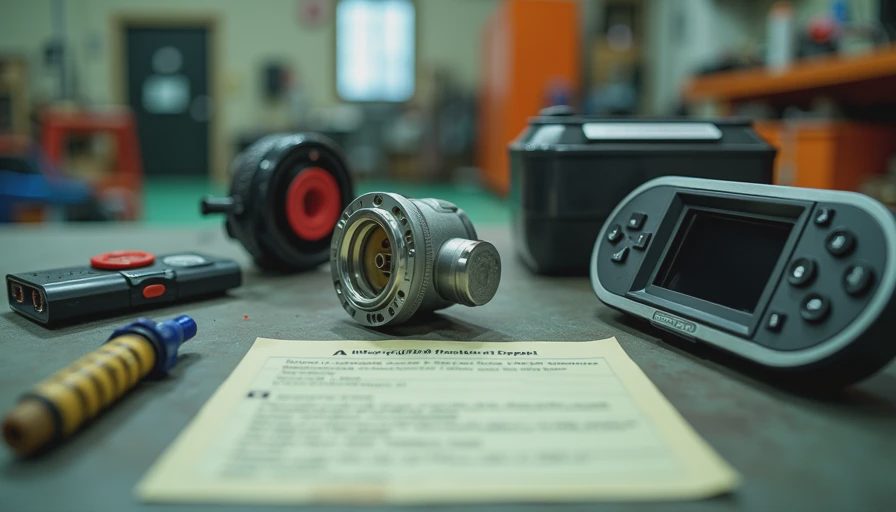
Common throttle position sensor symptoms
Hesitation on acceleration is one of the best-known throttle position sensor symptoms. The engine may respond normally if the pedal is pressed slowly, then stumble when the pedal moves quickly. A worn sensor track can briefly send an implausible low or high value, causing the module to remove or add fuel at the wrong moment. The result can feel similar to a weak fuel pump, clogged injector, or ignition misfire.
Another clue is an unstable idle. With the throttle closed, the module expects a consistent position value. If the signal jumps, the idle strategy may continually correct airflow and fueling. You might see the tachometer move several hundred rpm, hear the engine flare during a gear change, or find that the engine stalls while coasting to a stop.
Throttle position sensor symptoms can also include poor cruise behavior and unexpected downshifts. At a steady highway speed, a noisy signal may make the control system think the driver is repeatedly pressing and releasing the accelerator. On vehicles with electronic throttle control, reduced-power mode, limited acceleration, or an accelerator pedal warning can indicate a broader throttle-control fault rather than the TPS alone.
Hard starting, increased fuel consumption, and black exhaust are possible when the control module interprets the throttle as more open than it really is. These symptoms are not proof of a bad sensor. Vacuum leaks, incorrect fuel pressure, intake deposits, pedal sensors, and wiring faults belong on the same diagnostic list.
Codes and scan-tool clues
A scan tool is more useful than guessing from symptoms. Codes in the P0120 through P0124 range are commonly associated with throttle or pedal position circuit faults, although exact definitions depend on the vehicle. A code points toward a circuit or plausibility problem; it does not automatically identify the replaceable component.
Look at live data with the ignition on and engine off. The throttle position should change smoothly as the pedal or throttle blade moves. Do not expect every vehicle to display the same percentage at closed throttle, because some scan tools report calculated throttle angle while others report a sensor voltage or normalized value. The important clue is a sudden dropout, frozen value, erratic jump, or disagreement between sensor tracks.
Throttle position sensor symptoms that occur only when the engine is hot deserve special attention. Heat can open a marginal connection or change the resistance of a damaged component. Gently moving the harness while observing live data can reveal an intermittent fault, but keep hands, clothing, and test leads away from moving belts and the throttle blade.
Reference Box: A stored code is evidence, not a verdict. Confirm the reference voltage, sensor ground, signal pattern, connector condition, and mechanical throttle movement before ordering a part.

How to test the sensor safely
Begin with the service information for the exact year, engine, and throttle design. Disconnecting a connector with the ignition on can set additional faults, and some electronic throttles require an idle or throttle relearn after service. Photograph connector positions before unplugging anything.
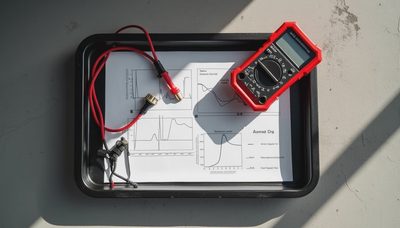
With the circuit identified, verify the reference supply and ground using a digital multimeter. A missing reference voltage can result from a shorted sensor elsewhere on the shared circuit. A poor ground can make the signal appear too high. Back-probe only where the procedure permits, and do not force probes into sealed terminals because enlarged terminals can create a future intermittent connection.
For an older potentiometer-style TPS, slowly sweep the throttle while monitoring voltage. The reading should change steadily without sudden opens or spikes. An oscilloscope provides a better view of a brief dropout, but a careful meter test can still identify many failures. Do not apply battery voltage to a signal terminal unless the manufacturer specifically instructs it.
Inspect the throttle body for binding, heavy carbon around the blade, damaged gears, and water intrusion. Never spray solvent into an electronic throttle motor or sensor housing. If cleaning is approved, use a suitable throttle-body cleaner on a cloth and protect electrical components. Follow the vehicle procedure for relearning throttle and idle values afterward.
Replace, repair, or diagnose further?
Replacing a conventional bolt-on TPS can be straightforward and often costs roughly $40 to $180 for the part, with labor bringing a shop total near $120 to $350. An integrated electronic throttle body is more expensive; parts frequently range from $200 to $700, and total repair cost can exceed $900 on some vehicles. Prices depend on access, calibration requirements, and whether an original-equipment assembly is required.
Throttle position sensor symptoms caused by wiring may be repaired with a proper terminal or harness repair instead of a sensor. Avoid twisting wires together and covering the joint with tape. Use the correct automotive repair terminals, sealed splices, and strain relief. A clean connector does not guarantee a good terminal fit; tension testing is important when a fault returns after replacement.
If the engine is stuck in reduced-power mode, stalls in traffic, or cannot respond reliably to the accelerator, avoid normal driving until the fault is resolved. A vehicle that hesitates during merging can create a serious safety problem. Towing is sensible when throttle control is unpredictable.
A practical diagnostic sequence
First, record the exact complaint: cold or hot, light or heavy acceleration, steady speed or gear change. Second, scan for current, pending, and history codes, then save freeze-frame information. Third, inspect the air intake, connector, wiring, grounds, and throttle-body mounting area. Fourth, compare live-data readings while moving the throttle slowly and quickly. Fifth, test voltage and ground against the service specification. Sixth, repair the confirmed fault, perform any required relearn, clear codes, and complete a road test.
That order prevents a common parts-counter mistake: selling a sensor when the real issue is a broken wire or a contaminated throttle body. It also prevents a technician from blaming a TPS for every hesitation complaint. Fuel pressure, ignition performance, unmetered air, and accelerator-pedal data still need consideration when the position signal looks correct.
If your customer asks, the one-line answer is this: throttle position sensor symptoms usually involve hesitation, unstable idle, surging, poor shift behavior, or reduced power, but the sensor must be tested before replacement. Here's the chemistry, here's the spec, here's what to do with it: treat the signal as measured evidence, follow the vehicle procedure, and repair the confirmed circuit rather than guessing.


No comments yet — be the first to share a thought.