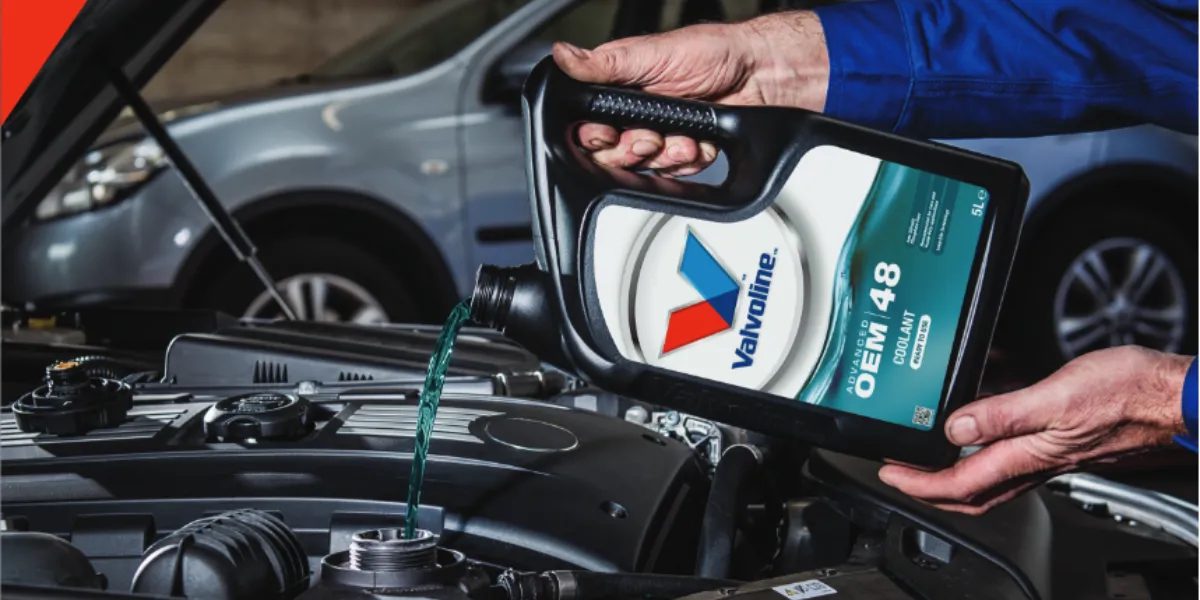
As a vehicle owner, you won't always have every maintenance product readily available. It's not uncommon to have one type of coolant already in your car and a different one sitting in your garage. Rather than making a trip to the store, you might find yourself tempted to simply combine them. Most of us have faced this dilemma at some point, so let's take a closer look at what mixing coolants actually does and whether it's ever a good idea.
Engine coolant is a specialized fluid that circulates through the engine to maintain a stable operating temperature. Typically, coolants are formulated with roughly 50% water and 50% ethylene glycol or propylene, along with small amounts of protective additives. These fluids are available in a range of colors, including blue, green, orange, and pink.
What exactly does engine coolant accomplish? Its primary function is to draw heat away from the engine and keep temperatures steady. Engines generate enormous amounts of heat during operation, and without a way to control it, that heat would eventually destroy the engine. The combination of water and glycol enables the engine to perform reliably regardless of external temperatures.
Which coolant does your specific vehicle require? That's not always a straightforward answer. Different vehicles call for different coolant formulations, each of which must be carefully engineered and thoroughly tested. The most widely used types available today include:
The most reliable way to determine which type is right for your vehicle is to consult the vehicle manufacturer directly.
Historically, coolants were color-coded in a standardized way, and that color served as a dependable guide for selecting the right product. Each shade was tied to specific applications, properties, and compatibility requirements. That system no longer applies universally, however. While coolants still come in various colors, the color is now determined entirely by the manufacturer and may be applied across multiple different formulations, which adds a layer of confusion for consumers. As an example, Valvoline produces both HT-12 Antifreeze Coolant and OEM Advanced 40 Coolant, and both are pink.
Drivers can no longer depend on color alone when selecting an auto coolant, which creates real challenges. Consider this scenario: you purchase a used vehicle that already has coolant in it. With today's inconsistent color conventions, there's no way to identify the coolant type just by looking at it. If you're uncertain about what's in the reservoir, the safest approach is to drain and flush the radiator before adding anything new.
On the question of mixing coolant colors, you'll find two schools of thought. Some vehicle owners see no problem with it, provided the coolant type matches what's already in the system. Experts, however, generally advise against mixing different coolant colors as a precaution. Certain combinations can cause serious damage. Mixing OAT and IAT coolants, for example, can be particularly harmful. What OAT coolant does when combined with IAT is transform the fluid into a gel-like substance that clogs the cooling system and causes the engine to overheat. Clearing that residue requires extensive flushing and may result in damage that proves far more costly than anticipated. A similar reaction can occur when propylene glycol and organic acid are combined.
Blending incompatible coolant types can lead to significant and costly damage. Beyond solidifying and blocking engine passages, the resulting overheating can trigger a cascade of additional problems:
Clearly, using the wrong coolant combination can seriously compromise your vehicle, making it essential to identify the correct type for your car's needs. Risking corrosion or damage to the water pump, radiator, and surrounding components simply isn't worth it. To make sure you're using the right diesel engine coolant or any other coolant suited to your vehicle, speak with a qualified auto technician or use the Valvoline Lubricant Advisor.
Many drivers don't fully consider the risks before mixing coolants. If you're trying to cut costs, mixing incompatible fluids without proper research is likely to backfire — a small misstep can turn into a major expense. Armed with this understanding and a supply of quality Valvoline engine coolant, you can keep your vehicle protected and running at the right temperature throughout the year. Our advisors are always available to assist with product selection and practical vehicle maintenance guidance.



No comments yet — be the first to share a thought.