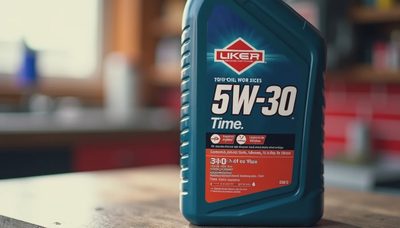
If you have ever asked **what does the W stand for in 5W30**, this post will give you the quick answer and the shop-floor explanation behind it. You will be able to look up what the W means, how 5W-30 is tested, what the two numbers actually tell you, and why this matters for cold starts and engine protection. Here's the chemistry, here's the spec, here's what to do with it.
The short answer is simple: the **W stands for winter**. In the SAE J300 viscosity grading system, the number before the W describes how the oil flows in cold conditions, while the second number describes viscosity performance at normal engine operating temperature. So 5W-30 is a multigrade oil designed to work in both cold starts and hot running conditions.
What the W actually means in 5W-30
When someone asks **what does the W stand for in 5W30**, they are usually trying to decode the label on the bottle. The W is not weight. That is one of the most common parts-counter misunderstandings I still hear. It means **winter**, and it identifies the oil's low-temperature performance class under SAE J300.
A 5W oil has to meet specific cold-cranking and low-temperature pumping limits during standardized lab testing. Those tests are used to show that the oil can still move through the engine fast enough during cold starts. That matters because a large share of engine wear happens in the first moments after startup, before full oil flow is established.
**Reference Box:** In SAE J300, the number before the W is the winter grade for cold-start and pumping performance; the number after it is the hot viscosity grade.
So if your customer asks, the one-line answer is: 5W-30 means the oil behaves like a 5W oil in winter conditions and a 30-grade oil at operating temperature.
What the 5 and the 30 tell you
The two numbers in 5W-30 do different jobs. The **5W** portion tells you how the oil performs when cold. Lower W numbers generally indicate better low-temperature cranking and pumpability. A 0W oil is tested to flow at lower temperatures than a 5W, and a 10W is not required to meet as severe a cold test as a 5W.
The **30** tells you the oil's viscosity range when hot, measured at 100 degrees C and supported by high-temperature testing. This is the part that helps maintain oil film thickness when the engine is fully warmed up. On the spec sheet, the number that decides it is the SAE high-temperature grade, not a casual idea of thickness from pouring the oil out of the bottle.
That is why 5W-30 and 10W-30 can both be SAE 30 oils when hot, yet differ during cold starts. They are not identical oils, but they can land in the same hot-viscosity range.

Why multigrade oil can do both jobs
Years ago, single-grade oils were more common, and drivers might switch between a winter oil and a summer oil. Modern passenger vehicles typically use multigrade oils like 5W-30 because formulators blend base oils and viscosity index improvers so the oil does not thin or thicken as dramatically across the temperature range.
That does not mean 5W-30 acts like two separate oils. It means the finished oil is engineered to satisfy both a winter requirement and a hot-viscosity requirement within the same grade. The oil still gets thinner as temperature rises; all oil does. The point is that it stays within the required viscosity windows defined by SAE J300.
From a chemistry standpoint, base oil selection, polymer choice, and additive balance all matter. A licensed engine oil also has to meet API performance standards such as API SP for gasoline engines, and many products also carry ILSAC specifications such as GF-6A. So viscosity grade is important, but it is only one part of choosing the correct oil.
Why the W matters for cold starts and engine life
The reason this topic matters is practical, not academic. Cold oil is harder to move, and the engine oil pump has to pull it through the pickup, push it through galleries, and build pressure quickly. If the oil is too thick for the temperature, cranking speed can drop and oil delivery can be delayed.
That is where the answer to **what does the W stand for in 5W30** becomes useful. The W rating helps indicate whether the oil will perform acceptably in low-temperature startup conditions. In a cold climate, that can affect startup feel, timing-chain noise on first fire, and how fast hydraulic lifters or cam phasers settle down.
For fleet service, delivery vehicles, and personal cars alike, matching the recommended winter grade helps reduce startup stress. It also supports fuel economy because excessively thick oil takes more energy to circulate. This is one reason many late-model engines call for 0W-20, 5W-20, or 5W-30 rather than older, heavier grades.

Common misunderstandings technicians hear every day
The biggest myth is that the W means **weight**. It does not. Another common mistake is assuming a higher second number automatically means better protection. More viscosity is not automatically better; the engine was designed around a target viscosity, bearing clearance, oil pump output, and flow requirement.
A third misunderstanding is that all 5W-30 oils are interchangeable. They are not always. Two oils can share the same SAE grade and still differ in approvals, additive chemistry, sulfated ash, phosphorus, sulfur limits, or OEM-specific tests. That matters for direct-injected turbo engines, emissions systems, and warranty compliance.
**Reference Box:** SAE J300 defines viscosity grade. API service categories define engine oil performance. OEM approvals add manufacturer-specific requirements.
If your customer asks whether they can swap grades, the right answer is simple: start with the owner's manual or service information, then match viscosity grade and required API or OEM spec.
How to choose the right oil after you understand the W
Once you know **what does the W stand for in 5W30**, choosing oil gets easier. First, follow the vehicle manufacturer's recommended viscosity grade. Second, confirm the current API category or required OEM approval. Third, think about operating conditions such as climate, towing, short-trip service, or extended highway use if the manufacturer gives alternate grades.
For most drivers, the bottle should match three things: the SAE grade, the API donut or starburst if applicable, and any required manufacturer approval listed in the manual. Do not choose by label language alone. On the spec sheet, the number that decides it is the actual viscosity grade and approval set.
Handle used oil carefully, avoid skin contact when possible, and store waste oil in a sealed labeled container for recycling. Most auto parts stores, service shops, or local collection sites accept used motor oil.
If your customer asks, the one-line answer is this: the W in 5W-30 stands for **winter**, and it tells you how the oil is graded for cold-temperature performance. Here's the chemistry, here's the spec, here's what to do with it.