This guide gives you a working reference for engine coolant: what it does, how its chemistry protects metal, which specifications matter, how to test it, and how to handle used fluid safely. Whether you are answering a parts-counter question or servicing a fleet vehicle, the goal is the same: identify the required formulation before opening the jug. Here's the chemistry, here's the spec, here's what to do with it.
What engine coolant actually does
Engine coolant is a heat-transfer fluid, but heat removal is only one part of its job. In a typical liquid-cooled engine, the mixture carries combustion heat from passages in the cylinder head and block to the radiator. The thermostat controls flow, while the water pump circulates the fluid. The radiator then releases heat to air moving through the fins.
A proper mixture also lowers the freezing point and raises the boiling point compared with plain water. More importantly for a working technician, the additive package limits corrosion, cavitation, scale, and deposit formation. Aluminum heads, cast iron blocks, soldered joints, steel fittings, and elastomer seals do not all react the same way to untreated water. The inhibitors create a controlled chemical environment around those materials.
Most passenger vehicles use ethylene glycol diluted with water, although propylene glycol appears in some applications. Ethylene glycol is effective and economical, but it is poisonous when swallowed. Its sweet taste and smell make spills especially dangerous around pets and children. Do not treat a coolant leak as harmless water.
Reference Box: A common service mixture is approximately 50 percent concentrated coolant and 50 percent distilled or deionized water. The vehicle manufacturer's specification controls the final choice, not fluid color.
Coolant chemistry and specification labels
The familiar green, orange, yellow, blue, or pink color is dye, not a universal chemical standard. Two fluids with similar colors can use different inhibitor systems, and two fluids with different colors can sometimes share a broadly similar technology. Color is useful for identifying a leak, but it is not sufficient for selecting replacement fluid.
Older conventional formulations often use inorganic inhibitors such as silicates or phosphates. Many newer extended-life products rely more heavily on organic acid technology, commonly abbreviated OAT. Hybrid organic acid technology, or HOAT, combines organic inhibitors with selected inorganic components. Nitrited and nitrite-free versions also exist, particularly in heavy-duty diesel service where liner cavitation protection is important.
On the spec sheet, the number that decides it is the vehicle or coolant approval listed by the manufacturer. ASTM D3306 is commonly associated with automotive engine coolant performance, while ASTM D6210 addresses heavy-duty engine coolant. These standards are useful reference points, but an ASTM claim alone does not automatically prove that a product meets a particular OEM requirement. Read the service manual, cap label, fleet specification, or product data sheet.
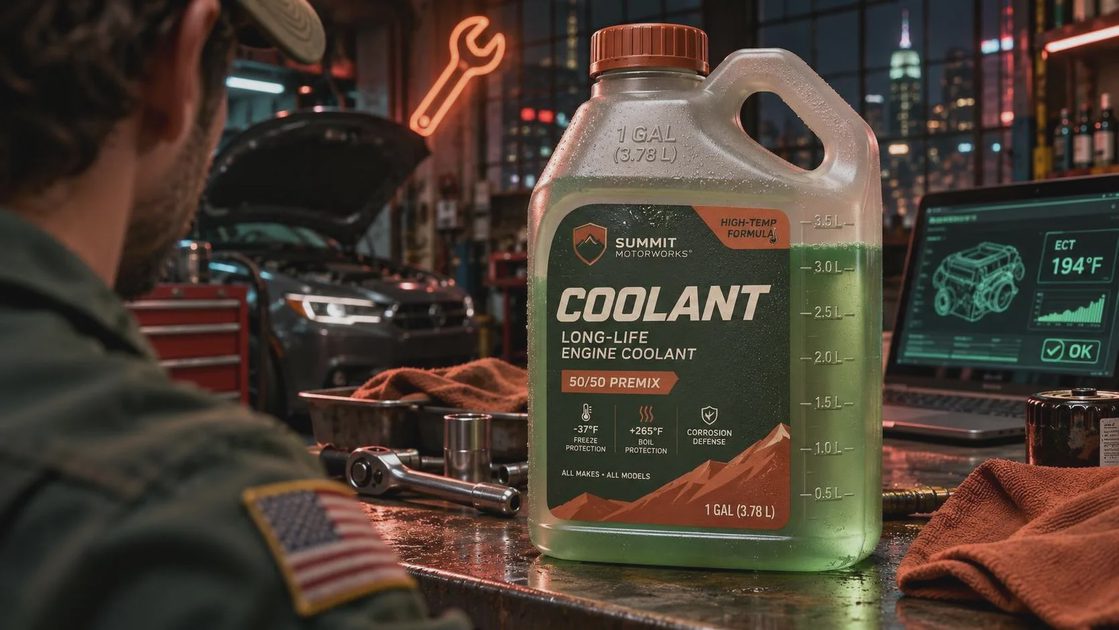
A universal label can be convenient, but “all makes and models” does not erase compatibility questions. If a cooling system requires a specific inhibitor package, use a product that explicitly lists that requirement. A parts counter recommendation should be based on the year, engine, duty cycle, and manufacturer specification rather than a guess from the color in the reservoir.
Mixing, concentration, and compatibility
Concentrated engine coolant must be mixed with the correct water before service unless the product instructions say otherwise. Premixed 50/50 fluid is practical because it removes a measuring step, but it can cost more per gallon and gives the technician less flexibility in unusual climates or large fleet systems. Distilled or deionized water is preferred because high mineral content can contribute to scale and deposit problems.
A 50/50 mixture is a common starting point, not a universal law. The owner's manual or product data sheet may specify a different range. Excessive glycol concentration can reduce heat-transfer performance and increase viscosity. Too much water weakens freeze protection and corrosion control. A refractometer or an appropriate test strip is more reliable than guessing from the appearance of the fluid.
Avoid mixing technologies simply because both containers say long life. In an emergency, adding the wrong fluid may be preferable to operating with an empty cooling system, but the system should then be tested and corrected. A drain, flush, and refill may be the appropriate repair when the history is unknown or the mixture is visibly contaminated. Never open a hot radiator cap; pressure and steam can cause severe burns.
Testing and diagnosing a cooling system
Start with a visual inspection. Look for a low reservoir, wet hose connections, crusty residue around the water pump, staining near the radiator seams, and oil-like material floating in the expansion tank. A low level is a symptom, not a service interval. Pressure-test the system when a leak is suspected, following the equipment and vehicle limits.
For fluid condition, use a refractometer to estimate freeze protection and a test strip or laboratory analysis when inhibitor depletion is a concern. Test strips can indicate reserve alkalinity, pH, and selected inhibitor levels, but they have expiration dates and require careful timing. A refractometer does not tell you whether the inhibitor package is exhausted; it primarily estimates concentration.
A brown appearance can result from corrosion, incompatible mixing, stop-leak material, or neglected maintenance. Do not diagnose by color alone. Check the service history, inspect the surge tank, and consider a coolant sample if the vehicle is part of a high-value fleet. Diesel equipment may need additional attention to cavitation protection and supplemental coolant additive requirements.
If your customer asks, the one-line answer is: test concentration and inspect the system, then match the replacement fluid to the OEM specification. That sequence prevents a surprisingly common mistake—replacing a weak mixture while leaving the leak that caused it.
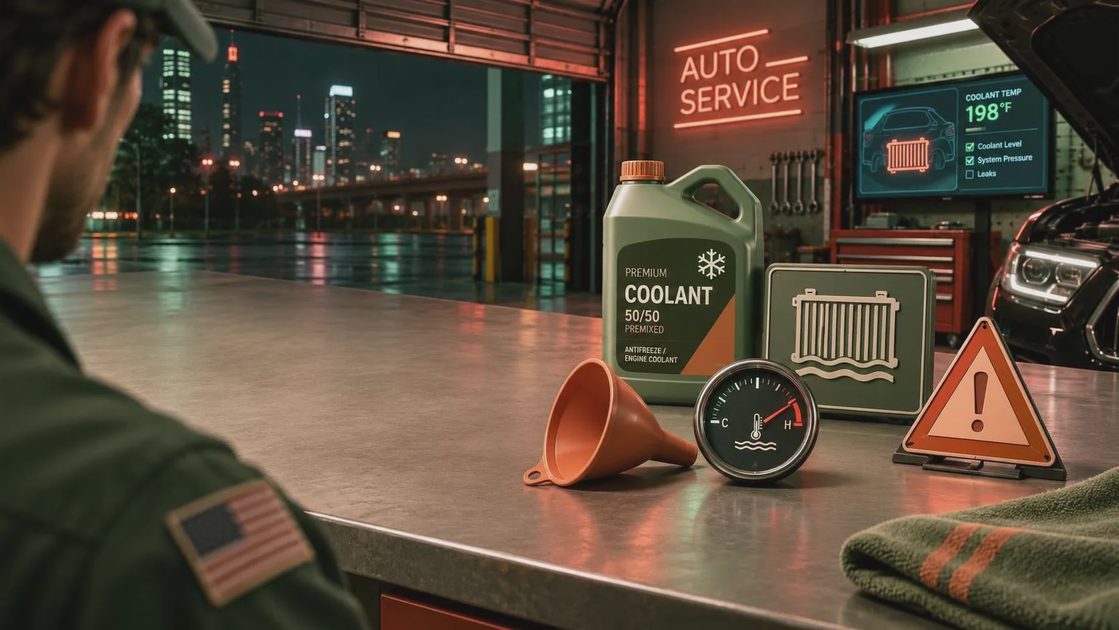
Service intervals and practical workshop procedure
Service intervals depend on formulation, vehicle design, operating temperature, mileage, and the manufacturer's maintenance schedule. Older conventional coolant may require more frequent replacement than an approved extended-life formulation, but “long life” does not mean permanent. Heat, oxygen, contamination, and electrical activity gradually consume inhibitor protection.
Before draining, record the existing fluid's color and condition, but do not use either as the selection rule. Allow the engine to cool, capture the fluid in a labeled drain pan, and keep the container stable. After draining, inspect the old fluid for oil, rust particles, scale, or metallic debris. Use the vehicle's approved flush procedure; aggressive chemical cleaners are not appropriate for every cooling system.
Refill slowly to reduce trapped air. Use the specified coolant mixture, bleed the system according to the manufacturer's procedure, and confirm heater operation. After the first heat cycle, let the engine cool completely and recheck the level. A final inspection should include hose condition, cap sealing, fan operation, belt condition, and leaks at the water pump and thermostat housing.
Safety, storage, and disposal
Wear chemical-resistant gloves and eye protection when handling engine coolant. Keep absorbent material available for spills, and prevent fluid from reaching storm drains, soil, floor drains, or surface water. Store new and used coolant in closed, labeled containers away from food, ignition sources, children, and animals. Do not mix used coolant with used motor oil unless a recycler specifically accepts that combined stream.
Used antifreeze can contain corrosion metals, dirt, and other contaminants. Disposal rules differ by location, so contact a municipal household hazardous-waste program, automotive recycler, or approved waste contractor before pouring anything out. Many repair shops collect used fluid for recycling or managed disposal. Never pour coolant onto the ground or into a sanitary drain without explicit local authorization.
The useful habit is simple: identify the chemistry, verify the specification, measure the mixture, inspect the cause of any loss, and document the refill. Engine coolant is not just colored liquid in a reservoir. It is a formulated heat-transfer and corrosion-control product, and correct selection protects the radiator, pump, seals, cylinder head, and the technician doing the work. Reference Box: the label is a starting point; the OEM specification and measured concentration are the final decision.


No comments yet — be the first to share a thought.