Engine coolant is a liquid that plays a critical role in the functioning of virtually every type of engine. The terms coolant and antifreeze are often used to mean the same thing. Generally speaking, coolant is the preferred term in warmer regions, whereas antifreeze tends to be the term of choice in colder climates.
Numerous coolant technologies exist to serve different applications. Beyond technology differences, coolants come in a variety of colors and are available in both concentrated and ready-to-use formulations.
While this may initially seem overwhelming, selecting the right coolant does not need to be a complicated process. Making the correct coolant choice for your specific vehicle or engine is, however, critically important. Equally essential is knowing how to properly check coolant levels and evaluate protective capacity.
What exactly is an engine coolant, and how do you check the coolant level? Here is a comprehensive look at everything you need to know.
A coolant is a liquid formulation composed of ethylene glycol, water, and inhibitors. More precisely, ethylene glycol accounts for 90 to 95% of the mixture, water makes up 1 to 3%, and the remainder consists of the additives or inhibitors package. When these components are combined, the result is a nearly clear liquid. A trace amount of coolant dye is then introduced into the mixture.
Ethylene glycol serves as the foundational base of any coolant. It entered the market during the 1930s as a replacement for plain water, which had previously been the standard coolant in the automotive industry. Unlike water, ethylene glycol offers a higher boiling point and a lower freezing point, making it a superior option for both hot and cold weather use in automobiles.
One critical point worth emphasizing is that ethylene glycol is highly toxic, particularly when ingested. As a result, handling and disposing of coolant — such as after a cooling system flush — must be carried out with great care to prevent children and animals from coming into contact with the substance, especially since it carries a bitter-sweet taste.
In the early days of ethylene glycol use, it was not yet understood that it could oxidize and generate acids capable of damaging the engine and corroding its internal components. To guard against this, additives and inhibitors are incorporated into the coolant formulation.
The additives that slow or inhibit the oxidation of ethylene glycol are what fundamentally differentiates one coolant from another. Compounds such as nitrites, silicates, phosphates, and borates also play a role in shielding the engine and cooling system's metal components from corrosion.
Because additives degrade and lose effectiveness over time, it becomes necessary to replace the coolant after a defined interval of time or distance. More on that in a later section.
As noted earlier, the trace or coolant dye is primarily included to make fluid leaks easier to identify. Of greater significance is the fact that coolant dye does not reflect the coolant's formulation — that distinction belongs to the additives. Different coolant technologies from different manufacturers can share the same dye color despite having entirely different chemical compositions.
The most widely used coolant dye colors include green, blue, red, orange, yellow, violet, and pink. Since color carries no information about the coolant's formulation, it should never be used as the sole criterion for selection.
Always verify the formulation of the coolant before purchasing.
Coolants developed specifically for automotive applications and internal combustion engines fulfill several key functions.
HEAT CONTROL. Coolants act as heat-transfer mediums that facilitate efficient removal of heat generated by the engine. In practical terms, coolant shields engines from overheating, particularly in warm climates and under operating conditions with temperatures reaching as high as 129°C.
PREVENTS FREEZING. Beyond heat management, coolants incorporate antifreeze additives that keep the cooling system from freezing during the extreme cold of winter. Their standard freezing point sits at approximately −37°C, although this threshold can be pushed even lower depending on the specific coolant mixture and formulation used.
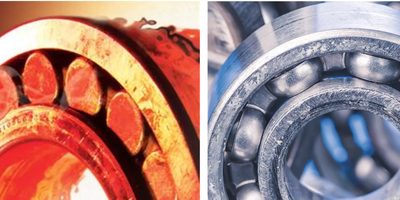
CORROSION PROTECTION. The additives package within a coolant helps minimize rust, corrosion, and cavitation throughout the cooling system and engine. This protective function directly contributes to extending overall engine lifespan.
PREVENTS EROSION. Coolants work to reduce electrolysis within both the cooling system and the engine itself. This chemical process, which occurs when an electrical current passes through a substance, has the potential to erode critical engine components and lead to expensive repairs.
EXTENDS LIFE. In addition to prolonging engine life, coolant also helps extend the service life of the rubber and plastic components found within the cooling system.
LUBRICATION. Due to its chemical composition, coolant additionally provides lubrication for the water pump seal.
Now that we have established that coolants are made up of ethylene glycol, water, and additives, it is worth examining how coolant technology has progressed over the years. Once again, it is the additive package that drives the differences.
IATs were the original coolants introduced to the automotive industry. These traditional, conventional, or standard coolants rely on phosphate-silicate additives. Because they are based on older technology, they are suited to protecting cast iron, brass, copper, and aluminum components found in older vehicles. Consequently, they are no longer appropriate for the cooling systems of modern vehicles or those manufactured from the mid to late 1990s onward.
The additive package in IAT coolants has a typical service life of 2 to 3 years or between 48,000 and 72,000 km, depending on the specific formulation. Beyond this point, protection for the cooling system is lost — even if the coolant still satisfies freeze protection requirements.
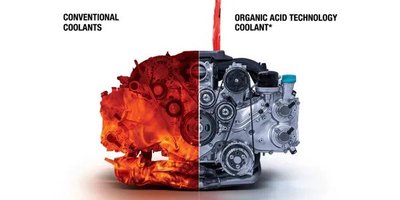
OATs emerged as the next generation of coolant solutions, addressing the limitations associated with IATs. These coolants are built around organic acids and corrosion inhibitors, which give them a significantly longer service life. Extended life OAT coolants can remain effective for up to 5 years or 240,000 km.
This widely adopted OAT coolant technology is used by American manufacturers such as GM and Dodge/Chrysler, European brands including VW, Audi, and Saab, as well as some Asian manufacturers like Honda.
It should be noted that OAT coolants do not offer protection for copper and brass system components, which makes them unsuitable for older vehicle models. Diesel engines may also require a nitrate-free heavy-duty OAT formulation.
HOATs earn the designation 'hybrid' because they draw on both IAT and OAT technologies. A HOAT coolant, for example, combines an OAT or organic acids with a silicate — an IAT-based inhibitor — making them particularly effective at protecting aluminum engine components and cooling system parts.
Certain coolants in this category can achieve service intervals of up to 10 years or 290,000 km. They are typically specified by American manufacturers such as Ford and Chrysler, and European automakers similarly incorporate them into their vehicle lineup.
P-HOATs are formulated with organic acid technology and phosphates and offer an extended service life. These coolants satisfy the requirements of most Asian vehicle manufacturers, including Toyota, Hyundai, Nissan, KIA, Honda, Subaru, and others. Service life for P-HOAT coolants generally extends to 5 years or 240,000 km.
Si-OATs combine silicates with HOAT technology and represent a comparatively recent advancement in coolant formulation. They provide extended service life and comply with the specifications of modern engines produced by European manufacturers such as Mercedes-Benz, Porsche, Audi, and VW, among others. Service life reaches up to 5 years or 250,000 km for passenger cars, or up to 3 years or 500,000 km for heavy-duty vehicles.
NAP-free HOAT formulations are built on OAT technology but are free of nitrites, amines, phosphates, and silicates. This makes them the appropriate choice for heavy-duty diesel applications. Manufacturers that recommend NAP-free coolants include Tesla, BMW, Volvo, and Mini Cooper, among others. Service life can extend to 10 years, 20,000 hours, or 1,600,000 km.
NOATs combine organic acid technology with nitrites as inhibitors. They are well suited to heavy-duty and diesel engine applications, with a service life reaching up to 12,000 engine hours or 965,000 km.
With so many distinct coolant technologies available, you may find yourself wondering which one is right for your needs. As you have learned, different original equipment manufacturers (OEMs) rely on different coolant technologies.
The most reliable guidance is straightforward: always consult the manufacturer's specifications when selecting a coolant for your engine.
Manufacturer coolant specifications and recommendations are developed based on factors including coolant service life, corrosion protection, and chemical compatibility. Operational and environmental conditions — such as extreme heat or severe cold — should also factor into your selection process.
Products from the Valvoline range of coolants are formulated to meet the requirements of leading engine and automotive manufacturers. Based on the intended application, they fall into several distinct categories.
Heavy-duty and diesel engines operate under different demands than light-duty engines and therefore typically call for what are known as extended life coolant formulations.
Coolants are available in both concentrated and ready-to-use formats, each providing a defined level of freeze protection. As a general rule, coolant concentrates are blended with deionized or demineralized water in a 50/50 ratio, protecting the system against freezing down to -37°C.
Alternatively, a 40/60 concentrate-to-water mixture offers freeze protection down to -25°C, while a 60/40 concentrate-to-water blend provides protection against temperatures as low as -52°C.
For extremely cold climate applications, coolants can also be used in a 70/30 concentrate-to-water ratio, delivering freeze protection down to -67°C.
Ready-to-use coolants come pre-mixed, offering a more convenient solution and eliminating the risk of users applying an incorrect dilution ratio.
IMPORTANT: DO NOT MIX DIFFERENT TYPES OF COOLANT
Since different coolants are built around different additive packages and inhibitors, mixing coolant types is strongly discouraged. When the additive packages of two different coolants are chemically incompatible, the combination may actually accelerate corrosion and lead to serious system damage.
For this reason, whenever it is time to replace the coolant, always perform a thorough cooling system flush and refill. Follow your vehicle's preventive maintenance schedule and OEM recommendations consistently to ensure the proper functioning of both the cooling system and the engine.
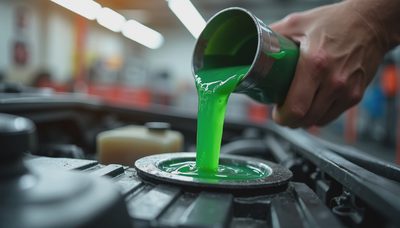
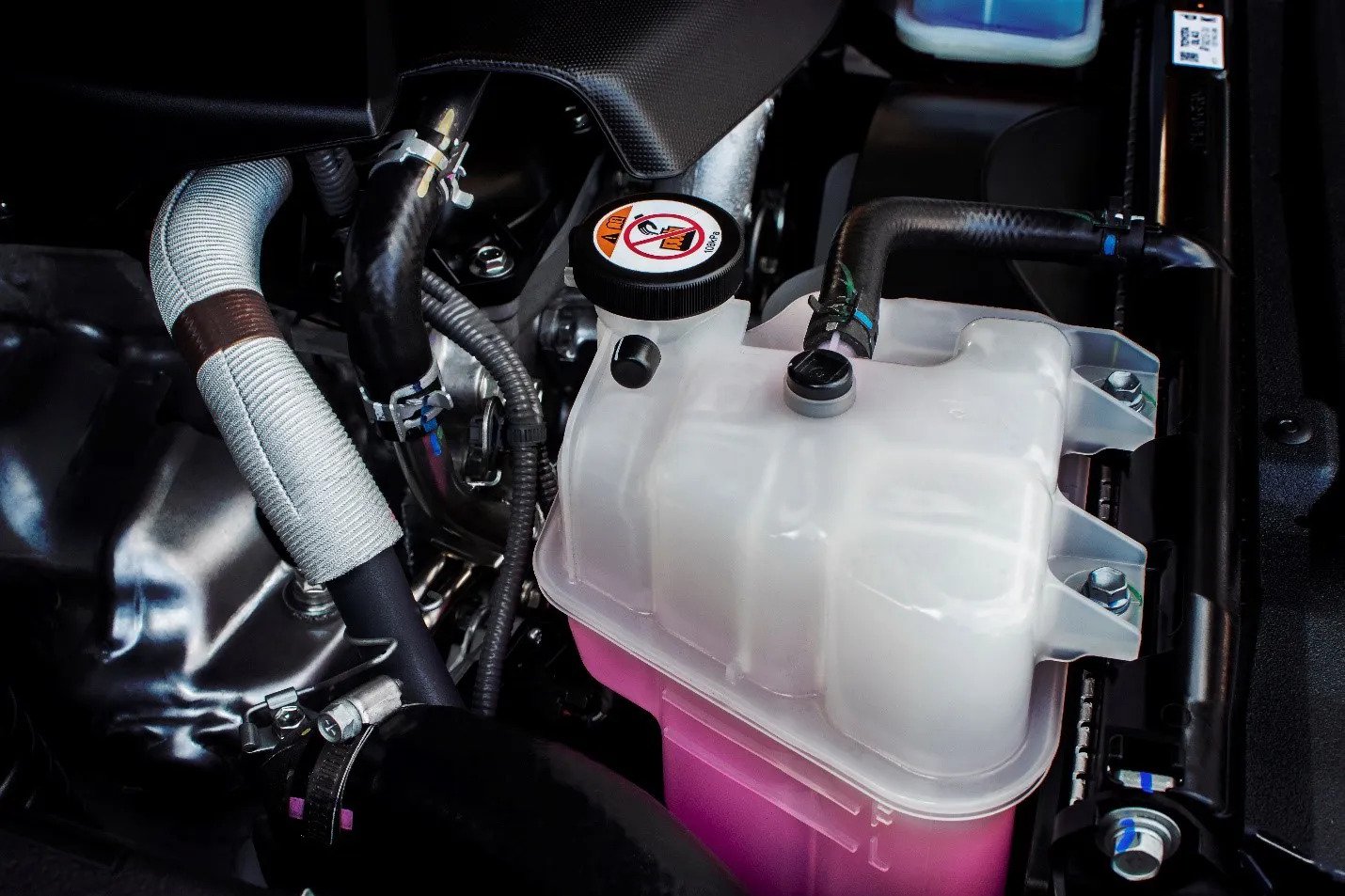
Begin by parking your vehicle on a level surface and allowing all fluids to settle. The coolant reservoir or tank is positioned under the hood and is typically white, though the exact appearance may vary by vehicle manufacturer.
It is critically important to allow both the engine and cooling system to cool down completely before opening the coolant reservoir cap, as pressure and hot liquid can pose serious injury risks.
A graduated scale is typically imprinted on the side of the coolant tank, indicating the maximum and minimum acceptable coolant levels. Compare this reading against the manufacturer's recommended coolant level to determine whether the system needs attention.
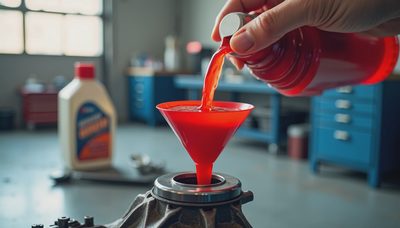
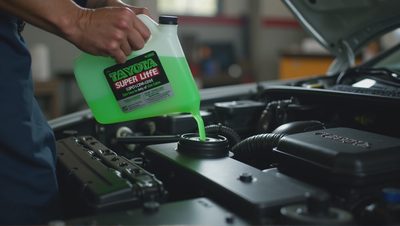
If you are already familiar with which coolant and coolant-to-water ratio your system uses, simply top it off using a funnel. During the inspection, take the time to examine whether the coolant appears dark, murky, or otherwise degraded. Any such signs may indicate it is time for a complete coolant replacement.
As coolants may contain highly toxic substances, handle them with care and take precautions to prevent spills.
A wide range of coolant technologies exists, and different vehicles and engines require solutions tailored to their specific needs. What sets these coolants apart from one another is the additive technology — or inhibitors — incorporated into their formulations.
Regardless of whether the application involves a high-mileage engine, a brand-new vehicle, a diesel or gasoline engine, or a European, Asian, or American vehicle, always defer to the manufacturer's recommendations. Each coolant is purpose-built to keep particular engine types and their cooling systems protected against overheating in warm conditions, freezing in cold weather, and corrosion throughout the system's service life.